

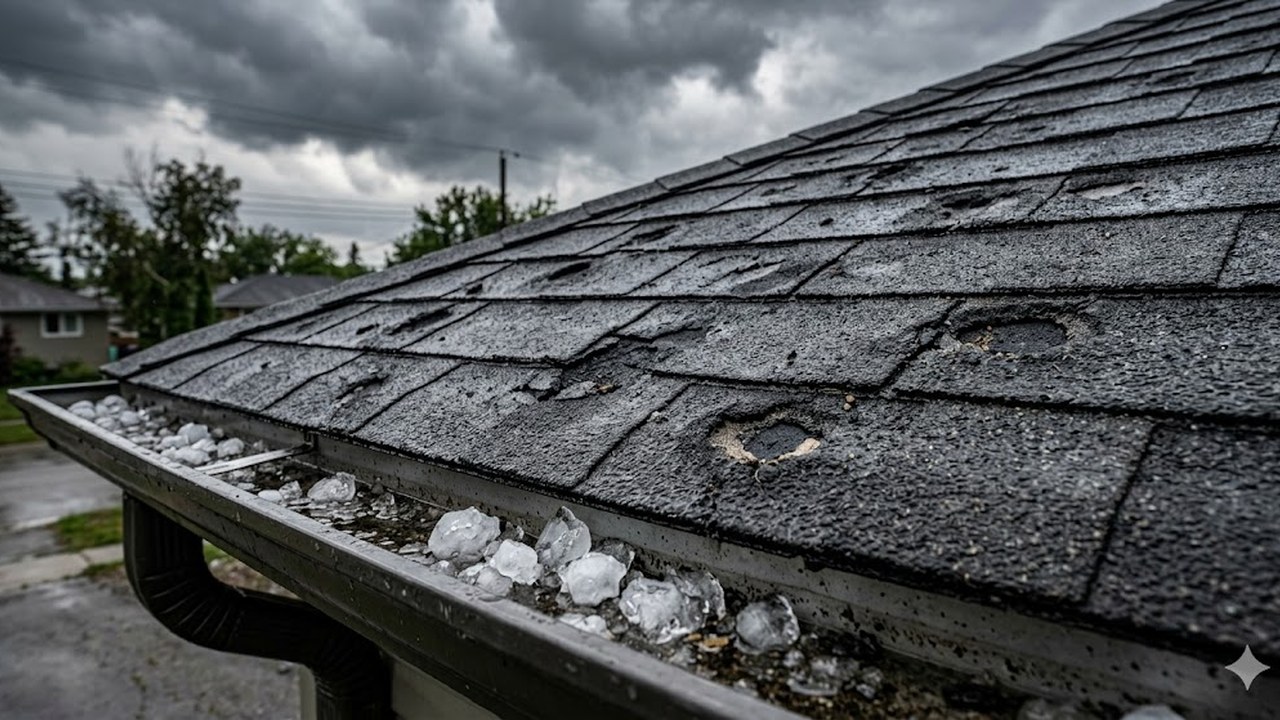
1Hailstorms: Canada's Most Common Roof Destroyer
Hailstorms are one of the most damaging weather events for Canadian homes — and they're becoming more frequent and more severe. Alberta alone experiences an average of $500 million to $1.5 billion in hail-related insured losses annually, but significant hailstorms also strike Saskatchewan, Manitoba, Ontario, and Quebec.
Your roof is your home's first line of defence against hail, and it takes the brunt of the damage. Fortunately, hail damage is covered by standard home insurance. But navigating the claim process — from inspection to settlement — requires understanding how insurers handle these claims and how to protect your interests.
2What Home Insurance Covers for Hail Damage
Hail is a named peril on all standard Canadian home insurance policies. Coverage includes:
- Roof: Shingles, tiles, membrane, flashing, vents, and skylights damaged by hail impact
- Exterior: Siding, stucco, fascia, soffit, gutters, and downspouts
- Windows and doors: Glass breakage and frame damage from hail impact
- Interior damage: If hail breaches the roof and causes water damage inside, your policy covers drywall, insulation, flooring, and affected personal property
- Detached structures: Sheds, garages, and fences damaged by hail
Important Limitation: Hail/Wind Deductibles
In hail-prone regions — particularly Alberta and Saskatchewan — many insurers now apply a separate, higher deductible for hail and windstorm claims. Instead of your standard $1,000 deductible, your hail deductible might be $2,500, $5,000, or even a percentage of your dwelling coverage (e.g., 2% to 5%). Check your policy for this detail before you file a claim.
3How to Identify Hail Damage on Your Roof
After a hailstorm, inspect your property from the ground first. Here's what to look for:
On the Roof (Professional Inspection Recommended)
- Asphalt shingles: Look for dark spots where the granule surface has been knocked off, exposing the black asphalt beneath. Dimples, dents, and soft spots are signs of impact.
- Metal roofing: Visible dents and dings. Metal roofs handle hail better than asphalt but can still sustain cosmetic and functional damage.
- Wood shakes: Splits along the grain, sharp corners broken off, or impact marks with orange-brown discolouration.
On the Ground (You Can Check These Yourself)
- Gutters and downspouts: Dents, dings, and dimples visible from ground level
- Siding: Impact marks, cracks, or chips in vinyl, aluminum, or wood siding
- Window screens: Punctures, tears, or visible dents
- Deck and patio: Impact marks on railings, furniture, and flooring
- Air conditioning unit: Dented fins on the exterior condenser — a reliable indicator of hail size and intensity
Do not climb on your roof. Hire a professional roofing contractor for the roof inspection — most offer free post-storm assessments.
4Step-by-Step: Filing a Hail Damage Claim
Follow this process to maximize your claim outcome:
- Document everything immediately. Take photos and video of all visible damage from the ground. Photograph your air conditioner, gutters, siding, windows, vehicles, and any outdoor furniture or equipment. Include wide shots of the property and close-ups of individual damage points.
- Check the storm date. Note the exact date and time of the hailstorm. Your insurer will cross-reference this with weather data. Local news reports and Environment Canada alerts can serve as supporting evidence.
- Report the claim to your insurer. Call your insurance company or broker within a few days of the storm. Provide the date of the storm, a description of the damage you've observed, and any photos you've taken.
- Get a professional roof inspection. Have a licensed roofing contractor inspect the roof and provide a written report with photos. This gives you an independent assessment before the insurer's adjuster arrives.
- Meet the adjuster. Your insurer will send an adjuster to inspect the damage. Be present during the inspection if possible. Share your contractor's report and point out all damage areas, including those on the ground level.
- Review the settlement offer carefully. The adjuster will prepare an estimate. Compare it to your contractor's assessment. If there's a significant difference, you can negotiate — or hire a public adjuster to represent your interests.
- Choose your contractor. You have the right to choose your own contractor — you are not required to use the insurer's preferred vendors, though using them may simplify the process.
5Replacement Cost vs. Actual Cash Value: Why It Matters
How your roof is valued in your policy dramatically affects your payout:
| Valuation Method | What It Pays | Example (15-year-old roof) |
|---|---|---|
| Replacement cost | Full cost of a new roof with similar materials | $15,000 roof = $15,000 payout (minus deductible) |
| Actual cash value (ACV) | New roof cost minus depreciation for age and wear | $15,000 roof depreciated 50% = $7,500 payout (minus deductible) |
On a standard 25-year asphalt shingle roof that's 15 years old, the difference between replacement cost and ACV coverage can be $5,000 to $10,000 or more.
Check your policy now. Some older policies or budget policies cover the roof at ACV rather than replacement cost. If yours does, ask your broker about upgrading — the additional premium is usually modest and well worth it if you ever need to file a hail claim.
Also note: some insurers switch from replacement cost to ACV coverage automatically once a roof reaches a certain age (typically 15 to 20 years). Read your policy's roof coverage section carefully.
6What to Do If You Disagree with the Settlement
It's not uncommon for homeowners to feel their insurer's settlement offer doesn't fully cover the damage. Here are your options:
- Request a re-inspection: Ask the insurer to send a different adjuster for a second opinion. Sometimes the first adjuster misses damage or underestimates repair scope.
- Provide your contractor's estimate: If your contractor's assessment is higher, submit it formally and ask the insurer to reconcile the differences.
- Hire a public adjuster: A public adjuster works for you (not the insurer) and negotiates the claim on your behalf. They typically charge 5% to 15% of the settlement. For large claims, this can significantly increase your payout.
- Use the appraisal clause: Most Canadian insurance policies include an appraisal clause that allows both parties to hire independent appraisers when they disagree on the value of a loss. An umpire chosen by both appraisers makes the final decision.
- Contact your provincial insurance ombudsman: Each province has a complaints or dispute resolution process for insurance disagreements.
7Reducing Hail Damage Risk
While you can't prevent hailstorms, you can reduce the damage they cause:
- Choose impact-resistant shingles: Class 4 (UL 2218) impact-resistant shingles can withstand larger hail. Some insurers offer premium discounts of 5% to 15% for Class 4 roofing materials.
- Maintain your roof: Replace cracked, curled, or missing shingles promptly. A well-maintained roof is more resilient to hail impact.
- Install hail guards on skylights: Wire mesh or polycarbonate guards protect skylights from hail impact.
- Park vehicles in garages during storms: Vehicle hail damage claims contribute to your overall loss history.
- Secure outdoor items: Bring in or secure patio furniture, grills, and potted plants before a forecasted hailstorm.
8Final Thoughts
Hail damage claims are among the most common property insurance claims in Canada, especially in Alberta and the Prairies. Your standard home insurance covers the damage, but understanding your deductible, your roof's valuation method, and the claims process can mean the difference between a full repair and a costly shortfall.
After any significant hailstorm: document, report, and inspect. Get a professional roof assessment before the adjuster visits. And before hail season arrives, review your policy to confirm your roof is covered at replacement cost — not actual cash value.
Frequently Asked Questions
Yes. Hail is a named peril on standard home insurance policies in Canada. Your policy covers repair or replacement of roof shingles, siding, gutters, and other exterior components damaged by hail. It also covers interior damage if hail breaches the roof. However, some policies in hail-prone regions like Alberta now carry separate, higher deductibles specifically for hail and windstorm claims.
Signs of hail damage include dents or dimples in asphalt shingles, cracked or missing shingles, exposed roofing felt, dented metal flashing or vents, dented gutters and downspouts, and damage to other exterior surfaces like siding or deck railings. Have a professional roofing contractor perform an inspection — many offer free post-storm inspections. Do not attempt to climb on your roof yourself.
It depends on the extent of the damage. If hail has damaged a significant portion of the roof and repairs won't restore it to its pre-loss condition, your insurer will typically approve a full replacement. If damage is limited to one slope or a small area, the insurer may only approve partial repairs. The type of shingles matters too — if your exact shingles are discontinued, a full replacement is more likely to be approved to ensure a uniform appearance.
Replacement cost pays to repair or replace your roof with new materials of similar quality. Actual cash value (ACV) pays the depreciated value — the cost of new materials minus depreciation based on the roof's age. On a 15-year-old roof, ACV might pay only 40% to 50% of the replacement cost. Always check whether your policy covers your roof at replacement cost or ACV, as this dramatically affects your payout.
Most Canadian home insurance policies require you to report damage promptly — ideally within days of the storm. The formal time limit to file a claim is typically 1 to 2 years from the date of the loss, depending on your province and policy wording. However, waiting too long weakens your claim because it becomes harder to prove the damage was caused by a specific storm rather than wear and tear. File as soon as you discover the damage.
Get your home insurance quote in 90 seconds — make sure your roof is properly covered.
Get Your Quote