
1Winter's Hidden Threat to Canadian Homes
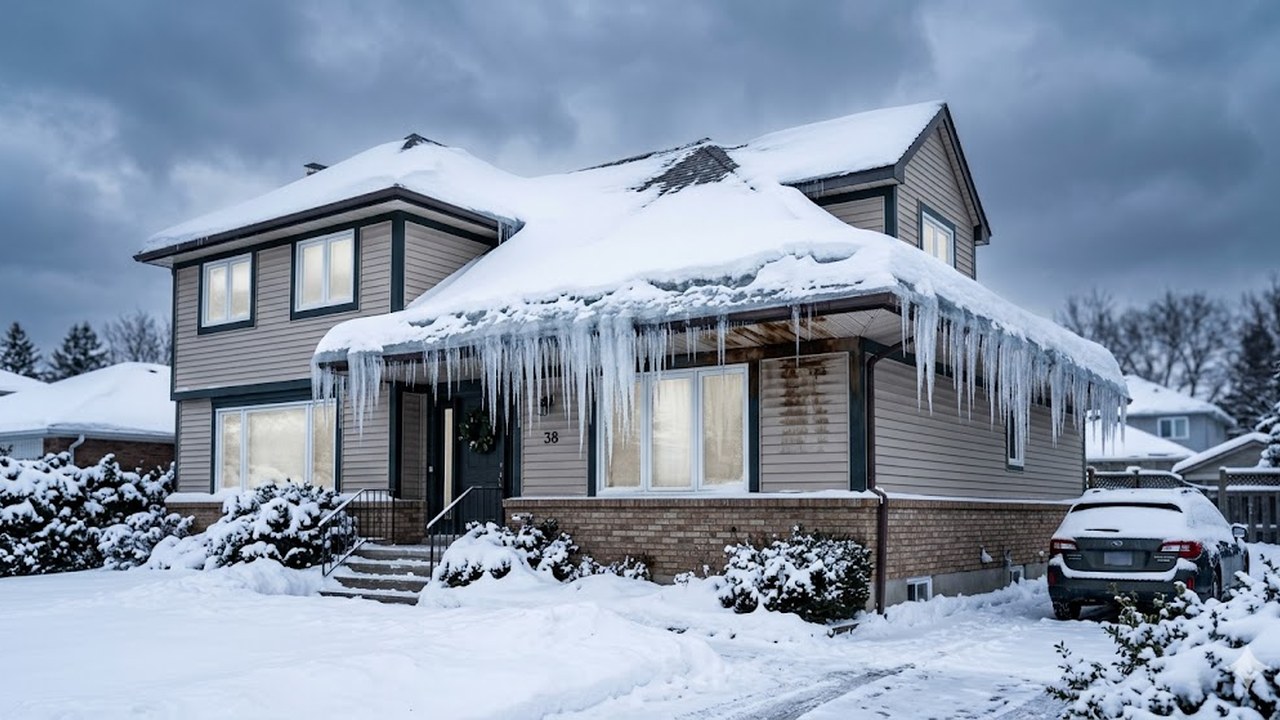
Every Canadian winter, ice dams cause millions of dollars in damage to homes across the country. They form silently on your roof during the freeze-thaw cycles of winter, and the damage they cause — water leaking into ceilings, walls, and insulation — often isn't discovered until it's already extensive.
But ice dams are just one of several winter storm threats to your home. Heavy snow loads can stress or collapse roofs. Freezing rain coats surfaces in layers of ice that bring down tree branches and power lines. Wind-driven snow finds every gap in your building envelope.
The good news: most winter storm damage is covered by standard home insurance in Canada. But there are important conditions, exclusions, and grey areas that every homeowner should understand before the next storm hits.
2How Ice Dams Form and Why They're Dangerous
An ice dam forms through a deceptively simple process:
- Heat escapes from your attic through poor insulation or air leaks, warming the roof surface from below
- Snow on the warmed portion of the roof melts, and the water runs downhill toward the eaves
- At the eaves — which are colder because they extend beyond the heated building — the water refreezes, forming a ridge of ice
- The ice ridge grows with each melt-freeze cycle, creating a dam that traps subsequent meltwater on the roof
- Pooling water behind the dam works its way under shingles, through the roof deck, and into your home's interior
The resulting damage can be devastating:
- Ceiling damage: Water stains, sagging drywall, and collapsed sections
- Wall damage: Water running inside exterior and interior walls, damaging insulation, framing, and finishes
- Mould growth: Moisture trapped in walls and ceilings creates ideal conditions for mould, which can develop within 24 to 48 hours
- Damaged insulation: Wet insulation loses its thermal performance and may need complete replacement
- Gutter and fascia damage: The weight of ice can tear gutters from the building and damage fascia boards
Ice dams can weigh hundreds of kilograms and extend along the entire perimeter of a roof. In severe cases, the pooled water behind them can flood entire upper floors.
3What Home Insurance Covers for Winter Storm Damage
Winter storm damage falls under several covered perils in a standard Canadian home insurance policy:
Ice Dam Water Damage
- Covered: Interior water damage caused by ice dam backup — ceiling damage, wall damage, insulation replacement, flooring damage, and affected personal property
- Usually NOT covered: The cost to remove the ice dam itself, or the cost to fix the attic insulation or ventilation problems that caused the dam to form
- Grey area: If your insurer determines the ice dam was a direct result of deferred maintenance (knowingly inadequate insulation, previously identified ventilation problems), they may deny the claim
Snow Load and Roof Collapse
- Covered: Structural damage to the roof, interior water damage from snow entry, damage to personal property, and additional living expenses if the home is uninhabitable
- Covered: Damage from snow or ice sliding off your roof onto structures below (fences, sheds, vehicles — though vehicle damage goes through auto insurance)
Freezing Rain and Ice Storms
- Covered: Damage from falling ice, fallen tree branches weighted by ice, structural damage from ice accumulation, and water damage from ice-related failures
- Covered: Damage to your home from a tree or branch that falls due to ice weight — even if the tree was on a neighbour's property
- Partially covered: Food spoilage from extended power outages may be covered if you have this endorsement (often $500 to $2,000 limit)
Wind-Driven Snow and Rain
- Covered: Water damage caused by wind-driven rain or snow that enters through damaged or breached openings in your home
- NOT covered: Snow or rain that enters through an open window or door, or through normal wear and tear in your building envelope
4When Winter Storm Claims Get Denied
Insurers investigate winter storm claims carefully. Here are the most common reasons for denial or reduction:
Maintenance-Related Exclusions
If the damage can be attributed to a lack of home maintenance, your insurer may deny the claim. Examples include:
- Roof shingles that were already curling, cracked, or missing before the storm
- Known attic insulation or ventilation deficiencies that you didn't address
- Gutters clogged with debris that contributed to ice dam formation
- Flashing around chimneys, skylights, or vents that was already deteriorated
Gradual Damage vs. Sudden Events
Insurance covers sudden and accidental damage. If water has been slowly seeping through your roof over weeks and you didn't notice or act, the insurer may classify the damage as gradual — and deny it. The key is responding promptly when you notice any signs of water intrusion.
Empty Home Without Precautions
If you were away from home and the heating failed during a storm — leading to frozen pipes or ice dam damage — your insurer may deny the claim if no one was checking on the home per the policy's requirements (typically every 24 to 72 hours).
5How to Prevent Ice Dams
Ice dams are almost entirely preventable with proper attic management. The goal is to keep the roof surface uniformly cold, so snow doesn't melt unevenly.
Long-Term Solutions (Most Effective)
- Increase attic insulation: Most Canadian homes need a minimum of R-50 insulation in the attic (approximately 40 cm of blown-in cellulose or fibreglass). Many older homes have only R-20 to R-30 — well below what's needed to prevent ice dams.
- Seal air leaks: Before adding insulation, seal every gap where warm air can escape into the attic:
- Around recessed light fixtures (or replace with IC-rated airtight fixtures)
- Around plumbing stacks and electrical penetrations
- At the attic hatch (add weatherstripping and an insulated cover)
- Around bathroom exhaust fans (ensure they vent outside, not into the attic)
- At the tops of interior walls where they meet the attic floor
- Ensure proper ventilation: Your attic needs continuous airflow from soffit vents at the eaves to a ridge vent or gable vents at the peak. This keeps the roof deck cold and prevents uneven snowmelt. The recommended ratio is 1 square foot of ventilation for every 300 square feet of attic floor space.
- Install ice and water shield: During your next roof replacement, have the roofer install a self-adhering ice and water shield membrane on the first 1 to 1.5 metres of the roof from the eaves. This provides a waterproof barrier even if an ice dam forms.
Short-Term Measures
- Roof rake: After heavy snowfall, use a roof rake (available at hardware stores for $30 to $80) to remove snow from the first 1 to 1.5 metres of the roof, standing safely on the ground. This eliminates the snow that would otherwise melt and feed the ice dam.
- Calcium chloride: Fill a nylon stocking with calcium chloride ice melt and lay it across the ice dam perpendicular to the gutter. It will slowly melt a channel through the ice, allowing trapped water to drain. Never use rock salt — it damages roofing materials and gutters.
- Never chop ice dams with an axe or hammer. This damages shingles and can cause far more harm than the ice dam itself.
6Preparing Your Home for Winter Storms
Beyond ice dam prevention, here's a comprehensive winter preparation checklist:
Roof and Exterior
- ☐ Inspect roof shingles for damage, curling, or missing pieces before the first snowfall
- ☐ Clean gutters and downspouts in late autumn after leaves have fallen
- ☐ Check flashing around chimneys, skylights, and vents for deterioration
- ☐ Trim tree branches that hang over the roof — ice-laden branches are a major hazard
- ☐ Check caulking and weatherstripping around windows and doors
Heating and Plumbing
- ☐ Service your furnace before winter — a breakdown during extreme cold triggers multiple risks
- ☐ Insulate exposed pipes in garages, crawl spaces, and along exterior walls
- ☐ Disconnect outdoor hoses and shut off exterior faucets from inside
- ☐ Test your sump pump before the spring thaw, when it will be most needed
Emergency Preparedness
- ☐ Know your emergency shutoffs for water, gas, and electricity
- ☐ Stock emergency supplies: flashlights, batteries, blankets, bottled water, and non-perishable food for 72 hours
- ☐ Have a backup heat source if possible — a wood stove, fireplace, or portable propane heater (with proper ventilation)
- ☐ Keep your insurance policy accessible — know your broker's phone number and your policy number
7Filing a Winter Storm Damage Claim
If your home sustains damage during a winter storm, follow this process:
- Prevent further damage. Your policy requires you to take reasonable steps to mitigate ongoing damage. If water is entering through the roof, place tarps, buckets, and towels to limit the spread. If safe, clear snow from the affected area. Keep receipts for any emergency materials you purchase — your insurer may reimburse these costs.
- Document the damage. Photograph and video everything — the exterior damage, interior water stains, wet areas, and any damaged belongings. Show the source of water entry if visible. Include date-stamped photos.
- Report to your insurer promptly. Don't wait for spring to report winter damage. Early reporting ensures faster adjuster assignment and demonstrates that the damage was sudden rather than gradual.
- Get contractor estimates. Have a licensed roofer or general contractor assess the damage and provide a written estimate. This serves as a baseline for comparison with the adjuster's assessment.
- Keep damaged materials. Don't throw away damaged insulation, drywall, or belongings until the adjuster has inspected them. If you must remove materials to prevent mould (which starts within 24 to 48 hours), photograph everything first and keep samples.
8Final Thoughts
Winter storms and ice dams are among the most common causes of home insurance claims in Canada. The damage is largely covered by standard policies, but claims can be denied if the insurer determines the underlying cause was deferred maintenance — particularly poor attic insulation and ventilation.
The best strategy is a combination of prevention and proper coverage. Invest in attic insulation and air sealing (which also reduces your heating bills), maintain your roof and gutters, and review your policy before winter to ensure your coverage limits are adequate. When damage does occur, act fast: mitigate further damage, document everything, and report to your insurer promptly. The homeowners who handle winter storm claims most successfully are those who prepared before the storm arrived.
Frequently Asked Questions
In most cases, yes. Home insurance in Canada generally covers the water damage that results from an ice dam — such as water leaking through the roof into your ceilings, walls, and insulation. However, the cost to remove the ice dam itself is typically not covered, and if the insurer determines the ice dam was caused by a maintenance issue like poor attic ventilation or inadequate insulation, the claim may be denied.
An ice dam is a ridge of ice that forms at the edge of a roof when heat escaping from the attic melts snow on the upper portion of the roof. The melted water runs down to the colder eaves, where it refreezes and builds up into a thick ridge of ice. This dam traps subsequent meltwater behind it, which pools on the roof and eventually seeps under shingles, through the roof deck, and into the home's interior — causing water damage to ceilings, walls, and insulation.
Yes. If heavy snow or ice accumulation causes your roof to collapse or sustain structural damage, your home insurance covers the repair. This includes damage to the roof structure, interior water damage from snow entering the home, and personal property damage. However, if your roof was already in poor condition or not maintained properly, the insurer may reduce or deny the claim.
Yes. Damage from freezing rain and ice storms is covered under standard home insurance policies in Canada. This includes damage from falling ice or tree branches weighed down by ice, power-line damage to your property, and water damage if ice causes structural failure. Coverage for food spoilage due to extended power outages varies by policy — check whether your policy includes this coverage.
The most effective prevention is improving your attic's insulation and ventilation so heat doesn't escape through the roof. Ensure your attic has at least R-50 insulation (the minimum recommended for most of Canada), seal all gaps where warm air can leak from the living space into the attic (around light fixtures, plumbing stacks, and attic hatches), and ensure your soffit and ridge vents provide adequate airflow. After heavy snowfall, use a roof rake to remove snow from the first 1 to 1.5 metres of the eaves.
Get your home insurance quote in 90 seconds — make sure your winter coverage is adequate.
Get Your Quote