

1The #1 Condo Insurance Claim in Canada
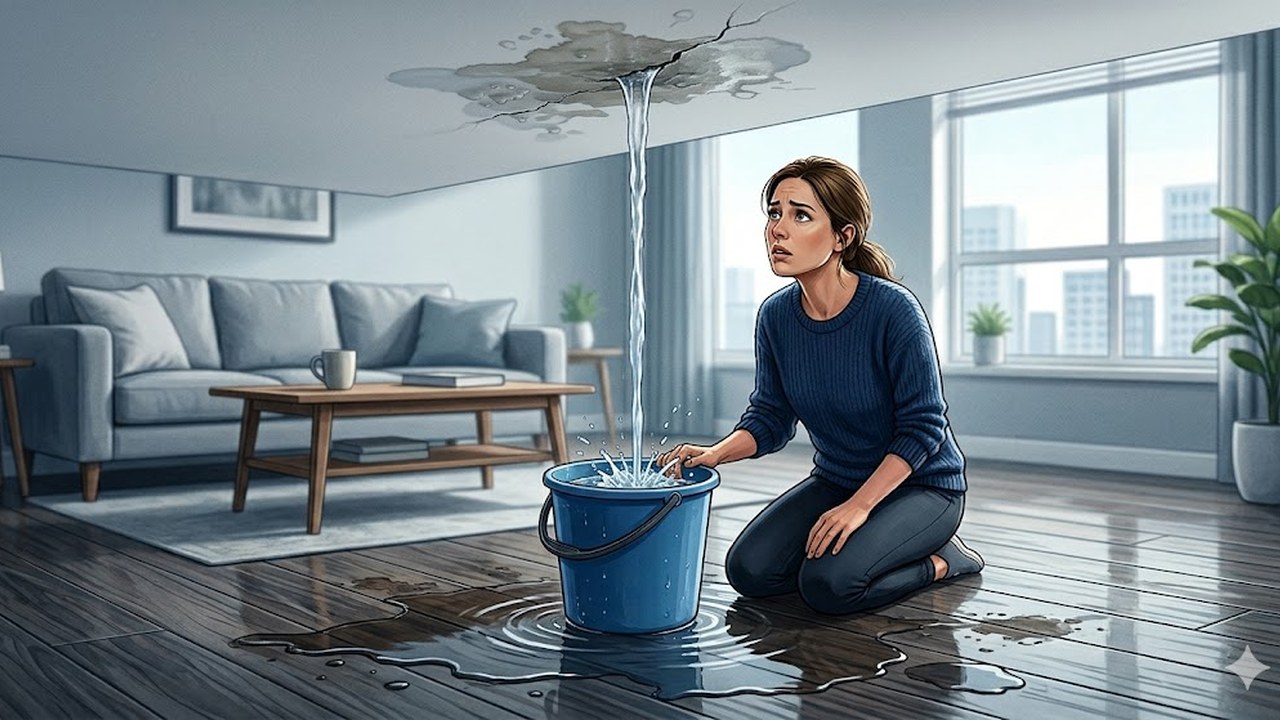
Water damage is the most common insurance claim in Canadian condominiums — and the most confusing. When water leaks from one unit to another, or when a shared pipe bursts within a wall, the question of who pays involves up to four different parties: the unit owner where the leak started, the unit owner whose property was damaged, the condo corporation, and multiple insurance policies.
The rules vary by province, by condo bylaw, and by the specifics of each incident. But the core principles are consistent across Canada — and understanding them before a leak happens can save you thousands in unexpected costs.
2The Three Insurance Policies Involved
When water damage occurs in a condo building, up to three different insurance policies may respond:
1. The Corporation's Master Policy
Covers the building's structure, common elements, and the standard unit definition (the unit's interior as it was when originally built). If a pipe bursts inside a wall and damages multiple units, the master policy covers the structural repair and restoration of standard finishes.
The master policy has a deductible — and this is where things get complicated. Someone has to pay that deductible, and it's often the owner of the unit where the damage originated.
2. The Originating Unit Owner's Insurance
If the leak started in your unit — your dishwasher overflowed, your toilet supply line burst, your bathtub overflowed — you may be responsible for the corporation's deductible. Your personal condo insurance's loss assessment coverage handles this cost, up to your coverage limit.
3. The Affected Unit Owner's Insurance
If your unit was damaged by water from somewhere else (the unit above, common element plumbing), your personal condo insurance covers your belongings and unit improvements that were damaged. You file a claim on your own policy. Your insurer may then pursue the responsible party's insurance for recovery.
3Common Water Damage Scenarios: Who Pays What
Here are the most common condo water damage situations and how responsibility is typically allocated:
Scenario 1: Your Dishwasher Leaks and Damages the Unit Below
| Damage | Who Pays | Which Policy |
|---|---|---|
| Building structure (subfloor, drywall between units) | Corporation | Master policy |
| Corporation's deductible | You (originating unit) | Your loss assessment coverage |
| Your belongings and unit improvements | You | Your condo insurance |
| Neighbour's belongings and improvements | Neighbour | Neighbour's condo insurance |
Scenario 2: A Pipe in the Wall Bursts (Common Element)
| Damage | Who Pays | Which Policy |
|---|---|---|
| Building structure and standard unit finishes | Corporation | Master policy |
| Corporation's deductible | Corporation (reserve fund) | N/A — no unit owner responsible |
| Your belongings and upgrades | You | Your condo insurance |
Scenario 3: The Unit Above You Overflows a Bathtub
| Damage | Who Pays | Which Policy |
|---|---|---|
| Building structure | Corporation | Master policy |
| Corporation's deductible | Upstairs neighbour | Neighbour's loss assessment coverage |
| Your belongings and improvements | You | Your condo insurance |
| If neighbour was negligent | Neighbour's liability may apply | Neighbour's liability coverage |
Scenario 4: Heavy Rain Causes Sewer Backup Through Your Floor Drain
| Damage | Who Pays | Which Policy |
|---|---|---|
| Your unit — belongings and improvements | You | Your sewer backup endorsement |
| Building structure | Corporation | Master policy |
| Deductible responsibility | Varies by bylaws | May be shared or charged to affected owner |
4The Deductible Chargeback: How It Works
The deductible chargeback is the mechanism that causes the most financial surprise for condo owners. Here's how it typically works:
- Water damage occurs. The corporation files a claim on its master policy.
- The master policy covers the repair, minus the deductible.
- The corporation determines which unit the damage originated from.
- Under the corporation's bylaws, the deductible is charged back to the owner of the originating unit.
- The unit owner's personal condo insurance (loss assessment coverage) pays this charge.
The provincial legislation governing this varies:
- Ontario: The Condominium Act, 1998 allows corporations to include deductible chargeback provisions in their bylaws. The standard unit bylaw defines what the corporation covers versus the owner.
- British Columbia: The Strata Property Act allows strata councils to charge the deductible to the owner of the strata lot that caused the damage, unless the owner can prove they were not negligent.
- Alberta: Condominium Property Act provisions allow deductible chargebacks through bylaws.
The amounts can be staggering. Water damage deductibles on master policies have been rising dramatically — $50,000 to $250,000 is increasingly common, especially in older BC buildings with claims histories.
5Preventing Water Damage in Your Condo
Preventing water damage in your condo protects your belongings, your insurance record, and your wallet (through avoiding deductible chargebacks). Here's what every condo owner should do:
High-Impact Prevention Measures
- Install water leak detectors: Place sensors near your dishwasher, washing machine, refrigerator (if it has a water line), toilets, and hot water tank. Smart sensors that alert your phone cost $30 to $80 each and provide early warning that can prevent thousands in damage.
- Replace washing machine hoses: Swap rubber hoses for braided stainless steel hoses ($15 to $30 per pair) and replace them every 5 years. Rubber hose failures are one of the top causes of catastrophic condo water damage.
- Never leave water running unattended: Don't start the dishwasher or washing machine and leave your unit. If a hose disconnects or a drain backs up, you want to catch it immediately.
- Know your shutoff valves: Locate the shutoff valves for your toilet, sinks, washing machine, and dishwasher. In an emergency, shutting off the water supply at the source can stop damage within seconds.
Maintenance Habits
- Check under sinks regularly for signs of moisture, dripping, or corrosion on supply lines and drain connections
- Inspect toilet supply lines and wax seals — a failed wax ring allows water to seep through the floor into the unit below with every flush
- Maintain your caulking: Re-caulk around bathtubs, showers, and sinks every 2 to 3 years. Failed caulking allows water to penetrate walls and floors
- Report building issues promptly: If you notice stains on your ceiling, condensation on pipes, or unusual dampness, report it to your property manager immediately. Early detection prevents small leaks from becoming major claims
6What to Do When Water Damage Happens
If you discover water damage in your condo — whether from your own unit, a neighbour's, or common elements — follow this process:
- Stop the water if possible. Turn off the shutoff valve at the source (toilet, sink, washing machine). If you can't identify the source, call your building's emergency maintenance line immediately.
- Notify your property manager or building superintendent. They need to know immediately — especially if the leak is affecting other units or common areas. They will also initiate the corporation's claims process if needed.
- Document everything. Take photos and video of the water source (if visible), the water itself, and all damaged areas and belongings. Do this before any cleanup begins.
- Contact your insurer. File a claim on your personal condo insurance for your belongings and unit improvements. If you may be responsible for the corporation's deductible, mention this to your insurer as well.
- Mitigate further damage. Mop up standing water, place towels under drips, and move undamaged belongings away from the water. Your policy requires you to take reasonable steps to prevent additional damage.
- Don't throw anything away until your adjuster has inspected and documented the damage.
- Keep all receipts for any expenses related to the damage — emergency cleanup, temporary accommodation, replacement essentials.
7Making Sure You're Properly Insured
Given the complexity of condo water damage responsibility, here's the coverage checklist every condo owner should verify:
- ☐ Loss assessment coverage matches or exceeds the corporation's highest deductible (check the master policy or ask your property manager)
- ☐ Sewer backup endorsement is included — sewer backup is excluded from standard policies and requires its own add-on
- ☐ Contents coverage accurately reflects the replacement value of your belongings
- ☐ Betterments and improvements coverage accounts for any renovations or upgrades beyond the original standard unit
- ☐ Personal liability is set to at least $2 million — water damage that you cause to a neighbour's property could result in a liability claim
- ☐ Additional living expenses coverage is adequate — if water damage makes your unit uninhabitable, you need somewhere to live during restoration
Review these coverages annually, especially when you receive notice that the corporation's master policy has been renewed — deductible levels can change significantly from year to year.
8Final Thoughts
Water damage in condos is inevitable — pipes age, appliances fail, and storms overwhelm drainage systems. The question isn't whether it will happen in your building, but whether you'll be financially prepared when it does.
The key takeaways: check your corporation's master policy deductibles, ensure your loss assessment coverage matches them, add sewer backup coverage, and invest in basic prevention measures like water leak detectors and stainless steel washing machine hoses. The cost of proper coverage and prevention is a tiny fraction of the potential bill if you're caught without it.
Frequently Asked Questions
It depends on where the water originated and what was damaged. Generally: the condo corporation's master policy covers damage to the building structure and common elements; your personal condo insurance covers your belongings and unit improvements; and the owner whose unit caused the leak may be responsible for the corporation's deductible. If a neighbour's negligence caused the damage, their liability insurance may also come into play.
Yes, you may be held responsible for the condo corporation's insurance deductible if the leak originated in your unit — even if it was accidental and not due to negligence. Many condo bylaws include a 'chargeback' provision that allows the corporation to charge the master policy's deductible to the owner of the unit where the damage started. Your condo insurance's loss assessment coverage is designed to cover this cost.
Yes. Your personal condo insurance covers damage to your belongings and unit improvements caused by water from any source — including a leak from a unit above yours. You file a claim on your own policy for your losses. Your insurer may then pursue recovery from the responsible party's insurance through a process called subrogation.
If the water damage originated from common element plumbing (risers, mains, or shared pipes within walls), the corporation's master policy covers the building damage and may cover damage to the standard unit finishes. Your personal condo insurance covers your belongings and any upgrades beyond the standard unit definition. You would not be responsible for the corporation's deductible in this case since the leak didn't originate in your unit.
You can, but it's rarely necessary. If your neighbour's negligence caused the damage (for example, they left a bathtub running), your insurance covers your losses and your insurer handles recovery through subrogation — meaning they pursue the neighbour's insurance company for reimbursement. Direct lawsuits between unit owners are uncommon because the insurance system is designed to handle these disputes.
Get your condo insurance quote in 90 seconds — make sure your water damage coverage is adequate.
Get Your Quote