

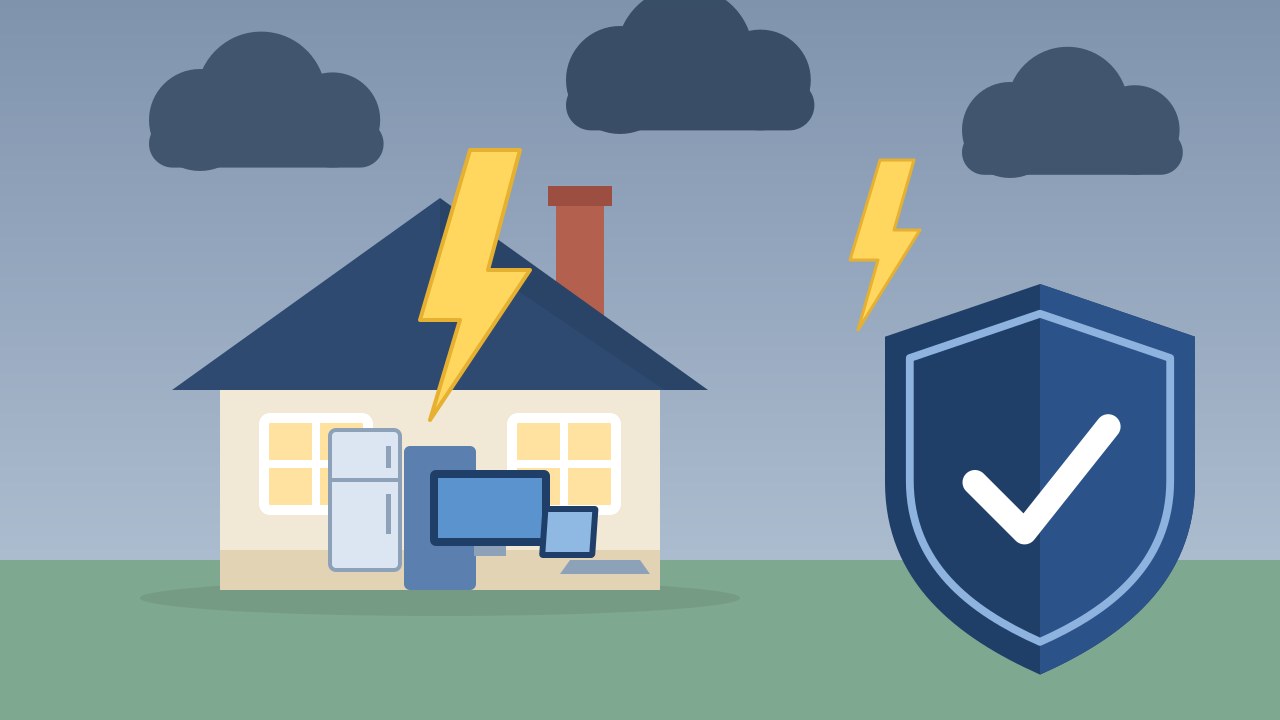
1Does home insurance cover power surge or lightning damage to appliances?
Often, but not always, and the cause matters. Lightning is typically one of the perils a Canadian home policy covers, and damage to your appliances and electronics from a lightning strike or the electrical current it causes is commonly treated as damage to your belongings. A surge that starts on the utility's side, or an appliance that simply fails inside, may be handled differently. Whether it pays, and how much, depends on your insurer and the wording of your policy, so check your policy before you assume.
The Insurance Bureau of Canada (IBC) lists lightning and electrical current among the perils in its overview of types of home insurance coverage. The same page explains that policies cover either named perils (only those specifically stated) or are written more broadly, which is why two neighbours can get different answers for the same storm.
2Lightning versus a power surge: why the cause changes the answer
People use the two words as if they were one event, but a claims adjuster may look at them separately.
- Lightning strike. A named peril on many policies. If lightning hits your home or the lines feeding it and fries a TV, router or furnace control board, the loss is often considered under your personal property or building coverage, subject to your deductible.
- Utility-side surge or voltage spike. This can come from switching on the grid, a downed line or a transformer problem. Some policies treat it as electrical damage; others may limit it. Wording varies.
- Surge from inside your home. A faulty circuit or a failing appliance can damage itself and what is plugged into it.
- Plain breakdown or wear and tear. A motor that burns out with age is generally not a covered loss under a standard home policy.
Ask your broker or insurer in plain terms: "If a power surge damages my fridge, TV and computer, is that covered, and under which part of the policy?" Get the answer in writing if you can.
3What your standard policy may and may not pay for
On most home policies, appliances you own, such as a fridge or washer, and electronics, such as a laptop or TV, sit under personal property (contents) coverage. Built-in items such as a furnace, wiring or a water heater are normally considered part of the building. Which part responds can change the limit and the deductible.
Points to check in your wording
- Is lightning or electrical current named as a covered peril, or is your policy written on a broader basis?
- Special limits. Some policies cap certain categories, such as computers or electronic equipment. Look at the limits page rather than the headline contents amount.
- Valuation. Replacement cost and actual cash value pay differently for a five-year-old TV. Our guide to replacement cost versus actual cash value explains the gap.
- Deductible. One damaged laptop may cost less than your deductible, so a claim might not pay anything.
- Exclusions. Mechanical or electrical breakdown of the appliance itself, gradual deterioration and wear and tear are common exclusions.
If you rent, the same logic applies to the electronics you own, but through a tenant policy, since the landlord's insurance covers the building rather than your belongings.
4Equipment breakdown and similar add-ons: optional, not included
Some Canadian insurers offer an optional add-on, often called equipment breakdown or home systems cover, aimed at sudden electrical or mechanical failure of appliances and home systems. Insurer descriptions, such as the overview on PolicyMe's equipment breakdown page, describe it as an optional extra that is not standard across insurers and typically aimed at sudden and accidental breakdown, not wear and tear.
Because this is an add-on, it is not part of a base policy unless it has been added, and availability, limits, the age of covered items and waiting periods differ by insurer and sometimes by address. If you are weighing it, you may want to compare:
- Which items are covered (appliances, electronics, furnace, heat pump, pool equipment)
- Whether power surge and electrical fault are named causes
- The deductible for this add-on, which may differ from your main one
- Age or value limits on items
- The annual cost compared with a typical repair or the cost of a home warranty
Our overview of home insurance endorsements worth considering puts this next to other add-ons. A service-line endorsement, which relates to buried utility lines on your property, is a separate add-on again; ask your broker whether the insurers you are comparing offer it.
5What utilities say about surge damage: do BC Hydro or Hydro One pay?
Many people assume the electricity company pays when a surge ruins their appliances. The published positions of two large utilities show why that is not a safe assumption. Other utilities have their own rules, so look at your provider's claims page.
BC Hydro
BC Hydro's claims page lists voltage or power irregularities among the situations where it does not provide compensation, and says customers should have adequate protection against them. It encourages customers to review their insurance policy or contact their insurer. It aims to respond to a claim within 30 days, asks for proof such as repair bills or estimates, and asks you to keep damaged items until the claim is settled. It also notes that if you go through your insurer, the insurer may cover replacement value, while BC Hydro pays depreciated or market value.
Hydro One (Ontario)
Hydro One's damage claims page says it is responsible for direct damages resulting from its negligence or wilful misconduct, and states that protecting your electric and electronic devices is your responsibility. It generally does not treat lightning as something it is liable for. It suggests talking to your insurance agent or broker, notes that insurers often pay full replacement value, and says an individual claim typically takes about 60 days to review after a completed claim form is received. It also says your insurer may pursue Hydro One on your behalf and may reimburse your deductible if successful.
The practical point: for most surge claims, your own insurance is the first place to look, and a utility claim is a possible second route only where the utility was at fault.
6How to document power surge or lightning damage
Good records make the difference between a smooth claim and a stalled one. Both utilities above ask for similar evidence, and your insurer will too.
- Stay safe first. Do not touch burnt outlets, scorched wiring or a panel that smells of smoke. If there is any sign of fire, call 911.
- Photograph and film each damaged item, its label showing make, model and serial number, and any visible scorching.
- Note the date and time of the storm or the flicker, and what else happened nearby (neighbours' outages, a loud bang, a tripped breaker).
- Keep the damaged items until the insurer or utility says you can dispose of them, as BC Hydro and Hydro One both ask you to do.
- Gather receipts, manuals and bank statements showing what you paid and when. See our guide to documenting your belongings for home insurance for a room-by-room method.
- Get a repair quote or technician's report that says what failed and why, if you can. An electrician's note on the cause helps.
7Steps to make a power surge or lightning claim
The process follows the usual home claim path. Our full walkthrough is in how to file a home insurance claim; here is the short version for surge damage.
- Contact your broker or insurer promptly. Tell them what happened and ask about any reporting deadline in your policy.
- Prevent further damage. Switch off and unplug affected devices. Keep receipts for any emergency repairs.
- Submit your list and evidence using the steps above.
- Compare the loss to your deductible before deciding whether to claim. A small loss may cost you more in future premiums than it pays; see our article on whether it is worth filing a home insurance claim.
- Cooperate with the adjuster and ask how each item will be valued.
- If a utility may be at fault, tell your insurer; they can advise whether it is worth a separate claim.
8Do surge protectors actually protect against lightning?
They help with everyday voltage spikes, but they cannot be relied on against a direct strike. Maritime Electric's surge protection guidance says that not all power bars are surge protectors, advises looking for a CSA or UL certified device, and notes that most surge protectors would not withstand the surge from a lightning strike, so unplugging electronics during a storm is the safer choice.
Hydro One's electrical storm safety page advises unplugging TVs, radios and other electronics ahead of a thunderstorm, and suggests looking at the joule rating on a surge protector's label, since a higher number means stronger protection.
- Use certified surge protectors for computers, TVs and home offices.
- Unplug sensitive electronics when a thunderstorm is forecast, and when you leave home for a long period.
- If lights dim often or breakers trip repeatedly, have a licensed electrician inspect your wiring.
- Ask your electrician whether whole-home surge protection at the panel makes sense for your house. This article does not give a price or a figure for it, because none is published by the sources above.
Some insurers may ask about protective devices when you apply, but whether any discount exists varies, so ask rather than assume.
9What to ask your broker before the next storm
BlueCouch is a broker, not an insurer, so we cannot say what your specific policy pays. What a broker can do is read your wording with you and compare options across insurers. Useful questions:
- Is damage from lightning and from a utility power surge covered, and under which section?
- Are there special limits for electronics, computers or appliances?
- Is an equipment breakdown add-on available, and what would it add?
- Is my contents settlement replacement cost or actual cash value?
- What is my deductible for this type of loss?
For other kinds of home loss, you can also see our claims information. If you are comparing policies, a quote request starts the conversation, and a broker follows up to confirm details.
Powered by Bluecouch
Wondering what your policy pays after a storm? Compare home insurance options
- A licensed broker compares options across insurers
- Ask about electronics limits and equipment breakdown add-ons
- Start with a quote request; a broker follows up to confirm details
Frequently Asked Questions
It depends on the cause and your policy wording. Lightning is commonly a covered peril, and appliances you own usually fall under personal property coverage, subject to your deductible and limits. Breakdown and wear and tear are generally excluded. Check your policy or ask your broker.
Lightning is listed among the perils in IBC's overview of home insurance coverage, and many Canadian policies cover it. The details, such as limits on electronics, differ by insurer, so confirm in your own wording.
Both say they generally do not compensate for voltage or power irregularities and that customers should protect their own equipment, though a utility may be responsible where it was negligent. Both point customers toward their insurer. Read the utility's claims page for current terms.
It is an optional add-on offered by some insurers for sudden failure of appliances and home systems, which may include electrical causes. It is not part of a base policy unless added, and availability and terms vary by insurer and address.
Not reliably. Utility guidance says most surge protectors would not withstand a direct lightning surge, and that unplugging electronics during a storm is safer. Surge protectors can still help with everyday voltage spikes.
Compare the cost of the damage with your deductible first. If the loss is only slightly above it, a claim may pay little and could affect future premiums. Your broker can help you weigh it.
Request a home insurance quote for your property and ask about electrical damage and equipment breakdown cover — a licensed BlueCouch broker confirms it with you.
Get Your Quote