

1Why So Many Home Insurance Claims Get Denied
When disaster strikes your home — a burst pipe, a kitchen fire, a tree through the roof — your first instinct is to call your insurance company and file a home insurance claim. You've been paying premiums for years. This is exactly what the policy is for.
But then the unexpected happens: your claim is denied. Or it's approved for far less than you expected. According to industry data, a significant percentage of Canadian homeowners who file claims encounter delays, partial denials, or outright rejections — often because of avoidable mistakes made during the filing process.
The truth is, how you file your claim matters just as much as what happened. Insurance companies follow strict procedures, and missing a single step can give them grounds to reduce or deny your payout.
This guide walks you through the insurance claim process in Canada step by step, explains the most common reasons claims are denied, and gives you practical tips to make sure your claim is handled fairly.
2Step 1: Document the Damage Immediately
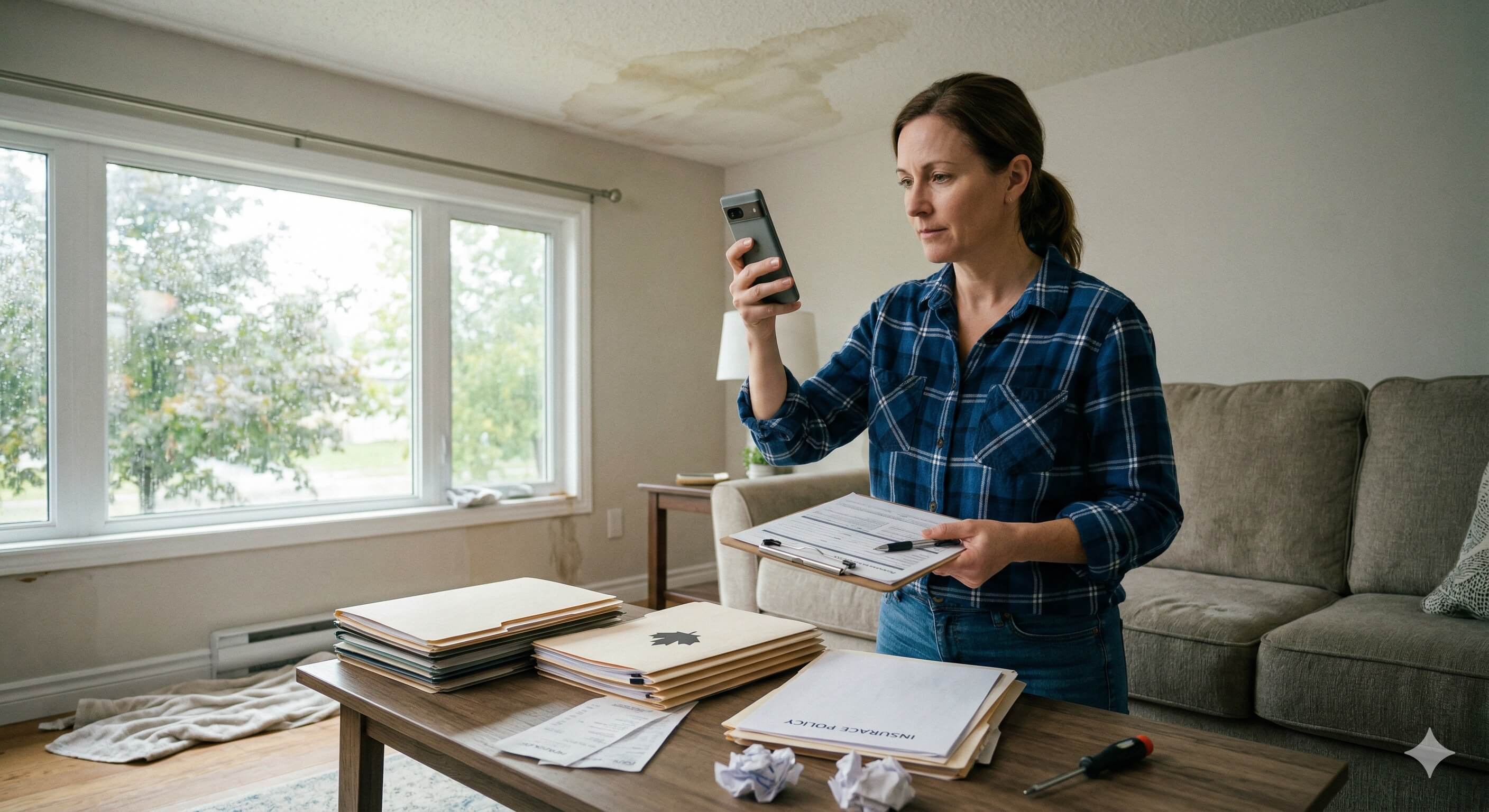
The moment you discover damage to your home, your first priority (after ensuring everyone is safe) is to document everything. This is the single most important step in the insurance claim process, and it's the one most homeowners rush through or skip entirely.
What to Document
- Photographs: Take wide-angle shots of affected rooms and close-up shots of specific damage. Photograph from multiple angles. Include timestamps if your camera supports it.
- Video: Walk through the damaged area with your phone recording. Narrate what you see — describe the damage, the likely cause, and anything that is still actively deteriorating (e.g., water still flowing).
- Written notes: Record the date and time you discovered the damage, what you were doing, the weather conditions, and any immediate steps you took to prevent further damage.
- Receipts and proof of ownership: Gather receipts, warranty documents, or credit card statements for damaged items. If you don't have receipts, check online purchase history or bank statements.
If the damage is extensive — a flooded basement, fire damage — resist the urge to start cleaning up before you've thoroughly documented the scene. Your insurer will rely on this evidence to assess your claim, and insufficient documentation is one of the top reasons claims get denied in Canada.
Pro Tip: Maintain a Home Inventory
If you don't already have one, create a home inventory now — before you ever need to file a claim. Walk through every room and record your belongings with photos, estimated values, and purchase dates. Store the inventory in the cloud or on a device kept outside your home. This single step can save you thousands of dollars and weeks of frustration if you ever need to file an insurance claim in Canada.
3Step 2: Contact Your Insurer as Soon as Possible
After documenting the damage, contact your insurance company immediately. Most Canadian insurers expect notification within 24 to 72 hours of discovering the loss. Some policies have even shorter windows for specific types of damage.
What to Have Ready When You Call
- Your policy number
- The date and time the damage occurred (or when you discovered it)
- A brief description of what happened and the extent of the damage
- Any emergency steps you've already taken (e.g., shutting off the water supply, tarping a damaged roof)
- Contact information for anyone else involved (neighbours, emergency services)
When you speak with your insurer, be honest and factual. Don't exaggerate the damage, speculate about causes, or admit fault for something you're unsure about. Stick to what you know and what you've documented.
Your insurer will assign a claims adjuster to your file. The adjuster's job is to investigate the claim, assess the damage, and determine the payout. Ask for the adjuster's name, direct phone number, and email address so you can follow up efficiently.
Emergency Mitigation
Most home insurance policies require you to take reasonable steps to prevent further damage. This means:
- Shutting off the water if a pipe has burst
- Covering a hole in the roof with a tarp
- Turning off electricity in flooded areas
- Calling a water extraction service if your basement is flooding
Keep receipts for any emergency expenses. These are typically covered under your policy as part of the claim, but only if you can prove you incurred them.
4Step 3: Understand What Your Policy Covers Before Filing
Before you formally submit your claim, take time to review your policy. Understanding what's covered — and what isn't — helps you set realistic expectations and avoid filing a claim that will be denied.
Key Policy Sections to Review
- Named perils vs. comprehensive coverage: Named perils policies only cover events specifically listed (fire, theft, windstorm, etc.). Comprehensive (all-risk) policies cover everything except what's explicitly excluded. Know which type you have.
- Exclusions: Every policy has exclusions — events and types of damage that are not covered. Common exclusions include overland flooding, earthquake, gradual wear and tear, mould, and pest damage.
- Endorsements and riders: Check whether you've added optional coverage for things like sewer backup, overland water, home office equipment, or high-value items.
- Deductible: Know your deductible amount. If the damage is only slightly above your deductible, consider whether filing the claim is worth the potential impact on your premium.
- Coverage limits: Check the maximum payout for your dwelling, personal property, and additional living expenses. Sub-limits may apply to specific categories like jewelry, electronics, or cash.
For a complete breakdown of what standard policies include, see our guide on what home insurance covers in Canada. For common surprises, read about 10 things your home insurance doesn't cover.
5Step 4: Keep Records of All Communication
Once your claim is filed, the process involves multiple conversations, emails, and decisions. Keeping detailed records of every interaction protects you if there are disputes later.
What to Track
- Phone calls: Log the date, time, the person you spoke with (name and title), and a summary of what was discussed. If any promises or commitments were made, note them specifically.
- Emails and letters: Save every email and piece of written correspondence from your insurer. Create a dedicated folder for claim-related documents.
- Adjuster visits: When the claims adjuster visits your property, accompany them during the inspection. Take your own photos during the visit and note any comments the adjuster makes about the damage.
- Timelines: Record when you filed the claim, when the adjuster was assigned, when the inspection occurred, and when you received the settlement offer. If there are unreasonable delays, your records will support a complaint.
If your insurer makes a verbal commitment — for example, confirming that a specific type of damage is covered — follow up with an email summarizing the conversation and asking them to confirm in writing. This creates a paper trail that can be critical if your claim is denied or underpaid later.
6Step 5: Get Repair Estimates but Don't Start Work Yet
After filing your claim and before the adjuster completes their assessment, get independent repair estimates — but do not begin permanent repairs.
Why This Matters
Starting repairs before the adjuster inspects the damage can seriously jeopardize your claim. If the insurer can't verify the extent of the original damage, they may reduce the payout or deny it entirely. The only exception is emergency mitigation — temporary measures to prevent further damage (as discussed in Step 2).
How to Handle Estimates
- Get at least two written estimates from licensed, reputable contractors
- Make sure each estimate includes a detailed breakdown: labour, materials, timelines, and any applicable taxes
- Keep the estimates to compare against the insurer's own assessment
- If the insurer's estimate is significantly lower than your contractor quotes, you have documentation to negotiate
Your insurer may send their own contractor or use a preferred vendor network. You are not obligated to use the insurer's preferred contractor in Canada. You have the right to choose your own, although using the insurer's preferred vendor can sometimes speed up approvals.
Temporary vs. Permanent Repairs
| Type | When to Do It | Example |
|---|---|---|
| Temporary (emergency) | Immediately — before adjuster visit | Tarping a roof, boarding a broken window, water extraction |
| Permanent | After adjuster inspection and approval | Roof replacement, drywall repair, plumbing overhaul |
7Top Reasons Home Insurance Claims Get Denied in Canada
Understanding why claims are denied helps you avoid those pitfalls. Here are the most common reasons Canadian homeowners see their home insurance claim denied:
1. The Damage Isn't Covered by Your Policy
This is the number one reason. Homeowners often assume their policy covers everything. In reality, standard policies exclude overland flooding, sewer backup (unless endorsed), earthquake, gradual deterioration, and intentional damage. Always know your exclusions before you file.
2. Failure to Maintain the Property
Insurance covers sudden and accidental damage — not damage caused by neglect. If your roof leaks because you haven't replaced missing shingles for years, or your pipes burst because you failed to winterize the property, the insurer can argue the damage was preventable and deny the claim.
3. Late Reporting
Waiting too long to report damage can void your claim. Most policies require prompt notification. Delayed reporting raises suspicion and makes it harder for the adjuster to assess the original damage accurately.
4. Insufficient Documentation
Without photos, videos, receipts, and records, the insurer has no way to verify the extent of the loss. Claims with poor documentation are far more likely to be underpaid or denied.
5. Misrepresentation on the Application
If you provided inaccurate information when you purchased the policy — understating the age of your roof, failing to disclose a home business, or not mentioning a previous claim — the insurer can void the policy entirely.
6. Starting Repairs Before Inspection
Completing permanent repairs before the claims adjuster inspects the damage removes the evidence the insurer needs to validate your claim. This is one of the most common and most avoidable mistakes.
7. Policy Has Lapsed
If you missed a premium payment and your policy lapsed before the damage occurred, you have no coverage. Set up automatic payments to avoid this scenario.
8Tips to Strengthen Your Home Insurance Claim
Beyond following the steps above, here are additional strategies to give your home insurance claim the best chance of being approved for the full amount:
- Keep your home inventory updated. Review and update your home inventory annually. Add new purchases, remove items you've sold or discarded, and update values. An up-to-date inventory dramatically simplifies the claims process.
- Understand replacement cost vs. actual cash value. Replacement cost coverage pays to replace your damaged property with new items of similar quality. Actual cash value coverage deducts depreciation, meaning you'll receive less. Make sure you know which type your policy provides and consider upgrading if needed.
- Don't accept the first settlement offer blindly. The insurer's initial offer is often negotiable. Compare it against your own contractor estimates and documentation. If the offer seems low, push back with evidence.
- Consider hiring a public adjuster for large claims. A public adjuster works on your behalf (not the insurer's) to assess damage and negotiate settlements. They typically charge 5-10% of the settlement amount but can significantly increase your payout on complex or high-value claims.
- File a complaint if you're treated unfairly. Every Canadian province has an insurance regulator, and the General Insurance OmbudService (GIO) handles disputes between consumers and insurers. Don't hesitate to escalate if your claim is being handled improperly.
- Review your policy annually. Life changes — renovations, major purchases, a new home office — can affect your coverage needs. Review your policy every year to make sure you're not underinsured when it matters most.
9Final Thoughts
Filing a home insurance claim doesn't have to be overwhelming, and it certainly doesn't have to end in denial. The homeowners who get the best outcomes are the ones who prepare before disaster strikes, document thoroughly when it does, and follow the process carefully from start to finish.
To recap the key steps to file an insurance claim in Canada successfully:
- Document everything immediately — photos, video, written notes, receipts
- Contact your insurer within 24 hours
- Review your policy to understand coverage and exclusions
- Keep meticulous records of all communication
- Get independent repair estimates but wait for adjuster approval before starting permanent work
The right preparation and the right coverage make all the difference. If you're unsure whether your current policy has the protection you need, now is the time to review it — not after a loss has already occurred.
Frequently Asked Questions
Most Canadian home insurance policies require you to report a claim as soon as reasonably possible after the damage occurs. While there is no universal legal deadline, many insurers expect notification within 24 to 72 hours. Delaying your report can give the insurer grounds to reduce or deny your claim, especially if the delay leads to additional damage that could have been prevented.
The most common reason for claim denial in Canada is that the damage falls outside the scope of the policy. Many homeowners assume they are covered for events like overland flooding, sewer backup, or gradual water damage, only to discover these perils require separate endorsements. Other frequent reasons include failure to maintain the property, filing a claim after the reporting deadline, and misrepresenting information on the original application.
It can. Filing a claim, especially for an at-fault loss, may result in a premium increase at renewal. The amount depends on the insurer, the type and size of the claim, and your overall claims history. Some insurers offer claims forgiveness for your first claim. For very small claims close to your deductible amount, it may be worth considering whether filing is financially worthwhile in the long term.
Yes. In Canada, you have the right to choose your own contractor for repairs. Your insurer may recommend preferred vendors, and using them can sometimes speed up the process, but you are not obligated to use them. Regardless of who you choose, get at least two written estimates and keep all invoices and receipts for reimbursement.
If your claim is denied, start by requesting a written explanation from your insurer detailing the specific reason for the denial. Review your policy carefully to determine whether the denial is justified. If you believe the denial is incorrect, you can escalate the dispute to your insurer's internal complaints department, contact your provincial insurance regulator, or file a complaint with the General Insurance OmbudService (GIO). You may also want to consult a public adjuster or insurance lawyer for complex disputes.
Protect your home with the right coverage. Get a quote in 90 seconds.
Get Your Quote