

1Backyard Fun Comes with Serious Insurance Considerations
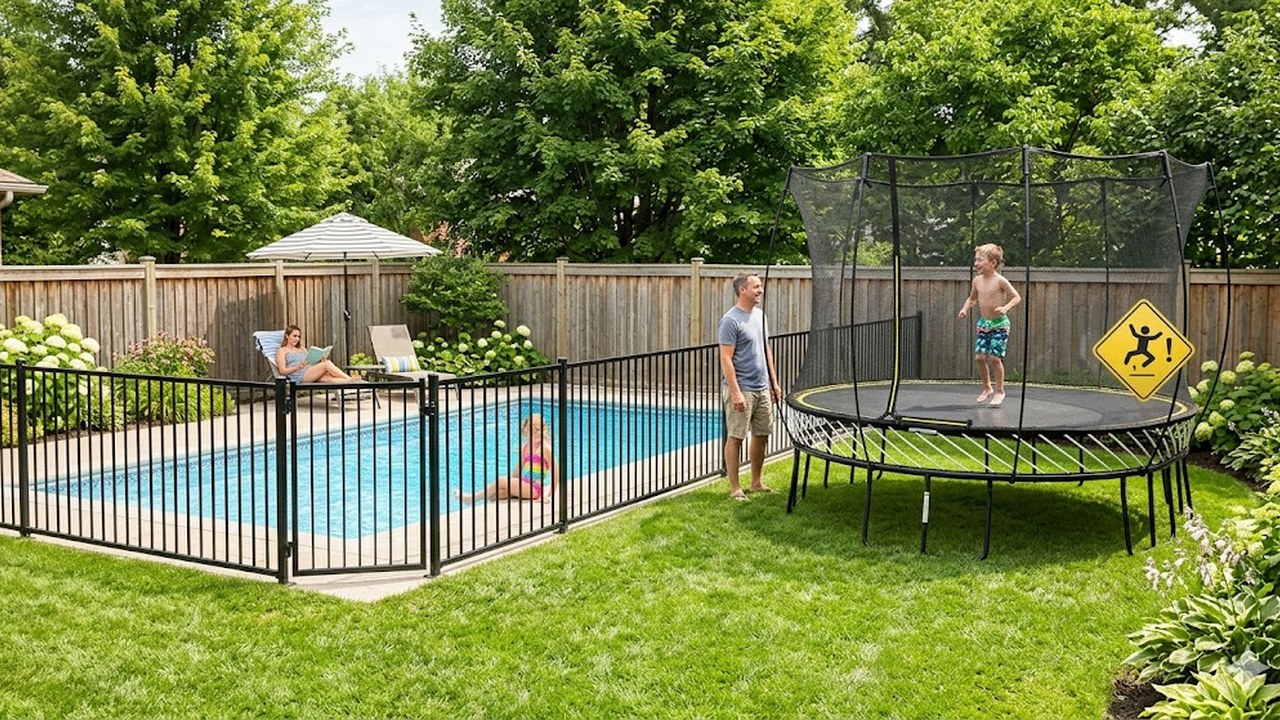
A swimming pool or trampoline can transform your backyard into the neighbourhood's favourite destination. But from an insurance perspective, these features are among the highest-risk items you can add to your property.
In Canada, over 1,200 children are treated in emergency departments for trampoline-related injuries each year, according to data from the Canadian Hospitals Injury Reporting and Prevention Program (CHIRPP). Drowning remains a leading cause of unintentional death among children under 14, with residential pools accounting for a significant portion of incidents.
These statistics directly influence how insurers assess your property. Adding a pool or trampoline affects your premiums, your coverage terms, and in some cases, your ability to get insured at all.
This guide covers everything Canadian homeowners need to know about pools, trampolines, and home insurance — from disclosure obligations to fencing requirements to what happens if someone is injured.
2Understanding the 'Attractive Nuisance' Doctrine in Canada
Before diving into the specifics, it's important to understand a legal concept that underpins much of this discussion: the attractive nuisance doctrine.
In Canadian law, an attractive nuisance is a condition on your property that is both dangerous and likely to attract children who may not understand the risk. Pools and trampolines are classic examples.
Under provincial Occupiers' Liability Acts, property owners in Canada owe a duty of care to people who enter their property — and this duty extends, in varying degrees, even to trespassers. The duty is heightened when the hazard is one that could attract children.
What This Means for Homeowners
- You can be held liable if a neighbourhood child enters your property without permission and is injured by your pool or trampoline
- The liability standard is based on whether you took reasonable precautions to prevent access and injury
- Fencing, locks, enclosures, and supervision are all considered part of your duty of care
- The fact that the child was trespassing does not automatically shield you from liability
This legal reality is why insurers treat pools and trampolines as significant liability risks — and why they impose conditions around safety measures.
3Swimming Pools and Home Insurance in Canada
Whether you have an in-ground pool, an above-ground pool, or even a large inflatable pool, your home insurance is affected.
Premium Impact
| Pool Type | Typical Premium Increase | Notes |
|---|---|---|
| In-ground pool | 5% – 15% | Highest risk; permanent structure |
| Above-ground pool (4+ feet deep) | 3% – 10% | Less risk due to elevated entry |
| Hot tub / spa | 2% – 5% | Smaller but still a liability concern |
| Large inflatable pool (deep enough to submerge) | Varies | Some insurers treat these as temporary; others don't |
Fencing and Safety Requirements
Most Canadian municipalities have bylaws requiring pool fencing. Even where local bylaws are less strict, insurers typically require the following as conditions of coverage:
- Four-sided fencing at least 1.2 metres (4 feet) high that completely encloses the pool area — not just the property perimeter
- Self-closing, self-latching gate with the latch on the pool side, out of reach of small children
- No climbable features near the fence (chairs, tables, garden structures)
- Pool covers — while not a substitute for fencing, an approved safety cover can reduce risk and may earn a small discount
- Pool alarms — surface or subsurface alarms that detect unauthorized entry into the water
What Your Pool Insurance Covers
- Liability: If someone is injured in or around your pool, your personal liability coverage pays for medical expenses, legal costs, and damages
- Property damage: Your dwelling coverage can cover damage to the pool structure from covered perils (e.g., a tree falling on the pool deck during a storm)
- Equipment breakdown: Some policies cover pool equipment (pumps, heaters, filters) under a separate equipment breakdown endorsement
What's Typically NOT Covered
- Liner replacement due to wear and tear or chemical damage
- Cosmetic damage like staining, discolouration, or surface cracking from normal use
- Damage from improper winterization — if you fail to close your pool properly and freeze damage results, the claim may be denied
- Injury when safety requirements aren't met — if you lack the required fencing and someone drowns, your insurer may deny the liability claim
4Trampolines and Home Insurance in Canada
Trampolines are one of the most polarizing items in home insurance underwriting. Some insurers accept them with conditions; others exclude them entirely.
The Injury Statistics
The numbers explain why insurers are cautious:
- Over 1,200 Canadian children visit emergency departments annually for trampoline injuries (CHIRPP data)
- The most common injuries are fractures, sprains, and head/neck injuries
- 75% of injuries occur when multiple people are on the trampoline simultaneously
- Children under 6 are at the highest risk of severe injury due to their smaller size relative to larger jumpers
- The Canadian Paediatric Society advises against recreational trampoline use for children
Insurer Responses to Trampolines
| Insurer Approach | What It Means | How Common |
|---|---|---|
| Accept with conditions | Coverage provided if safety net, padding, and supervision rules are met | Most common |
| Exclude trampoline liability | Home policy continues but injuries from the trampoline are not covered | Moderately common |
| Decline or non-renew | Insurer refuses to provide home insurance if a trampoline is present | Less common but does happen |
Safety Conditions Insurers Typically Require
- Safety enclosure net: A net surrounding the jumping surface to prevent falls off the edge — this is the single most important safety feature
- Spring padding: Thick foam padding covering all springs and the frame
- Ground-level installation: Some insurers prefer in-ground trampolines that sit at ground level, eliminating fall height
- No ladder: Removing the ladder when the trampoline is not in supervised use prevents unsupervised access by small children
- Single jumper rule: Some policies require that only one person uses the trampoline at a time
- Adult supervision: Active supervision by an adult when children are jumping
5Disclosure Obligations: What You Must Tell Your Insurer
Disclosure is non-negotiable. Failing to inform your insurer about a pool or trampoline is one of the most common — and most costly — mistakes Canadian homeowners make.
When You Must Disclose
- At application: When you first apply for home insurance, the application typically asks about pools, hot tubs, trampolines, and other recreational features
- When you add one: If you install a pool or buy a trampoline mid-policy, you're contractually required to notify your insurer — usually within 30 days
- At renewal: When your policy renews, update any changes to your property
Consequences of Non-Disclosure
If you fail to disclose and an injury occurs:
- Your liability claim will almost certainly be denied
- Your policy may be voided retroactively for material misrepresentation
- You become personally liable for all medical expenses, legal costs, and damages — which can easily reach hundreds of thousands of dollars for a serious injury
- The non-disclosure goes on your insurance record, making it harder and more expensive to get coverage in the future
Consider this scenario: a neighbour's child breaks their arm on your undisclosed trampoline. The medical bills and potential lawsuit could reach $50,000 to $200,000. Without valid insurance coverage, that comes entirely out of your pocket. The premium increase from disclosing the trampoline — typically a few hundred dollars per year — is trivial by comparison.
6What Happens If Someone Is Injured on Your Property
Understanding the process after an injury helps you respond correctly and protect your interests.
Immediate Steps
- Ensure the injured person receives medical attention. Call 911 if the injury is serious.
- Document the scene. Take photos of the pool or trampoline area, the safety equipment in place, and the conditions at the time of the incident.
- Do not admit fault or make statements about liability. Be compassionate but stick to facts.
- Contact your insurance company immediately. Report the incident even if the injured person says they won't pursue a claim — they may change their mind later.
- Keep records of all communications, medical reports, and expenses related to the incident.
How the Claims Process Works
Once you report a potential liability claim:
- Your insurer assigns a claims adjuster to investigate the incident
- The adjuster will assess whether the injury falls under your personal liability coverage
- If the injured person files a lawsuit, your insurer provides legal defence — this is a significant benefit, as defence costs alone can run $20,000 to $100,000+
- Your insurer will attempt to negotiate a settlement with the claimant
- If the case goes to court, any judgment up to your policy limit is covered by the insurer
When Coverage Might Be Denied
Your liability claim could be denied if:
- You didn't disclose the pool or trampoline on your policy
- You failed to meet safety requirements stipulated in your policy (e.g., no fence around the pool)
- The injury resulted from intentional or reckless conduct on your part
- You were operating a business (e.g., charging for pool access or trampoline parties) without commercial coverage
7How to Reduce Your Risk and Keep Premiums Down
You don't have to give up backyard fun to manage your insurance costs. These strategies help reduce both your real-world risk and your premiums:
For Pool Owners
- Install four-sided fencing with a self-closing, self-latching gate — this is the single most effective drowning prevention measure
- Use a safety pool cover rated to support the weight of a child when the pool isn't in use
- Install pool alarms on gates, doors leading to the pool, and/or in the water itself
- Take a lifesaving or first aid course — some insurers offer discounts for certified pool owners
- Post visible pool rules — no running, no diving in shallow areas, no swimming alone
- Remove ladders from above-ground pools when not in use
- Keep rescue equipment poolside — a reaching pole, ring buoy, and first aid kit
For Trampoline Owners
- Install a safety enclosure net — non-negotiable for insurance and safety
- Place the trampoline on level ground, away from fences, trees, and structures
- Use thick spring padding that covers all springs and the frame
- Enforce a one-jumper-at-a-time rule — the majority of injuries happen with multiple jumpers
- Prohibit flips and somersaults unless under professional supervision
- Remove the ladder when children aren't supervised
- Inspect regularly for torn nets, worn padding, and rusted springs
General Tips
- Increase your liability coverage to at least $2 million — the cost increase is modest relative to the protection
- Consider an umbrella policy for an additional $1–$5 million in liability coverage
- Bundle your home and auto insurance for potential discounts that offset the pool/trampoline surcharge
- Maintain detailed records of all safety measures, inspections, and maintenance — this documentation protects you in a liability dispute
8Other Backyard Features That Affect Your Home Insurance
Pools and trampolines aren't the only backyard items that insurers care about. Here are other features that may impact your coverage or premiums:
| Feature | Insurance Impact | Typical Requirement |
|---|---|---|
| Hot tub / spa | Moderate premium increase | Locking cover; fencing if accessible |
| Playground equipment (swing set, climbing frame) | Minimal impact | Proper installation; impact-absorbing surface |
| Fire pit / outdoor fireplace | Minimal to moderate | Safe distance from structures; screen or spark guard |
| Skateboard ramp / half-pipe | May be excluded | Varies by insurer |
| Zipline | May be excluded | Rarely accepted; check with insurer |
| Tree house | Minimal to moderate | Structural integrity; limited height |
| Basketball hoop (near street) | Minimal | Proper installation; not blocking traffic |
The common thread is liability risk. Any feature that could result in injury to a visitor — especially a child — will draw insurer scrutiny. When in doubt, disclose it and ask your insurer how it affects your policy.
See also: EV Home Charging Stations: Do You Need Extra Insurance Coverage?
9Final Thoughts: Enjoy Your Backyard Without the Risk
Pools and trampolines make your home more enjoyable — but they also come with real liability exposure. The key to managing that exposure in Canada is straightforward:
- Disclose everything to your insurer — pools, trampolines, hot tubs, and any other recreational features
- Meet or exceed all safety requirements — fencing, nets, covers, and supervision
- Carry adequate liability coverage — at least $2 million, with an umbrella policy for additional protection
- Understand your legal obligations — as a property owner in Canada, you have a duty of care even toward trespassers in certain circumstances
- Document your safety measures — photos, maintenance records, and inspection logs protect you if a claim is filed
The premium increase from a pool or trampoline is a fraction of what you'd pay out of pocket for a single serious injury claim. Proper insurance isn't just a financial safety net — it's a responsibility that comes with owning these features.
Frequently Asked Questions
It depends on the insurer. Some Canadian home insurance companies will cover trampolines under your standard liability coverage, often with conditions like requiring a safety enclosure net. Others exclude trampoline-related liability entirely, and a few may decline to insure homes with trampolines. Always disclose your trampoline and check your policy.
An in-ground pool typically increases home insurance premiums by 5% to 15% in Canada, depending on the insurer, the type of pool, and whether it has safety features like fencing, a locking gate, and a pool cover. Above-ground pools generally have a smaller impact on premiums. The exact amount varies, so it's important to get quotes.
Potentially, yes. Under Canadian law, property owners have a duty of care even toward trespassers in some circumstances — particularly when the hazard is an 'attractive nuisance' that could attract children. If a child trespasses and drowns in an unfenced pool, the homeowner could face significant civil liability. Proper fencing with a self-closing, self-latching gate is both a legal requirement in most municipalities and a critical risk mitigation measure.
Yes. Most home insurance policies require you to disclose features that increase your liability risk, including trampolines, pools, hot tubs, and other recreational structures. Failure to disclose can result in a denied claim or policy cancellation if an injury occurs.
Yes. An umbrella policy provides additional liability coverage beyond what your home insurance offers — typically in increments of $1 million. This is worth considering for homeowners with pools or trampolines, as injury claims from these features can easily exceed standard policy limits of $1–$2 million.
Get a home insurance quote online for a property in BC and mention your pool or trampoline — a licensed BlueCouch broker confirms it with you.
Get Your Quote