
1What Happens When Your Home Becomes Uninhabitable?
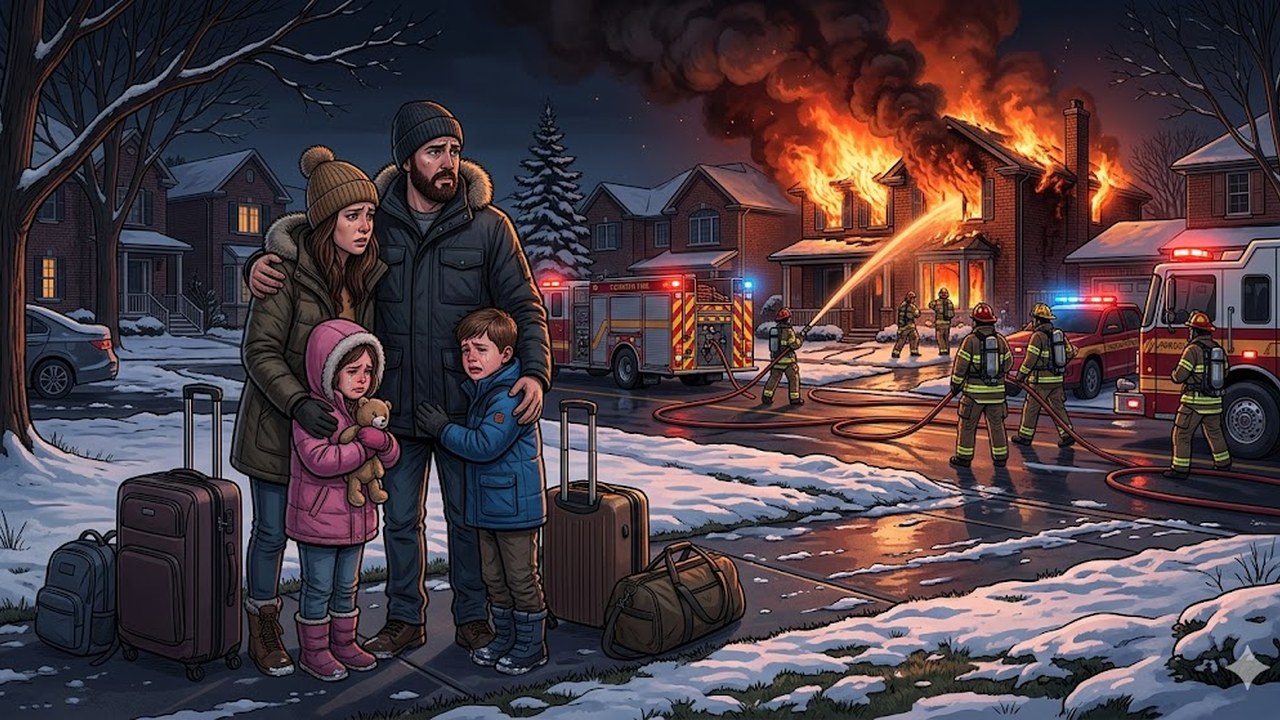
A kitchen fire. A burst pipe that floods your entire main floor. A tree crashing through your roof during a storm. These disasters don't just damage your home — they can make it impossible to live in for weeks, months, or even longer.
When a covered peril forces you out of your home, where do you go? How do you pay for a hotel, meals, and all the other costs of living somewhere else while your home is repaired? That's where additional living expenses (ALE) coverage comes in.
Also known as loss of use coverage, ALE is a standard component of virtually every Canadian home insurance policy. It's designed to cover the extra costs you incur when you can't live at home due to a covered loss — but it comes with limits, rules, and conditions that many homeowners don't understand until they need to file a claim.
In this guide, we'll break down exactly what ALE covers, what triggers it, how much coverage you have, and how to navigate a claim — including real cost examples for expensive Canadian rental markets like Toronto and Vancouver.
2What Additional Living Expenses Coverage Pays For
ALE coverage is designed to bridge the gap between your normal living expenses and the increased costs of living elsewhere. Here's a comprehensive breakdown of what's typically covered:
Temporary accommodation
This is usually the largest ALE expense. Covered options include:
- Hotel or motel stays — for short-term displacement (days to weeks)
- Short-term furnished rentals — apartments, condos, or houses rented by the month
- Extended-stay hotels — often more economical than standard hotels for longer stays
- Staying with family or friends — some insurers will provide a modest per-diem reimbursement if you stay with someone else rather than renting
Increased food costs
ALE covers the difference between your normal food expenses and your increased costs while displaced. If you normally spend $800 per month on groceries and now spend $1,500 on restaurant meals because you have no kitchen, ALE would cover the $700 difference. Key points:
- Restaurant meals are covered to the extent they exceed your normal food budget
- Groceries at a temporary location are covered if they exceed your normal spending
- You cannot claim your entire food budget — only the increase above normal
Storage costs
- Fees for a storage unit to hold belongings removed from your damaged home
- Moving costs to transport belongings to and from storage
- Climate-controlled storage for sensitive items (if reasonable)
Pet boarding and care
- Kennel or boarding facility fees if your temporary accommodation doesn't accept pets
- Additional pet daycare costs
- Reasonable veterinary boarding for exotic or special-needs pets
Additional transportation
- Extra commuting costs if your temporary location is farther from work or school
- Additional gas, transit fares, or parking fees above your normal commuting costs
Laundry and cleaning
- Laundromat or dry cleaning costs if your temporary accommodation lacks laundry facilities
- These costs are covered to the extent they exceed what you'd normally spend
Other reasonable expenses
- Mail forwarding fees
- Utility connection and disconnection fees at temporary accommodations
- Internet and phone setup at a temporary location (above your normal costs)
- Furniture rental if your temporary accommodation is unfurnished
3What Triggers ALE Coverage: Covered Perils and Situations
ALE coverage only activates when your home is made uninhabitable by a covered peril under your policy. The type of peril that qualifies depends on whether you have a named perils, comprehensive, or all-risk policy.
Common triggers for ALE
| Covered Peril | Example Scenario | Typical Displacement |
|---|---|---|
| Fire | Kitchen fire spreads through main floor | 3 - 12 months |
| Windstorm / tornado | Roof torn off, home exposed to elements | 2 - 6 months |
| Burst pipes / water damage | Frozen pipe floods multiple rooms | 1 - 4 months |
| Lightning strike | Electrical fire from lightning | 2 - 8 months |
| Falling objects | Tree crashes through roof and upper floor | 2 - 6 months |
| Sewer backup (with endorsement) | Sewage floods basement living area | 1 - 3 months |
| Vandalism / break-in | Extensive property damage, unsafe to occupy | 1 - 4 weeks |
Voluntary vs mandatory evacuation
This is an important distinction that catches many homeowners off guard:
- Mandatory evacuation (government order): Most policies cover ALE when a government authority orders you to evacuate, even if your home hasn't been physically damaged — for example, during a wildfire evacuation order. This is often called "civil authority" or "prohibited access" coverage.
- Voluntary evacuation: If you choose to leave your home out of caution (e.g., a wildfire is 10 km away but no evacuation order has been issued), your ALE coverage may not apply. Some insurers cover voluntary evacuations; others require an official order.
- Precautionary displacement: If your home is habitable but uncomfortable (e.g., your furnace breaks in winter but the house is technically liveable), ALE typically does not apply unless the home is genuinely uninhabitable.
What does "uninhabitable" mean?
There's no universal definition, but generally your home is considered uninhabitable if:
- It poses a safety hazard (structural damage, fire damage, toxic conditions)
- Essential systems are non-functional (no heat in winter, no running water, no electricity)
- A government authority has declared it unsafe to occupy
- Repair work makes the home impossible to live in (e.g., complete gutting of contaminated materials)
4ALE Coverage Limits and Time Limits
ALE coverage is not unlimited. Your policy sets both a dollar limit and a time limit on how much and how long you can claim.
Dollar limits
ALE coverage is typically expressed as a percentage of your dwelling coverage:
| Dwelling Coverage | ALE at 20% | ALE at 30% |
|---|---|---|
| $300,000 | $60,000 | $90,000 |
| $400,000 | $80,000 | $120,000 |
| $500,000 | $100,000 | $150,000 |
| $600,000 | $120,000 | $180,000 |
| $800,000 | $160,000 | $240,000 |
Time limits
Most policies also cap ALE at a specific duration:
- 12 months — common on standard policies
- 24 months — available on comprehensive or premium policies
- Until repairs are complete — some policies tie ALE to the reasonable repair timeline rather than a fixed period
You hit whichever limit comes first. If your ALE limit is $100,000 and your time limit is 12 months, coverage ends at 12 months even if you haven't used the full $100,000 — or at $100,000 even if it's only been 6 months.
Is your ALE coverage enough?
This depends heavily on where you live. In expensive rental markets, ALE can be depleted much faster than you'd expect. Consider this scenario: a family displaced by a house fire in Toronto needs temporary housing for 8 months while their home is rebuilt.
5Real ALE Cost Examples: Toronto, Vancouver, and Beyond
The cost of temporary displacement varies dramatically across Canada. Here's what a family of four might actually spend during an 8-month displacement in some of Canada's most expensive rental markets:
Toronto example: 8 months displacement
| Expense Category | Monthly Cost | 8-Month Total |
|---|---|---|
| 3-bedroom furnished rental | $4,200 | $33,600 |
| Increased food costs (above normal) | $600 | $4,800 |
| Storage unit (10x15) | $350 | $2,800 |
| Pet boarding (first month, dog) | $1,200 | $1,200 |
| Additional commuting costs | $250 | $2,000 |
| Laundry (no in-unit) | $80 | $640 |
| Moving costs (2 moves) | - | $2,400 |
| Total | - | $47,440 |
Vancouver example: 8 months displacement
| Expense Category | Monthly Cost | 8-Month Total |
|---|---|---|
| 3-bedroom furnished rental | $4,500 | $36,000 |
| Increased food costs (above normal) | $650 | $5,200 |
| Storage unit (10x15) | $380 | $3,040 |
| Pet boarding (first month, cat) | $600 | $600 |
| Additional commuting costs | $300 | $2,400 |
| Laundry | $80 | $640 |
| Moving costs (2 moves) | - | $2,600 |
| Total | - | $50,480 |
Smaller city example (e.g., Halifax, Winnipeg): 8 months displacement
| Expense Category | Monthly Cost | 8-Month Total |
|---|---|---|
| 3-bedroom furnished rental | $2,500 | $20,000 |
| Increased food costs (above normal) | $450 | $3,600 |
| Storage unit (10x15) | $200 | $1,600 |
| Pet boarding (first month) | $800 | $800 |
| Additional commuting costs | $150 | $1,200 |
| Laundry | $60 | $480 |
| Moving costs (2 moves) | - | $1,600 |
| Total | - | $29,280 |
These examples illustrate an important point: in expensive markets like Toronto and Vancouver, even a $100,000 ALE limit might not be sufficient if your displacement lasts a full year or longer. Always evaluate your ALE coverage against the actual cost of temporary housing in your area.
6What 'Reasonable' Means and How Insurers Evaluate ALE Claims
One of the most common sources of friction in ALE claims is the word "reasonable." Your policy requires that your temporary living expenses be reasonable and comparable to your normal standard of living. But what does that actually mean?
The standard of living principle
The general rule is that your insurer will cover expenses that maintain your pre-loss standard of living — no better, no worse. This means:
- If you lived in a 3-bedroom house, a 3-bedroom rental is reasonable. A 5-bedroom luxury home is not.
- If you lived in a family neighbourhood, a similar neighbourhood rental is reasonable. A downtown penthouse is not (unless that's where you lived before).
- If you normally cooked at home, restaurant meals are covered — but at a reasonable level, not gourmet dining nightly.
Examples of reasonable vs unreasonable expenses
| Expense | Reasonable | Likely Denied |
|---|---|---|
| Accommodation | Mid-range hotel or comparable rental | 5-star luxury hotel or resort |
| Meals | Moderate restaurant + takeout meals | Fine dining every evening |
| Transportation | Bus/transit or mileage at new commute distance | Daily Uber rides or rental car upgrade |
| Pet care | Standard boarding facility or pet-friendly rental | Premium pet spa or luxury pet resort |
| Storage | Standard unit in a nearby facility | Premium climate-controlled for non-sensitive items |
Keeping receipts and documentation
Meticulous record-keeping is essential for a smooth ALE claim. You should:
- Keep every receipt — hotels, meals, groceries, gas, storage, laundry, pet boarding
- Maintain a log of daily expenses with dates and descriptions
- Document your normal expenses — credit card and bank statements from before the loss help establish your baseline
- Photograph your temporary accommodation to show it's comparable to your normal home
- Communicate with your adjuster regularly — get pre-approval for large expenses whenever possible
Insurers are more likely to challenge expenses that seem excessive or aren't well documented. The better your records, the smoother your claim will be.
7Tips for Maximizing Your ALE Claim
If you ever need to use your ALE coverage, these strategies will help you get the most from your policy while keeping the claims process smooth.
1. Understand your coverage before you need it
Review your ALE limit and time limit now — not during a crisis. Know your dollar cap, your time limit, and whether your insurer requires pre-approval for certain expenses.
2. Act quickly but thoughtfully
In the immediate aftermath of a disaster, a hotel is fine for the first few days. But transition to a longer-term rental as soon as possible — hotels are far more expensive and will deplete your ALE coverage much faster.
- Days 1-7: Hotel is reasonable while you assess the situation
- Weeks 2-4: Extended-stay hotel or begin searching for a furnished rental
- Month 2+: Furnished rental apartment or house for the duration of repairs
3. Communicate with your adjuster
Let your claims adjuster know about significant expenses before you incur them. While most reasonable expenses will be approved after the fact, getting pre-approval avoids disputes and delays.
4. Look for pet-friendly rentals
Pet boarding costs add up quickly — $30 to $60 per day for dogs and $15 to $30 per day for cats. A pet-friendly rental eliminates this ongoing expense and keeps your pet with your family. The slightly higher rent for a pet-friendly unit is almost always cheaper than boarding.
5. Consider whether your ALE limit is adequate
If you live in an expensive rental market, your standard ALE limit may be insufficient. Some insurers offer increased ALE limits as an endorsement for an additional premium. If your dwelling is insured for $400,000 and your ALE is 20% ($80,000), consider whether 8 to 12 months of temporary housing in your area would exceed that amount.
6. Don't forget "saved" expenses
While you're displaced, some of your normal expenses stop — mortgage is still due, but utilities at your damaged home may cease. Your insurer calculates ALE as the net increase in your living expenses. If your temporary rental costs $3,000/month and your normal utility costs of $300/month are "saved," the ALE-covered amount is the $3,000 minus the $300 you're saving — a net increase of $2,700 for accommodation.
8The Bottom Line: ALE Coverage Is Your Financial Safety Net During a Crisis
Additional living expenses coverage is the component of your home insurance that you hope you'll never need — but if disaster strikes, it's the difference between a manageable disruption and a financial catastrophe on top of an already stressful situation.
The average Canadian homeowner pays relatively little attention to their ALE limit, but it deserves careful review. In expensive markets like Toronto and Vancouver, where furnished 3-bedroom rentals can easily exceed $4,000 per month, an insufficient ALE limit could leave you paying thousands of dollars out of pocket during what is already one of the most difficult periods of your life.
Take a few minutes to check your policy's ALE coverage. Look at both the dollar limit and the time limit. Compare those numbers to the actual cost of temporary housing in your area. If there's a gap, talk to your insurer or broker about increasing your ALE coverage — the cost of the upgrade is modest compared to the protection it provides.
And remember: if you ever do need to use your ALE coverage, keep every receipt, communicate with your adjuster, and focus on finding reasonable long-term accommodation as quickly as possible. Your future self will thank you for being prepared.
Frequently Asked Questions
Additional living expenses (ALE), also called loss of use coverage, is a component of your home insurance policy that pays for the extra costs you incur when a covered peril — such as fire, severe water damage, or windstorm — makes your home temporarily uninhabitable. ALE covers the difference between your normal living expenses and the higher costs of living elsewhere while your home is being repaired or rebuilt.
ALE coverage typically pays for temporary accommodation (hotel, short-term rental, or furnished apartment), increased food costs above your normal grocery budget (such as restaurant meals when you have no kitchen), storage fees for your belongings, pet boarding costs if your temporary accommodation doesn't allow pets, additional commuting costs if your temporary location is farther from work or school, and laundry services if your temporary accommodation lacks laundry facilities.
ALE coverage is typically set at 20% to 30% of your dwelling coverage limit. For example, if your dwelling is insured for $500,000, your ALE limit would be $100,000 to $150,000. Some policies set a specific dollar amount instead. There is usually also a time limit of 12 to 24 months. Check your declarations page under 'Additional Living Expenses' or 'Loss of Use' for your specific limits.
Most standard home insurance policies only cover ALE when your home is uninhabitable due to direct physical damage from a covered peril. Voluntary evacuations — such as leaving your home because a wildfire is nearby but hasn't damaged your property — may not be covered unless your insurer or policy specifically includes a 'civil authority' or 'prohibited access' provision. Some insurers cover ALE when a government authority orders an evacuation, even if your home hasn't been damaged yet.
Insurers expect your temporary living arrangements to be 'reasonable' — comparable to your normal standard of living. If you normally live in a 3-bedroom house, a 3-bedroom rental is reasonable; a luxury penthouse suite is not. If you normally cook at home, restaurant meals are covered to the extent they exceed your normal food costs, but fine dining every night would likely be challenged. The key principle is maintaining your usual standard of living, not upgrading it at the insurer's expense.
Make sure your ALE coverage is enough for your city's rental market. Get a personalized home insurance quote.
Get Your Quote