

1Thousands of Canadian Students Move Out Every Year Without Insurance
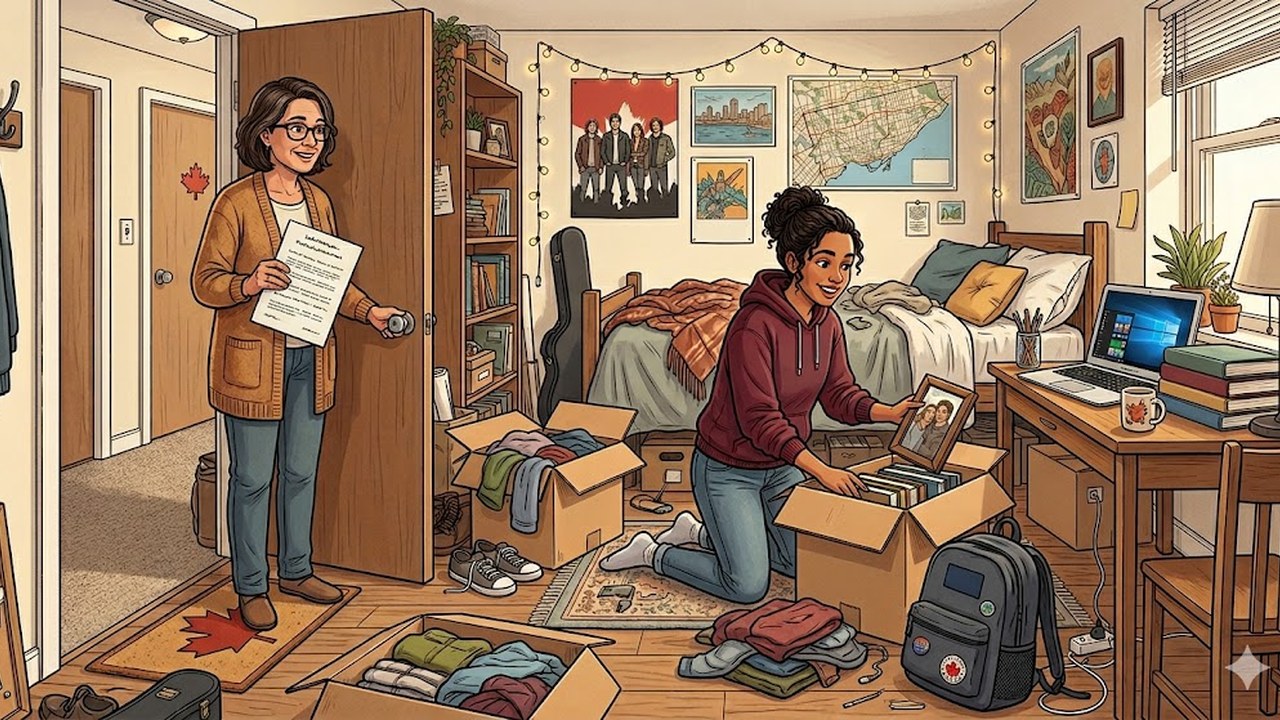
Every September, hundreds of thousands of Canadian students pack up their belongings and move into apartments, basement suites, and shared houses near their college or university. They bring laptops, phones, textbooks, bicycles, furniture, and everything else they need for the year ahead.
What most of them don't bring is insurance.
According to industry surveys, the majority of student renters in Canada have no tenant insurance — and many assume their parents' home insurance policy has them covered. Sometimes it does, partially. But more often than not, students are left with significant gaps in coverage that could cost them thousands of dollars if something goes wrong.
In this guide, we'll break down exactly when your parents' insurance covers you, when it doesn't, what student tenant insurance actually includes, and how to get your own policy for less than the cost of a streaming subscription.
2Are You Covered Under Your Parents' Home Insurance?
The short answer: maybe — but probably not as much as you think.
Many Canadian home insurance policies include a provision that extends limited personal property coverage to dependent children living away from home for school. However, this extension comes with significant conditions and limitations:
Conditions That Must Be Met
- Full-time student status: You must be enrolled full-time at a recognized educational institution. Part-time students may not qualify.
- Dependent status: You must still be considered a dependent of your parents. If you're financially independent, the extension typically doesn't apply.
- Age limit: Most policies cap dependent coverage at age 21 or 25, depending on the insurer.
- Temporary residence: Your time away must be considered temporary. If you've signed a 12-month lease and consider the new address your permanent home, coverage may not apply.
Coverage Limits Are Low
Even when parents' insurance does extend to a student living away from home, the coverage is typically limited to 10% of your parents' personal property coverage. If your parents have $100,000 in contents coverage, you'd only have $10,000 — which may not be enough to replace a laptop, phone, textbooks, furniture, and clothing.
Liability May Not Be Included
Here's a critical gap: your parents' policy may not extend liability coverage to your off-campus living situation. If someone is injured in your apartment or you accidentally cause water damage to a neighbour's unit, you could be personally responsible for the full cost. For a deeper look at why liability matters, read our guide on why tenant insurance is essential.
3When Your Parents' Coverage Is NOT Enough
There are several common situations where relying on your parents' home insurance leaves you completely or mostly unprotected:
- You live off-campus in your own apartment. Renting your own apartment (especially with a 12-month lease) is often treated as establishing a separate residence, which can disqualify you from your parents' extension.
- You've graduated but are still renting. Once you're no longer a full-time student, the student extension no longer applies — even if you're still living in the same apartment.
- You're over the age limit. If your parents' policy caps dependent coverage at 21 and you're 22, you're out of luck.
- You're financially independent. Filing your own taxes, earning your own income, and not claimed as a dependent? You likely don't qualify.
- Your parents don't have home insurance. If your parents rent and don't carry their own tenant insurance, there's no policy to extend coverage from.
- Your lease requires proof of insurance. Many landlords near Canadian universities now require tenants to carry their own policy with minimum $1 million in liability. Your parents' policy won't satisfy this requirement.
In any of these cases, you need your own student apartment insurance policy.
4What Does Student Tenant Insurance Cover?
A student tenant insurance policy works exactly like a standard tenant insurance policy. It provides three core protections:
1. Personal Property Coverage
This covers the cost of replacing your belongings if they're stolen, damaged, or destroyed by a covered peril — fire, theft, vandalism, water damage, or windstorm. For students, this is critical because your belongings are concentrated in one location and often include high-value electronics.
2. Personal Liability Coverage
If someone is injured in your rental unit, or if you accidentally cause damage to another person's property, liability coverage pays for legal defence costs and any settlement or judgment. Standard policies include $1 million to $2 million in liability protection.
Common student liability scenarios:
- A friend slips on a wet floor at your apartment and breaks an ankle
- You accidentally leave a candle burning and cause fire damage to neighbouring units
- Your bathtub overflows and damages the unit below
3. Additional Living Expenses (ALE)
If your rental becomes uninhabitable due to a covered event (fire, major water damage), ALE covers temporary housing, meals above your normal budget, and storage costs. For students, this can be a lifeline — you can't exactly move back into your parents' house mid-semester if your apartment building has a fire.
5How Much Does Student Tenant Insurance Cost?
Here's the part that surprises most students: tenant insurance is incredibly affordable — often cheaper than a single night out.
| Coverage Level | Approximate Monthly Cost |
|---|---|
| Basic ($15K–$20K personal property, $1M liability) | $10 – $15 |
| Standard ($30K personal property, $1M liability) | $15 – $25 |
| Enhanced ($50K personal property, $2M liability) | $25 – $40 |
Most students fall into the Basic or Standard tier, meaning you can get comprehensive renter insurance for $10 to $20 per month — less than a streaming subscription or two cups of coffee per week.
Factors that influence your premium:
- Location: Downtown Toronto or Vancouver will cost more than a small college town
- Coverage amount: The more belongings you insure, the higher the premium
- Deductible: Choosing a $1,000 deductible instead of $500 can reduce your monthly cost
- Building type and security: A secured apartment building with smoke detectors and sprinklers may qualify for lower rates
- Bundling: If you have auto insurance, bundling it with tenant insurance can save 10–15%
For a complete breakdown of tenant insurance pricing, see our guide to tenant insurance costs in Canada.
6What Students Commonly Need to Insure
Most students drastically underestimate the total value of what they own. Here's a typical breakdown of a student's belongings and approximate replacement costs:
| Item | Estimated Replacement Cost |
|---|---|
| Laptop | $1,000 – $2,500 |
| Smartphone | $800 – $1,500 |
| Tablet / iPad | $400 – $1,200 |
| Textbooks (per year) | $500 – $1,200 |
| Bicycle | $300 – $1,500 |
| Clothing and shoes | $2,000 – $5,000 |
| Furniture (desk, bed, shelving) | $1,000 – $3,000 |
| Kitchen appliances and cookware | $300 – $800 |
| Gaming console / entertainment | $500 – $1,500 |
| Musical instrument | $200 – $5,000+ |
Total estimated value: $7,000 – $23,000+
Now imagine a break-in, a fire, or a burst pipe destroying all of it. Could you afford to replace everything out of pocket? For most students, the answer is no. That's exactly why student apartment insurance exists — to protect you from a financial setback that could derail your studies.
7How to Get Your Own Tenant Insurance as a Student
Getting student tenant insurance is straightforward and can be done entirely online in just a few minutes. Here's what you'll need:
- Your rental address — the full address of your apartment, house, or room
- An estimate of your belongings' value — walk through your space and add up the replacement cost of everything you own (use the table above as a starting point)
- Your preferred coverage limits — $15,000 to $30,000 in personal property is typical for students; $1 million in liability is the standard minimum
- Your deductible preference — $500 or $1,000 are common; a higher deductible means a lower monthly premium
- Move-in date — your policy should be active from the day you take possession of your rental unit
Here are a few tips to make the process even easier:
- Ask your parents' insurer first. Some insurers offer discounts if a parent already has a policy with them.
- Check if your university has partnerships. Some Canadian universities negotiate group rates with insurers for their students.
- Bundle with auto insurance. If you have a car, bundling your tenant and auto insurance can save you 10–15%.
- Set up automatic payments. Paying monthly by pre-authorized debit avoids missed payments and potential policy cancellation.
- Keep a home inventory. Take photos or video of your belongings and store them in the cloud. This makes filing a claim dramatically faster and easier.
With modern online platforms, you can answer a few questions and have a binding policy in minutes — no phone calls, no paperwork, no waiting rooms.
8Final Thoughts
Moving out for school is one of the most exciting milestones in a young person's life. But with that independence comes responsibility — including protecting yourself financially.
Relying on your parents' insurance might work in some cases, but the coverage is often limited, conditional, and may not include the liability protection that every renter needs. For $10 to $20 per month, a student tenant insurance policy gives you comprehensive protection for your belongings, shields you from liability claims that could cost tens of thousands of dollars, and ensures you have a place to stay if something goes wrong.
You insure your phone. You insure your car. Your apartment and everything in it deserve the same protection.
Don't wait until something happens. Get your own tenant insurance policy before move-in day — it takes less time than registering for classes.
Frequently Asked Questions
It depends. Many Canadian home insurance policies extend limited coverage to dependents living away from home for school, but only if you're enrolled full-time, remain a dependent, and haven't established a permanent residence elsewhere. Coverage is often capped at a percentage of your parents' personal property limit — typically 10%. Always confirm the details with your parents' insurer.
Student tenant insurance is very affordable. Most students can expect to pay between $10 and $20 per month for a basic policy that includes personal property coverage, liability protection, and additional living expenses. The exact cost depends on your location, coverage limits, and deductible.
If you live in an on-campus residence, your parents' home insurance may extend partial coverage. However, that coverage is often limited and may not include liability protection. If you live off-campus — in an apartment, house, or basement suite — you almost certainly need your own tenant insurance policy.
Students should consider the replacement cost of all their belongings: laptop, tablet, smartphone, textbooks, bicycle, furniture, clothing, kitchen appliances, gaming consoles, and musical instruments. When added up, most students own $10,000 to $25,000 worth of personal property — far more than they realize.
Yes. You can get your own individual tenant insurance policy even if you rent a single room in a shared house or apartment. Your policy covers your personal belongings and your personal liability. Your roommates are not covered under your policy — they need their own.
Student tenant insurance starts from $10/month. Get your quote in 90 seconds.
Get Your Quote