

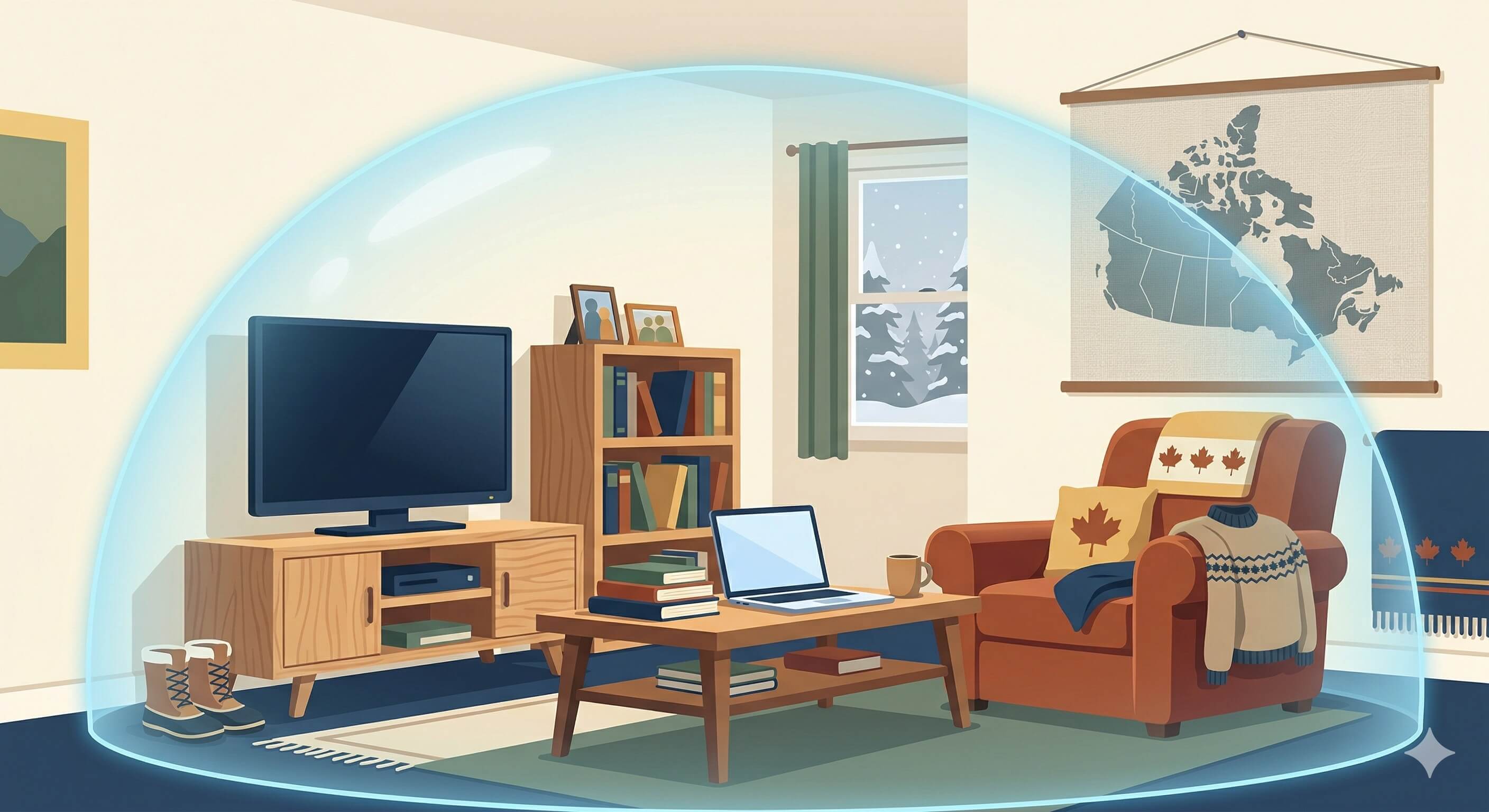
1Why Every Canadian Renter Should Understand Their Coverage
If you rent an apartment, condo, or house in Canada, there is a good chance you have thought about tenant insurance at some point — and an equally good chance you decided to skip it. According to industry estimates, roughly half of Canadian renters do not carry any form of renter insurance.
That is a significant financial risk. Without a policy, a single event — a kitchen fire, a break-in, or a liability lawsuit — could cost you tens of thousands of dollars out of pocket. And contrary to what many renters believe, your landlord's insurance covers the building, not your belongings or your liability.
This guide breaks down everything you need to know about tenant insurance in Canada: what it covers, what it costs province by province, what it excludes, how to choose the right coverage amount, and how to save money on your premium. Whether you are a first-time renter or have been renting for years, understanding your options is the first step toward protecting yourself.
If you are still wondering whether you actually need a policy, start with our guide on why tenant insurance is essential — even if your landlord has coverage.
2What Does Tenant Insurance Cover? The Three Pillars of Protection
A standard tenant insurance policy in Canada provides three distinct types of protection. Understanding each one helps you choose the right coverage limits for your situation.
1. Personal Property Coverage (Contents Insurance)
This is the core of any tenant insurance policy. It protects your personal belongings if they are damaged, destroyed, or stolen due to a covered peril. Covered perils typically include:
- Fire and smoke damage
- Theft and attempted theft
- Vandalism
- Windstorm and hail
- Water damage from burst pipes (sudden and accidental)
- Lightning strikes
- Explosions
Personal property coverage extends to virtually everything you own inside your rental unit: furniture, electronics, clothing, kitchen appliances, books, sporting equipment, and more. Most policies also cover belongings temporarily stored outside your home — for example, a laptop stolen from your car or luggage lost while travelling.
Coverage limits typically range from $30,000 to $75,000, but you can adjust this based on the total replacement value of your possessions.
2. Personal Liability Coverage
Liability coverage is arguably the most important part of a tenant insurance policy, yet many renters overlook it. It protects you financially if:
- A guest is injured in your rental unit and sues you for medical costs
- You accidentally cause a fire that damages neighbouring units
- Your bathtub overflows and causes water damage to the apartment below
- Your dog bites a visitor or another tenant
- You accidentally damage someone else's property in a way that leads to a lawsuit
Standard policies include $1 million to $2 million in liability coverage. Given that legal defence costs alone can run into the tens of thousands, this protection is critical. Most insurers recommend a minimum of $1 million, and upgrading to $2 million typically adds only a few dollars per month.
3. Additional Living Expenses (ALE)
If a covered event — such as a fire or major water leak — makes your rental unit uninhabitable, ALE covers the extra costs you incur while your home is being repaired:
- Hotel stays or temporary rental costs above your normal rent
- Restaurant meals above your normal food budget
- Storage fees for your salvaged belongings
- Additional transportation costs (if your temporary housing is farther from work)
- Laundry expenses if your temporary housing lacks facilities
ALE is usually capped at a percentage of your personal property coverage — commonly 20% to 30%. So if you have $50,000 in contents coverage, your ALE limit might be $10,000 to $15,000.
3Average Tenant Insurance Cost by Province
One of the most common questions renters ask is: how much is tenant insurance? The answer depends significantly on where you live. Premiums vary by province due to differences in claim frequency, weather-related risks, theft rates, and local market conditions.
The table below shows estimated monthly premiums for a standard policy with $40,000 in personal property coverage, $1 million in liability, and a $1,000 deductible:
| Province | Average Monthly Cost | Annual Estimate |
|---|---|---|
| Alberta | $25 – $45 | $300 – $540 |
| British Columbia | $30 – $50 | $360 – $600 |
| Manitoba | $20 – $35 | $240 – $420 |
| New Brunswick | $15 – $30 | $180 – $360 |
| Newfoundland and Labrador | $20 – $35 | $240 – $420 |
| Nova Scotia | $20 – $35 | $240 – $420 |
| Ontario | $25 – $45 | $300 – $540 |
| Prince Edward Island | $15 – $25 | $180 – $300 |
| Quebec | $20 – $35 | $240 – $420 |
| Saskatchewan | $20 – $35 | $240 – $420 |
Note: These are estimated ranges based on typical policies. Your actual tenant insurance cost will depend on your specific coverage limits, deductible, building type, claims history, and insurer. Urban centres like Toronto, Vancouver, and Calgary tend to sit at the higher end of each range, while smaller cities and rural areas are typically at the lower end.
British Columbia and Ontario tend to have the highest premiums due to higher property values, denser urban populations, and increased risk of events like earthquakes (BC) and severe weather (Ontario). The Atlantic provinces generally offer the most affordable rates.
5What Tenant Insurance Does NOT Cover
No insurance policy covers everything. Understanding the exclusions in your tenant insurance policy prevents unpleasant surprises when you need to file a claim. Here are the most common exclusions:
- Overland flooding: Damage caused by rivers overflowing, storm surges, or surface water entering your unit is typically excluded. Some insurers offer flood endorsements in high-risk areas, but this is separate from standard coverage.
- Sewer backup: Water damage from backed-up sewers or drains is excluded from most base policies. This is one of the most common and important endorsements to add, usually costing $2 to $5 per month.
- Earthquake damage: Standard policies in British Columbia and other seismic zones do not cover earthquake damage. A separate earthquake endorsement is available but can be expensive depending on your location.
- Gradual damage: Slow leaks, mould that develops over time, or wear and tear are not covered. Insurance is designed for sudden and accidental events, not maintenance issues.
- Pest infestations: Bedbugs, cockroaches, mice, and other infestations are considered a maintenance and building management issue, not an insurable event.
- Intentional damage: Any damage you cause deliberately is excluded. This applies to all insurance policies.
- Business equipment and inventory: If you run a business from home, your business-related equipment and inventory may not be covered under a personal tenant insurance policy. You may need a separate commercial policy or a home-business endorsement.
- High-value items above sub-limits: Policies impose sub-limits on categories like jewelry ($2,000 – $6,000), fine art, collectibles, and bicycles. Items exceeding these sub-limits need a scheduled personal property endorsement (also called a floater) for full coverage.
- Motor vehicles: Your car and its contents are covered by auto insurance, not tenant insurance.
6How to Choose the Right Coverage Amount: A Home Inventory Guide
One of the biggest mistakes renters make is guessing how much personal property coverage they need. Underestimating leaves you with a shortfall after a claim; overestimating means you pay a higher premium than necessary. The solution is a home inventory.
Here is a practical, room-by-room approach to calculating your coverage needs:
Step 1: Walk Through Each Room
Go room by room and list every item you own. Do not skip things that seem small — they add up quickly. Use your phone to take photos or video as you go.
Step 2: Estimate Replacement Cost
For each item, estimate what it would cost to buy a brand-new replacement at today's prices — not what you originally paid or what it's worth used. This is called replacement cost value (RCV), and it is the basis of most modern tenant insurance policies.
Step 3: Use This Room-by-Room Checklist
| Room | Common Items | Typical Total Value |
|---|---|---|
| Living Room | Sofa, TV, gaming console, decor, bookshelves, rugs | $3,000 – $10,000 |
| Bedroom | Bed frame, mattress, clothing, dresser, electronics, jewelry | $4,000 – $12,000 |
| Kitchen | Appliances, cookware, dishes, utensils, small appliances | $2,000 – $6,000 |
| Bathroom | Towels, toiletries, personal care appliances | $500 – $1,500 |
| Home Office | Computer, monitor, desk, chair, printer, peripherals | $2,000 – $8,000 |
| Storage / Closets | Sporting equipment, tools, seasonal items, luggage | $1,000 – $4,000 |
Step 4: Add It All Up
Total the replacement values from every room. Most Canadian renters find their belongings are worth between $25,000 and $60,000. Round up to the nearest $5,000 for your coverage limit to give yourself a comfortable buffer.
Step 5: Keep Your Inventory Updated
Store your inventory in a cloud-based spreadsheet or a dedicated home inventory app. Update it whenever you make a major purchase. This document will be invaluable if you ever need to file a claim — it speeds up the process and ensures you receive the full amount you are owed.
7How to Save Money on Tenant Insurance
Even though tenant insurance is already affordable, there are several strategies to reduce your premium further without sacrificing meaningful coverage:
- Bundle with auto insurance. Combining your renter insurance and auto insurance with the same provider typically saves 10% to 15%. This is the single most effective discount for most Canadians.
- Increase your deductible. Raising your deductible from $500 to $1,000 can reduce your premium by 15% to 25%. Just make sure you can comfortably afford the deductible out of pocket if you need to make a claim.
- Ask about building and safety discounts. Many insurers offer discounts for living in a building with fire alarms, sprinkler systems, a monitored security system, or controlled-access entry. If your building has these features, make sure your insurer knows.
- Maintain a claims-free record. Many insurers reward long-term customers with no claims through loyalty discounts or claims-free credits. Avoid filing small claims that barely exceed your deductible — the premium increase after a claim can outweigh the payout.
- Don't over-insure. Complete a home inventory (see the section above) and insure only what you actually own. Guessing high adds unnecessary cost to your premium.
- Pay annually instead of monthly. Some insurers charge a small administrative fee for monthly billing. Paying your annual premium in one lump sum can save you $10 to $30 per year.
- Improve your credit score. In provinces where credit-based insurance scoring is used, maintaining good credit can translate to lower premiums over time.
- Shop around and compare quotes. Premiums for the same coverage can vary by 30% or more between insurers. Getting quotes from at least three providers ensures you are not overpaying. Online insurance platforms make this comparison quick and easy.
8Do You Need Tenant Insurance If Your Lease Doesn't Require It?
Short answer: yes. Here is why.
A growing number of Canadian landlords now require tenant insurance as a condition of the lease — typically a minimum of $1 million in liability coverage. But even if your lease says nothing about insurance, going without it is a gamble that rarely pays off.
Consider what you are risking without a policy:
- Your belongings: If a fire destroys everything you own, you replace it all out of pocket. For most renters, that is $25,000 to $60,000.
- Liability exposure: If you accidentally cause damage to your building or a neighbour's unit, you are personally liable. A single water damage incident can easily cost $15,000 to $50,000 in repairs. A liability lawsuit after a guest injury can reach six figures.
- Temporary housing: If your unit becomes uninhabitable, you need to find and pay for temporary housing immediately — potentially for weeks or months.
Now compare that to the cost of coverage: roughly $15 to $40 per month. That is less than most people spend on streaming subscriptions.
The math is simple. The potential loss without insurance is catastrophic. The cost of protection is negligible. Whether your lease requires it or not, tenant insurance is one of the most rational financial decisions a renter can make.
For a deeper look at why coverage matters regardless of your lease terms, read our complete guide on why tenant insurance is essential.
9Final Thoughts
Tenant insurance in Canada is affordable, straightforward, and provides protection that far exceeds its cost. Whether you are renting a studio apartment in downtown Toronto or a house in rural Nova Scotia, a policy gives you peace of mind that your belongings, your liability, and your living situation are covered if something goes wrong.
Here is a quick summary of what we covered:
- Tenant insurance covers three things: your personal property, your personal liability, and additional living expenses.
- Average cost: $15 to $50 per month depending on your province, coverage amount, and deductible.
- Key exclusions: overland flooding, sewer backup (unless endorsed), earthquakes, gradual damage, and pests.
- Best ways to save: bundle with auto, increase your deductible, complete a home inventory, and compare quotes from multiple providers.
- You should have it regardless of whether your lease requires it. The financial risk of going without coverage is simply too high for the minimal monthly cost.
The next step is simple: get a quote, review the coverage, and protect yourself. With online platforms, the entire process takes a few minutes — and the peace of mind lasts as long as you need it.
Frequently Asked Questions
The average tenant insurance cost in Canada ranges from $15 to $50 per month, depending on your province, the amount of personal property coverage you choose, your deductible, and the age and security features of your building. Basic policies in lower-risk provinces like Prince Edward Island or New Brunswick can start as low as $10/month.
Tenant insurance covers three core areas: personal property coverage (protects your belongings against theft, fire, and other covered perils), personal liability coverage (protects you if someone is injured in your unit or you accidentally damage someone else's property), and additional living expenses (covers temporary housing costs if your unit becomes uninhabitable due to a covered event).
Standard tenant insurance covers sudden and accidental water damage, such as a burst pipe or an overflowing bathtub. However, overland flooding from rivers, heavy rainfall, or sewer backup is typically excluded from basic policies. You can usually add sewer backup coverage as an endorsement for an additional premium.
Yes. Most Canadian insurers offer a multi-policy discount of 10% to 15% when you bundle tenant insurance with auto insurance. This is one of the easiest ways to reduce your overall insurance costs without sacrificing coverage.
While your landlord may not require it, tenant insurance is still strongly recommended. Without it, you are personally responsible for replacing all your belongings after a theft or fire, covering liability claims if someone is injured in your unit, and paying for temporary housing if your rental becomes uninhabitable. For as little as $15/month, the financial protection far outweighs the cost.
Tenant insurance starts from $10/month. Get your personalized quote in 90 seconds.
Get Your Quote