

1The Secondary Suite Boom — and the Insurance Gap
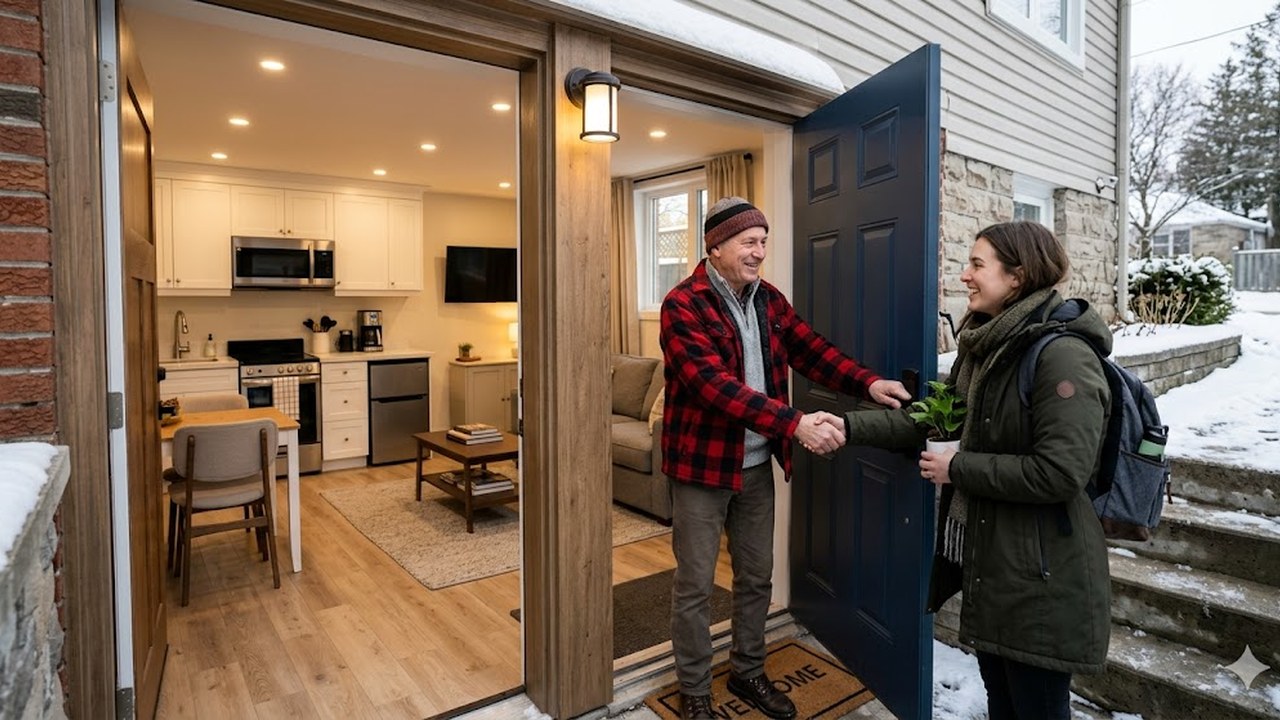
Canada is in the middle of a housing affordability crisis, and secondary suites are a central part of the government's response. The federal government, provincial governments, and municipalities across the country are actively encouraging homeowners to create rental units within their existing homes — basement apartments, laneway houses, garden suites, and accessory dwelling units (ADUs).
In 2024, the federal government introduced sweeping changes to support secondary suites:
- Mortgage qualification rules now allow buyers to include projected rental income from a secondary suite when qualifying for a mortgage
- New construction incentives through the Housing Accelerator Fund are encouraging municipalities to eliminate zoning restrictions on secondary suites
- As-of-right zoning — allowing secondary suites by default, without rezoning — is being adopted by cities across the country
The result: hundreds of thousands of Canadian homeowners now have or are creating secondary suites. But there's a critical gap that most of them aren't addressing: insurance.
An unreported secondary suite can void your entire home insurance policy. An improperly insured suite exposes you to liability claims, lost rental income, and financial ruin. This guide covers everything you need to know to protect yourself.
2Disclosure: Why You MUST Tell Your Insurer
This is the most important section of this article. If you take nothing else away, remember this: you must disclose your secondary suite to your insurance company.
What Happens If You Don't Disclose
Under Canadian insurance law, you have a duty to disclose all material changes to your property. Adding a rental unit — or renting out an existing space — is a material change. If you don't disclose it:
- Claim denial: If you file any claim — even one unrelated to the suite, such as roof damage from a storm — your insurer can deny it if they discover an undisclosed rental unit during their investigation
- Policy voidance: Your insurer can void your policy retroactively, treating it as if it never existed. This means no coverage for any claim, period.
- Insurance record: A voided policy goes on your insurance record and makes it harder and more expensive to get coverage from any insurer in the future
- Personal liability: Without valid insurance, you're personally liable for all damages, injuries, and legal costs — which can easily reach six figures
What You Need to Disclose
You must tell your insurer about:
- Any rental activity — whether it's a formal lease or an informal arrangement with a family member
- The type of suite (basement apartment, separate entrance unit, laneway house, etc.)
- Whether the suite is legal (compliant with local building codes and zoning) or non-conforming
- The number of tenants and the rental arrangement (long-term, short-term, room rental)
- Any renovations or modifications made to create the suite
The "Family Member" Misconception
Many homeowners assume that renting to a family member doesn't count as a rental arrangement. This is incorrect. Whether your tenant is a stranger, a friend, or your adult child, if there's a separate living space and any form of payment (including below-market rent), it's a rental arrangement that must be disclosed.
Some insurers treat family-member occupancy differently from arms-length tenants, and it may not increase your premium as much — but you still need to disclose it.
3Legal vs. Illegal Suites: How It Affects Your Insurance
The legality of your secondary suite has a direct impact on your insurance options and costs.
What Makes a Suite Legal?
A legal secondary suite must comply with:
- Zoning bylaws: The municipality must permit a secondary suite on your property type in your zone
- Building codes: The suite must meet Ontario Building Code, BC Building Code, or your province's equivalent for fire separation, ceiling height (typically minimum 1.95m or 6'5"), egress windows, smoke and carbon monoxide detectors, and other safety requirements
- Fire codes: Proper fire separation between the suite and the rest of the home (typically 30-minute to 1-hour fire-rated barrier), interconnected smoke alarms, and clearly marked exits
- Permits and inspections: The suite must have been built or renovated with proper permits and passed all required inspections
Insurance Implications by Suite Status
| Suite Status | Insurance Availability | Premium Impact | Claim Risk |
|---|---|---|---|
| Legal and permitted | Widely available | +15% to 30% | Low — standard claim process |
| Legal but unpermitted (pre-existing, grandfathered) | Available from most insurers | +20% to 35% | Low-Medium — may require documentation |
| Non-conforming (doesn't meet code) | Limited — some insurers only | +30% to 50%+ | Medium-High — insurer may dispute |
| Illegal (zoning violation) | Very limited | +40% to 60%+ (if available) | High — claim may be denied |
| Undisclosed (any status) | Policy is void | N/A — no valid coverage | Certain denial |
The Cost of Legalizing
Legalizing a non-conforming suite typically costs $10,000 to $50,000+ depending on the work required (fire separation, egress windows, plumbing, electrical upgrades). While this is a significant investment, it:
- Gives you access to better and cheaper insurance options
- Protects your ability to collect rent legally
- Increases your property value (a legal suite adds significant marketable value)
- Qualifies you for federal mortgage benefits under the 2024 rules
- Protects you from municipal fines (which can range from $500 to $100,000+ depending on the municipality)
4Insurance Coverage You Need for a Secondary Suite
Insuring a property with a secondary suite is more complex than a standard homeowner's policy. Here's what you need:
1. Landlord Liability Coverage (Increased Limits)
Your standard home insurance includes personal liability coverage — typically $1 million to $2 million. When you add a secondary suite, you need to ensure this liability extends to landlord activities. If a tenant or their guest is injured in the suite — a fall, a fire, carbon monoxide exposure — you need liability coverage that responds.
Recommended minimum: $2 million in liability coverage. If you own other properties or have significant assets to protect, consider an umbrella policy for additional protection.
2. Rental Income Protection
If a covered peril (fire, major water damage, storm damage) makes the secondary suite uninhabitable, rental income protection replaces the rent you lose during repairs. If your suite rents for $1,500/month and repairs take three months, that's $4,500 in lost income this coverage protects.
3. Increased Dwelling Coverage
Adding a secondary suite often involves renovations that increase your home's replacement cost — upgraded plumbing, electrical, fire separation, separate entrance, kitchen, and bathroom. Your dwelling coverage limit needs to reflect these improvements.
Failure to increase your dwelling coverage after a renovation is one of the most common underinsurance mistakes. If your home's replacement cost is now $600,000 but your policy only covers $500,000, you'll receive a proportionally reduced payout on any claim (the co-insurance clause).
4. Sewer Backup Coverage
Basement suites are the most vulnerable to sewer backup damage. A sewer backup can cause $20,000 to $80,000+ in damage and make the suite uninhabitable for weeks or months. Sewer backup coverage is typically an endorsement that costs $50 to $200 per year — and it's essential for any property with a basement suite.
5. Tenant's Contents (Your Responsibility vs. Theirs)
Your insurance covers your property — the structure, your fixtures, and any furnishings you provide. Your tenant's personal belongings are NOT covered by your policy. This is why requiring tenant insurance is so important. If a fire destroys the suite, your tenant could lose everything — and may hold you responsible if they weren't informed about their coverage gap.
Coverage Checklist
| Coverage | Needed? | Why |
|---|---|---|
| Increased liability ($2M+) | Essential | Landlord liability for tenant injuries |
| Rental income protection | Essential | Replaces lost rent during repairs |
| Increased dwelling coverage | Essential | Reflects renovation/improvement costs |
| Sewer backup | Essential (basement suites) | Most common and costly basement claim |
| Overland water/flood | Recommended | Basement suites are flood-vulnerable |
| Umbrella policy | Recommended (high-value properties) | Additional liability beyond base policy |
5Why You Should Require Tenant Insurance
As a secondary suite landlord, one of the most effective risk management strategies is requiring your tenant to carry their own tenant insurance. Here's why:
What Tenant Insurance Does for You
- Liability transfer: If your tenant accidentally causes a fire or flood that damages the rest of your home, their tenant insurance's liability coverage responds first — protecting your policy from the claim and keeping your premiums from skyrocketing
- Reduced disputes: When a tenant has their own contents coverage, they can replace their belongings without looking to you for compensation
- Better insurer terms: Some home insurers offer better rates or coverage terms when they know tenants are independently insured
- Professionalism: Requiring tenant insurance demonstrates you're a serious, responsible landlord — which attracts better tenants
What to Require in the Lease
Include a clause in your lease agreement that requires the tenant to:
- Maintain tenant insurance for the duration of the tenancy
- Carry a minimum of $1 million in personal liability coverage
- Provide proof of insurance before move-in and upon each renewal
- Name you as an additional interested party (not additional insured) — this means you'll be notified if the tenant cancels or fails to renew their policy
Tenant Insurance Costs
Tenant insurance in Canada costs $15 to $40 per month — an affordable expense for tenants that provides enormous value to both parties. For more details on what tenant insurance covers and why it matters, see our guide on why tenant insurance is essential.
62024 Federal Mortgage Rule Changes and Secondary Suites
In 2024, the Canadian federal government introduced significant mortgage rule changes that directly affect secondary suites — and have important insurance implications.
What Changed
- Rental income inclusion: First-time homebuyers can now include 100% of projected rental income from an existing or planned secondary suite when qualifying for a mortgage (up from 50% or less previously)
- 30-year amortizations: Extended amortization periods are now available for first-time buyers purchasing homes with secondary suites, reducing monthly payments
- Increased purchasing power: These changes can add $50,000 to $150,000+ to a buyer's qualifying mortgage amount
Insurance Implications
These mortgage changes create insurance obligations that many buyers overlook:
- Immediate disclosure: If you're buying a home with a secondary suite and using the rental income to qualify, your home insurance must reflect the rental use from the closing date — not "eventually when you get around to it"
- Mortgage lender requirements: Your mortgage lender will require proof of home insurance that covers the entire property. If your policy doesn't account for the suite, you could be in breach of your mortgage agreement.
- Suite condition at purchase: If the existing suite is non-conforming or illegal, you need to understand the insurance implications before you buy. Getting insurance quotes during your due diligence period — not after closing — is essential.
- Renovation financing: If you're financing suite construction as part of your purchase, your insurance needs to be updated as soon as the suite is completed and available for rent
CMHC and Suite Requirements
The Canada Mortgage and Housing Corporation (CMHC) has been a driving force behind secondary suite policy. Their mortgage insurance programs now explicitly support suite construction, but they also require that suites comply with local building codes and bylaws. This alignment between mortgage qualification and code compliance reinforces the importance of having a legal, insurable suite.
7Common Insurance Claims for Properties with Secondary Suites
Understanding the most common claims helps you choose the right coverage and take preventive steps.
1. Sewer Backup (Most Common)
Basement suites are inherently vulnerable to sewer backup. Heavy rainfall, aging municipal infrastructure, or blocked pipes can send sewage into the lowest level of your home. Average claim: $40,000 to $80,000. Prevention: install a backwater valve ($3,000–$6,000 installed — many municipalities offer rebates of $1,000–$3,000).
2. Water Damage from Plumbing Failures
A secondary suite adds a full bathroom and kitchen's worth of plumbing to your home. Burst pipes, failed supply lines, and leaking fixtures are common. Average claim: $15,000 to $50,000. Prevention: use braided stainless steel supply lines (not rubber), install water leak sensors, and shut off water to the suite if it's vacant for extended periods.
3. Fire
Properties with secondary suites face increased fire risk due to additional kitchens, electrical loads, and heating equipment. Proper fire separation (fire-rated drywall, self-closing fire doors, interconnected smoke alarms) is essential — and required by building codes. Average claim: $50,000 to $200,000+.
4. Tenant-Caused Damage
Accidental damage caused by tenants — such as leaving a stove on, overflowing a bathtub, or accidentally breaking a window — is covered by most landlord policies. Intentional damage is typically excluded, though your tenant's liability insurance may cover some scenarios. For more on this topic, see our guide on landlord insurance and tenant damage.
5. Liability Claims
Slip-and-fall injuries on shared walkways, carbon monoxide exposure from improperly vented appliances, and injuries from poorly maintained stairs or railings are all scenarios that can generate significant liability claims. A single serious injury claim can easily exceed $500,000.
Prevention Investments That Pay Off
| Investment | Cost | Potential Claim Prevented | Insurance Benefit |
|---|---|---|---|
| Backwater valve | $3,000 – $6,000 (before rebate) | $40,000 – $80,000 | May reduce premium 5–10% |
| Interconnected smoke alarms | $300 – $800 | $50,000 – $200,000+ | Required for coverage |
| Water leak sensors | $100 – $300 | $15,000 – $50,000 | Some insurers offer discount |
| Carbon monoxide detectors | $50 – $150 | Liability claims $100,000+ | Required for coverage |
| Proper fire separation | $5,000 – $15,000 | $50,000 – $200,000+ | Required for legal suite coverage |
8How to Get the Right Insurance for Your Secondary Suite
Getting properly insured for a secondary suite is a straightforward process — but it requires more thought than a standard home insurance purchase.
Step 1: Determine Your Suite's Legal Status
Before contacting insurers, know whether your suite is:
- Fully legal and permitted (the most insurance options)
- Pre-existing and grandfathered (acceptable to most insurers)
- Non-conforming but occupied (limited insurer options)
- Illegal under zoning (very limited options — consider legalizing first)
Step 2: Gather Documentation
Insurers will want to know:
- Your property's age, size, construction type, and replacement value
- The suite's size, number of bedrooms, and separate entrance status
- Building permits and inspection reports (if available)
- Monthly rental income
- Whether the tenant is a family member or arms-length tenant
- Safety features (smoke alarms, CO detectors, fire separation, backwater valve, etc.)
Step 3: Choose the Right Policy Type
Depending on your insurer and the suite arrangement, you may need:
- A home insurance policy with a rental endorsement: This is the simplest option if you live in the property and rent the suite. Your existing home insurer adds coverage for the rental activity.
- A landlord or rental dwelling policy: Some insurers require this instead of an endorsement, especially if the suite is large, has a separate entrance, or generates significant rental income.
- A separate policy for the suite: In rare cases (e.g., a laneway house or a suite with completely separate services), a separate policy may be appropriate.
Step 4: Review and Compare
Get quotes from at least three insurers. Compare not just the premium, but:
- Liability limits and whether landlord liability is explicitly covered
- Rental income protection limits and duration
- Sewer backup and water damage coverage
- Whether the policy covers a non-conforming suite (if applicable)
- Deductible amounts
See also: Subletting Your Apartment? What Happens to Your Insurance.
9Final Thoughts: Protect Your Home and Your Rental Income
Secondary suites are a win for Canadian housing — they increase supply, provide homeowners with rental income, and make homeownership more affordable. But they come with real insurance responsibilities that too many homeowners ignore.
The consequences of getting this wrong are severe: an undisclosed suite can void your entire home insurance policy, leaving you unprotected not just for suite-related claims, but for any claim on your property.
Here's what to do now:
- Disclose your suite to your insurer immediately — whether it's legal, non-conforming, or occupied by family
- Ensure your coverage includes landlord liability, rental income protection, and sewer backup
- Require your tenant to carry tenant insurance with at least $1 million in liability coverage
- Invest in safety — backwater valves, smoke alarms, CO detectors, and fire separation protect lives and reduce premiums
- Consider legalizing your suite if it's non-conforming — for better insurance, higher property value, and peace of mind
The cost of proper insurance for a secondary suite is modest — typically $300 to $800 more per year. Compare that to the rental income your suite generates and the financial exposure of being uninsured, and the decision is clear. Get covered, and enjoy the financial benefits of your secondary suite with confidence.
Frequently Asked Questions
Yes — absolutely. Failing to disclose a secondary suite or basement apartment to your insurer is considered material misrepresentation. If you file a claim and your insurer discovers an undisclosed rental unit, they can deny the claim entirely and cancel your policy. This applies whether the suite is legal or illegal, occupied by a family member or a paying tenant. Always disclose any rental activity to your insurer.
Some insurers will cover a non-conforming (illegal) basement suite, but many won't. If your suite doesn't meet local building codes, fire codes, or zoning bylaws, your insurance options are limited and premiums will be higher. Some insurers require proof that the suite meets minimum safety standards (smoke detectors, separate egress, fire separation) even if it's not fully code-compliant. The safest approach is to legalize your suite — which also increases your property value.
Adding a secondary suite to your home insurance typically increases your premium by 15% to 40%, depending on the insurer, the suite's size, whether it's a legal suite, and whether you need additional liability coverage. On an average home insurance policy of $2,000 per year, that's an increase of $300 to $800 annually. Some insurers require you to switch to a landlord or rental dwelling policy instead of adding an endorsement.
Yes. Requiring your tenant to carry tenant insurance is one of the smartest things you can do as a secondary suite landlord. Tenant insurance provides your tenant with personal property coverage, liability coverage (which can protect both of you if the tenant causes damage to other parts of the building), and additional living expenses if the suite becomes uninhabitable. Many landlord insurance policies also provide better terms if tenants are insured.
The 2024 federal mortgage rule changes allow buyers to include projected secondary suite rental income in their mortgage qualification. This has increased demand for properties with suites and incentivized homeowners to add them. From an insurance perspective, more suites means more landlords who need proper coverage. If you're buying a home with an existing suite, or adding one to qualify for a larger mortgage, make sure your insurance reflects the rental use from day one.
Renting out a suite? Get a landlord insurance quote online for a property in BC — a licensed BlueCouch broker confirms it with you.
Get Your Quote