

1The Snowbird Insurance Problem Most Canadians Don't Know About
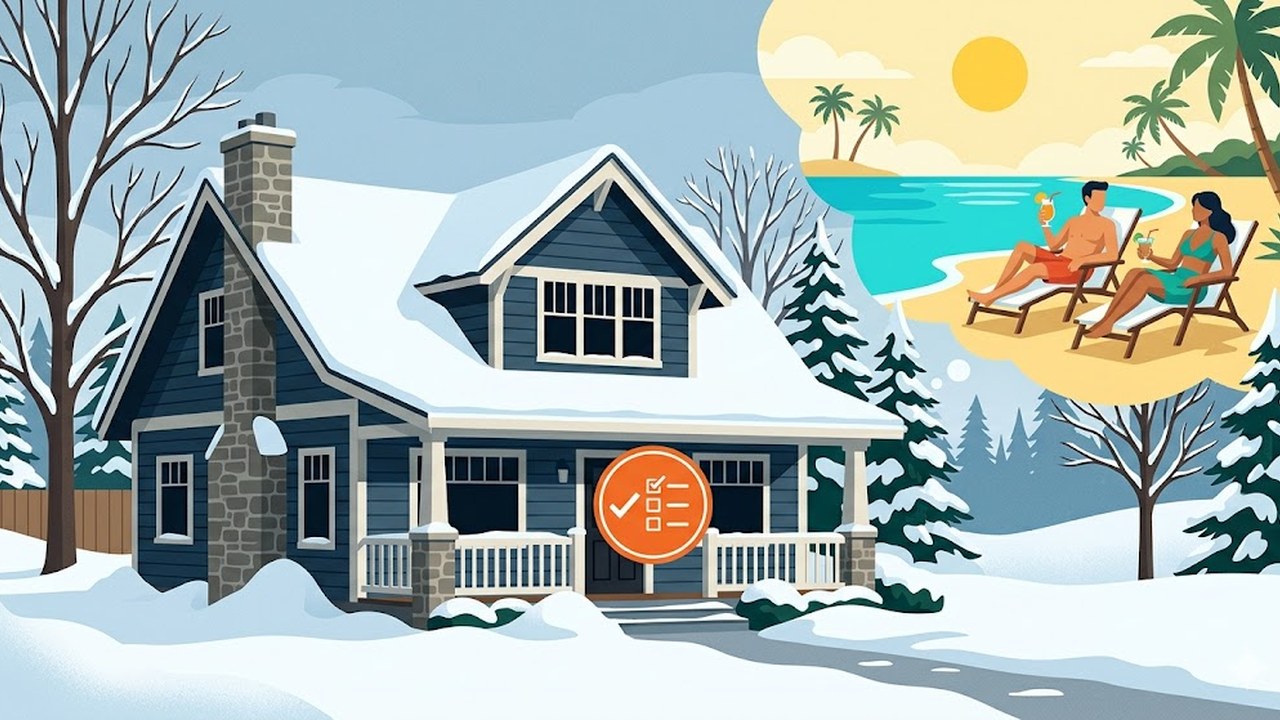
Every winter, an estimated 1.5 to 2 million Canadians — known as snowbirds — head south to escape the cold. They spend weeks or months in Florida, Arizona, Mexico, or the Caribbean, enjoying warm weather while their Canadian homes sit empty through the harshest months of the year.
What most snowbirds don't realize is that leaving your home unoccupied can fundamentally change your insurance coverage — or void it entirely.
Canadian home insurance policies contain vacancy clauses that impose strict requirements on homeowners who leave their properties empty for extended periods. Fail to comply with these requirements, and you could return home to a burst pipe, $60,000 in water damage, and a denied insurance claim.
This guide covers everything Canadian snowbirds need to know: the vacancy rules, the checking requirements, what a vacancy permit costs, how to prepare your home before you leave, and how to make sure you're fully protected while you're away.
2The 30-Day Vacancy Rule: How It Works
Nearly every home insurance policy in Canada includes a vacancy or unoccupancy clause. While the specific terms vary by insurer, the standard rule is:
If your home is left unoccupied for more than 30 consecutive days, your coverage for certain perils is automatically restricted or eliminated.
What Changes After 30 Days of Vacancy
| Coverage Type | Before 30 Days | After 30 Days (No Vacancy Permit) |
|---|---|---|
| Water damage (frozen pipes, leaks) | Covered (with conditions) | Typically excluded |
| Vandalism and malicious damage | Covered | Excluded in most policies |
| Theft and break-in | Covered | Excluded or severely limited |
| Fire | Covered | Usually still covered |
| Liability | Covered | Usually still covered |
| Glass breakage | Covered | Often excluded |
The 4-Day Water Damage Rule
Many policies have an even shorter window for water damage. A common clause states that if the home is left unattended for more than 4 consecutive days during the heating season (typically October to April), the homeowner must either:
- Shut off the water supply and drain all pipes and appliances, or
- Arrange for a competent person to enter the home every 48 to 72 hours to verify the heating system is working and there are no signs of water leakage
If you fail to do either and a pipe bursts, your claim will almost certainly be denied. This is one of the most frequently enforced exclusions in Canadian home insurance.
Unoccupied vs. Vacant: A Critical Distinction
Insurance companies distinguish between:
- Unoccupied: The home still contains furniture and belongings; the owner intends to return. This is the typical snowbird scenario.
- Vacant: The home has been emptied of most contents. This is considered a higher risk because vacant properties are more attractive to vandals and squatters, and because there's no one monitoring the property.
A vacant property is harder and more expensive to insure. If you're selling a home and it's been emptied, or if you're renovating and no one is living there, you may need a specialized vacant home insurance policy rather than a standard vacancy permit.
3Vacancy Permits: What They Cost and How They Work
A vacancy permit (sometimes called an unoccupancy endorsement) is an add-on to your existing home insurance policy that extends coverage during your absence. It's the standard solution for snowbirds.
What a Vacancy Permit Provides
- Continued coverage for water damage, vandalism, theft, and other perils that would otherwise be excluded after 30 days
- Peace of mind that your policy remains fully in force during your absence
- Clear documentation that you've disclosed your absence to your insurer (which matters enormously if you need to file a claim)
How Much Does a Vacancy Permit Cost?
Vacancy permits typically increase your premium by 50% to 60% for the period of vacancy. Here's what that looks like in practice:
| Regular Monthly Premium | Absence Duration | Vacancy Permit Cost (Est.) | Total Extra Cost |
|---|---|---|---|
| $150/month | 3 months | $225 – $270 | $225 – $270 |
| $200/month | 4 months | $400 – $480 | $400 – $480 |
| $250/month | 5 months | $625 – $750 | $625 – $750 |
| $300/month | 6 months | $900 – $1,080 | $900 – $1,080 |
Conditions Insurers Typically Require
Even with a vacancy permit, insurers impose conditions:
- Regular property checks: A competent person must check the home every 48 to 72 hours (some insurers allow weekly checks — confirm with yours)
- Minimum heating: The home must be kept at a minimum temperature, typically 15°C (59°F) or higher
- Water shutoff option: Some insurers require the water supply to be shut off and pipes drained, especially if regular checks aren't guaranteed
- Snow removal: Walkways and driveways must be maintained to reduce liability risk and prevent the appearance of an unoccupied property
- Mail and flyer management: Accumulated mail signals an empty home; arrange for mail hold or pickup
Who Counts as a "Competent Person"?
Your insurer will expect the person checking your home to be a responsible adult — typically a friend, family member, neighbour, or professional property management company. They should:
- Enter the home (not just drive by)
- Verify the heating is working
- Check for signs of water leaks, damage, or break-in
- Document each visit (date, time, and what was checked — a log or dated photos work well)
If you file a claim and your insurer asks for proof of regular checks, you'll need to provide it. An informal arrangement with a neighbour who "drives by occasionally" may not satisfy your insurer's requirements.
4The Snowbird Home Preparation Checklist
Proper preparation before you leave is the best way to prevent problems — and the best way to ensure any insurance claim you do file will be honoured.
Water and Plumbing
- Option A — Shut off and drain: Turn off the main water supply, drain all pipes, flush toilets, empty hot water tank, drain washing machine hoses, and add antifreeze to drain traps (toilets, sinks, floor drains). This is the most secure option.
- Option B — Keep running with monitoring: Keep the water on but ensure regular checks every 48–72 hours. Install a smart water leak detector (e.g., Honeywell Lyric, Flo by Moen) that alerts you by phone if a leak is detected.
- Disconnect and drain garden hoses; shut off outdoor water valves
- Insulate exposed pipes in the garage, attic, and crawl spaces
Heating and HVAC
- Set the thermostat to a minimum of 15°C (59°F) — many insurers require this
- Have your furnace serviced before you leave to reduce the risk of mid-winter failure
- Consider a smart thermostat (e.g., Ecobee, Nest) that sends alerts if the temperature drops below a set threshold
- Change furnace filters before departure
- If you have a backup heating source (e.g., a generator), ensure it's operational
Security
- Install or activate a monitored security system with freeze and flood sensors
- Set interior lights on timers or use smart lights to simulate occupancy
- Lock all windows and doors; consider deadbolt upgrades
- Don't advertise your absence on social media
- Arrange for snow removal and driveway clearing to maintain the appearance of occupancy
General Maintenance
- Clean out the fridge and unplug non-essential appliances to reduce fire risk
- Turn off the gas supply to the stove and fireplace
- Ensure smoke detectors and CO detectors have fresh batteries
- Redirect mail through Canada Post or arrange for pickup
- Notify your insurer of your departure dates and confirm your vacancy permit or checking arrangements are in place
5Smart Home Technology That Can Lower Your Risk (and Premium)
Technology has made it significantly easier for snowbirds to monitor their homes remotely — and many insurers now offer discounts of 5% to 15% for smart home devices that reduce risk.
Devices Worth Installing
| Device | Purpose | Typical Cost | Potential Insurance Benefit |
|---|---|---|---|
| Smart water shutoff valve (e.g., Flo by Moen) | Detects leaks and shuts off water automatically | $500 – $800 installed | Up to 10% discount from some insurers |
| Smart thermostat (e.g., Ecobee, Nest) | Monitors temperature remotely, alerts on drops | $200 – $350 | Up to 5% discount |
| Water leak sensors | Detects water near water heater, washing machine, sinks | $30 – $80 per sensor | Reduces claim risk |
| Smart security system (e.g., Ring, SimpliSafe) | Monitored security with cameras and sensors | $200 – $600 + monthly fee | Up to 10–15% discount |
| Smart smoke/CO detector (e.g., Nest Protect) | Sends phone alerts for smoke or CO detection | $130 – $170 each | Included in general safety discounts |
The Insurance Discount Math
If your annual home insurance premium is $2,400 and you install a smart water shutoff valve and a monitored security system, you could save $240 to $600 per year in premium discounts — potentially paying back the device cost within 1–2 years, while dramatically reducing your risk of a costly claim while you're away.
Some insurers — including several that partner with Bluecouch — actively encourage these devices and offer specific discount programs. Ask about available discounts when you arrange your vacancy permit.
6Professional Property Checking Services
If you don't have a trusted friend or family member nearby to check your home, professional property checking services are available across Canada — and they're specifically designed for snowbirds.
What These Services Typically Include
- Scheduled visits every 48–72 hours (or weekly, depending on your insurer's requirements)
- Interior walkthrough checking heating, plumbing, and overall condition
- Photo documentation of each visit (timestamps and condition notes)
- Snow removal and walkway clearance
- Mail and flyer pickup
- Emergency response if an issue is discovered
Typical Costs
Professional property checking services across Canada typically charge:
- $25 – $50 per visit for basic interior checks
- $150 – $400 per month for comprehensive packages (2–3 visits per week plus snow removal and mail pickup)
- $500 – $1,000 for the full winter season (4–5 months) for premium packages
Compare this to the cost of a denied insurance claim — which can easily reach $40,000 to $100,000+ for water damage from a burst pipe — and professional checking services are an excellent investment.
What to Look For in a Property Checker
- Are they insured and bonded?
- Do they provide written reports or photographic documentation for each visit?
- Will their documentation satisfy your insurance company's checking requirements?
- Do they have emergency contacts and procedures if they discover a problem?
- Are they available over holidays and during extreme weather events?
7Travel Insurance: The Other Half of Snowbird Protection
While this article focuses on protecting your home, no snowbird insurance discussion is complete without mentioning travel medical insurance — because the two work together to protect you fully.
Why Provincial Health Plans Don't Cover You Abroad
Canadian provincial health plans — OHIP (Ontario), MSP (BC), RAMQ (Quebec), and others — provide minimal to zero coverage outside Canada. As of 2024, Ontario eliminated all out-of-country hospital coverage through OHIP. Other provinces provide only partial reimbursement at Canadian rates, which doesn't come close to covering U.S. medical costs.
A single hospital visit in the United States can cost $10,000 to $50,000+. An ICU stay can exceed $10,000 per day. Without travel medical insurance, a health emergency abroad can be financially devastating.
What Snowbird Travel Insurance Covers
- Emergency medical treatment: Hospital, physician, and specialist fees
- Emergency medical evacuation: Air ambulance back to Canada if needed
- Prescription drugs: Emergency medications prescribed abroad
- Trip cancellation and interruption: Reimbursement if you need to cancel or return early
- Baggage loss or delay: Compensation for lost or delayed luggage
Key Considerations for Snowbirds
- Pre-existing conditions: Most policies have a stability clause requiring that pre-existing conditions be stable for 90 to 180 days before departure. Failure to disclose or comply can result in claim denial.
- Trip duration: Ensure your policy covers the full length of your trip. If you extend your stay, notify your insurer.
- Age: Premiums increase with age. Snowbirds over 70 should expect higher costs and potentially stricter medical questionnaires.
- Multi-trip vs. single-trip: If you travel frequently, an annual multi-trip policy may be more cost-effective than purchasing single-trip coverage each time.
The bottom line: protect your home and yourself. A comprehensive snowbird plan includes both proper home insurance arrangements (vacancy permit, property checks, winterization) and adequate travel medical insurance.
8Final Thoughts: Protect Your Home Before You Pack Your Bags
Being a snowbird is one of the great privileges of Canadian life — but it comes with insurance responsibilities that too many homeowners overlook.
The vacancy clause in your home insurance policy is not a technicality. It's an actively enforced provision that insurers rely on to deny claims every winter. Burst pipes, vandalism, and theft in unoccupied homes are among the most common — and most expensive — insurance claims in Canada.
Before you head south, take these steps:
- Call your insurer and arrange a vacancy permit or confirm your checking requirements
- Prepare your home using the checklist above — especially water and heating
- Arrange reliable property checks every 48–72 hours, either through a trusted contact or a professional service
- Install smart monitoring devices for remote visibility and potential premium discounts
- Secure travel medical insurance for the full duration of your trip
The cost of proper preparation — a vacancy permit, a property checker, and some smart home devices — is a fraction of what a denied insurance claim would cost. Protect your home, protect your peace of mind, and enjoy your winter in the sun.
Frequently Asked Questions
Most Canadian home insurance policies have a vacancy clause that kicks in after 30 consecutive days of the home being unoccupied. Some policies use a shorter window of 4 days for specific perils like water damage. After this threshold, coverage for water damage, vandalism, theft, and other perils may be significantly reduced or eliminated entirely unless you arrange a vacancy permit or have someone check the property regularly.
A vacancy permit is an endorsement added to your home insurance policy that extends coverage while your home is unoccupied for longer than the standard vacancy period. It typically costs 50% to 60% more than your regular premium for the period of vacancy. For example, if your monthly premium is $200, a vacancy permit for 4 months could add $400 to $480 in additional premium. Some insurers may also require specific conditions like shutting off the water supply or maintaining minimum heating levels.
Yes, and the distinction matters for insurance. An unoccupied home still contains furniture and personal belongings — the owner intends to return (this is the typical snowbird situation). A vacant home has been emptied of most belongings and furnishings. Insurance companies consider vacant properties a higher risk and may charge more or impose stricter conditions. Some insurers won't cover truly vacant homes at all without a specialized vacant property policy.
If a pipe bursts while you're away and you haven't met your policy's maintenance requirements — such as having someone check the property every 48 to 72 hours or maintaining adequate heating — your insurer can deny the claim entirely. Water damage from frozen pipes is one of the most common and expensive claims in Canada, averaging $40,000 to $80,000. Proper preparation before you leave (shutting off water, draining pipes, or maintaining heat) is essential.
Yes. Home insurance and travel insurance cover completely different risks. Your home insurance protects your property and belongings. Travel insurance covers your health, trip cancellation, and personal belongings while you're away from Canada. Provincial health plans (like OHIP in Ontario) provide very limited coverage outside Canada, and virtually no coverage outside the country. Snowbirds should carry both adequate home insurance arrangements and comprehensive travel medical insurance.
Heading south? Make sure your home is protected before you leave. Get a quote in minutes.
Get Your Quote