
1Why Sewer Backup Coverage Matters
Imagine waking up to find your basement filled with raw sewage. The smell is overwhelming, your belongings are destroyed, and the cleanup bill is going to be enormous. Now imagine discovering that your home insurance won't cover a single dollar of it.
This is the reality for thousands of Canadian homeowners every year. Sewer backup is one of the most common — and most expensive — types of water damage in Canada, yet standard home insurance policies do not include it.
In this guide, you'll learn:
- Why sewer backup is excluded from standard policies
- What a sewer backup endorsement covers
- How much the endorsement costs
- The difference between sewer backup and overland flooding
- How to prevent sewer backup and lower your risk
2What Is Sewer Backup?
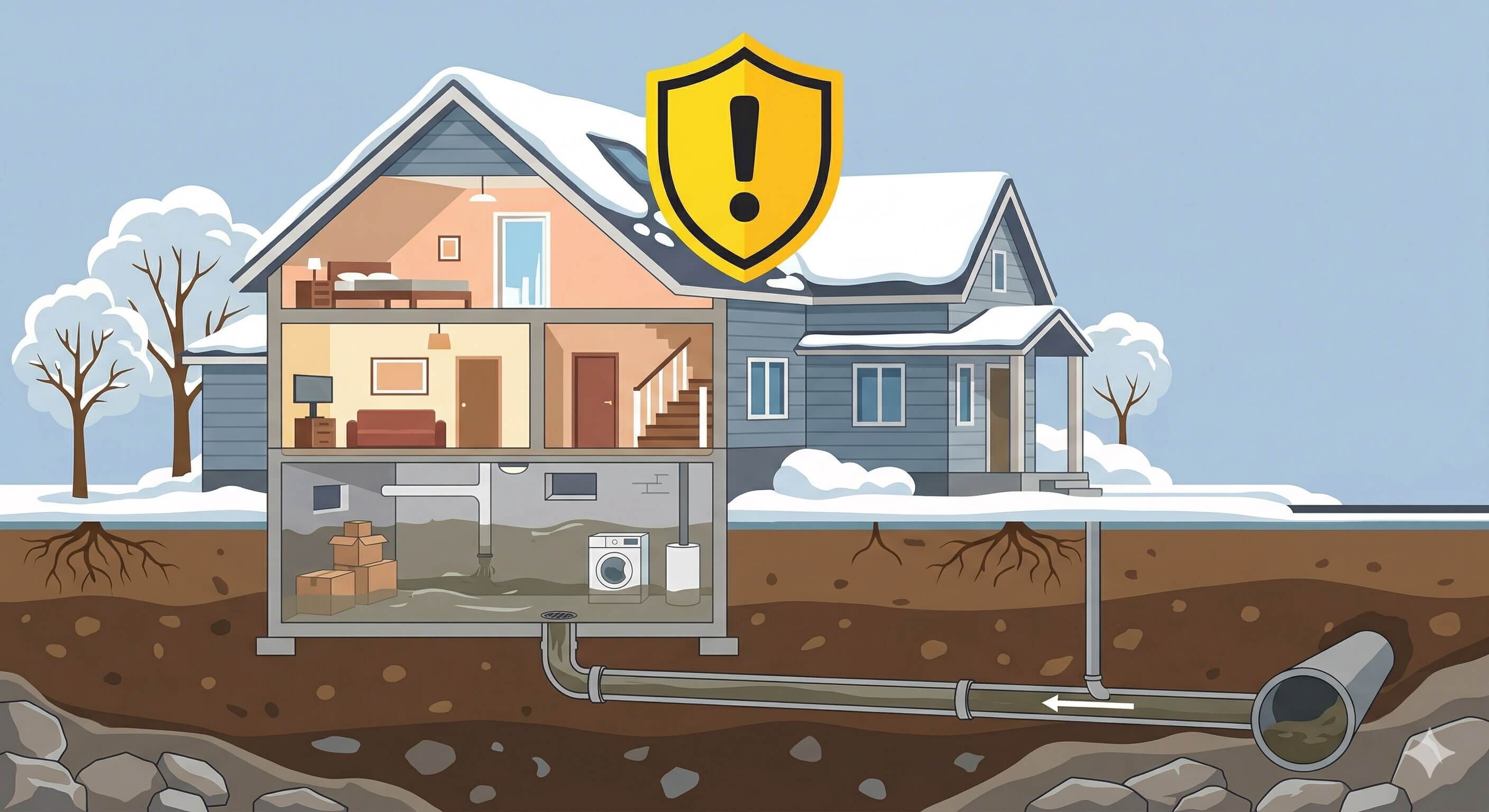
Sewer backup occurs when wastewater flows in reverse through your home's drain system — entering through basement floor drains, toilets, sinks, or bathtubs. This typically happens when:
- The municipal sewer system is overwhelmed by heavy rain, rapid snowmelt, or aging infrastructure
- Your private sewer lateral (the pipe connecting your home to the city main) is blocked by tree roots, grease buildup, or debris
- A combined sewer system fails to separate stormwater from sanitary sewage during extreme weather events
The resulting damage goes far beyond a bad smell. Sewage contains bacteria, viruses, and parasites that make contaminated areas hazardous. The average sewer backup claim in Canada costs between $20,000 and $45,000, covering cleanup, decontamination, drywall replacement, flooring, and damaged personal property.
3Why Standard Home Insurance Doesn't Cover Sewer Backup
Canadian home insurance policies are designed around named perils or comprehensive (all-risk) coverage, but both types explicitly exclude sewer backup unless an endorsement is added.
Insurers exclude it because sewer backup is considered a predictable and preventable risk in many cases. Older cities with combined sewer systems — where storm drains and sanitary sewers share the same pipes — experience backups more frequently. Rather than build the cost into every policy, insurers offer it as an optional add-on so homeowners in lower-risk areas don't subsidize those in higher-risk ones.
This means that if you haven't specifically asked for sewer backup coverage, you almost certainly don't have it.
4What Does a Sewer Backup Endorsement Cover?
A sewer backup endorsement adds coverage for damage caused when water or sewage enters your home through its drain system. Depending on your insurer, it typically covers:
- Structural repairs: Drywall, flooring, baseboards, and framing damaged by contaminated water
- Personal property: Furniture, electronics, clothing, and other belongings destroyed by sewage
- Cleanup and decontamination: Professional restoration services to remove sewage and sanitize affected areas
- Additional living expenses: If your home is uninhabitable during cleanup, some endorsements cover temporary accommodation
Coverage limits typically range from $10,000 to $250,000, depending on your policy. Some insurers set a separate deductible for sewer backup claims — often between $500 and $2,500.
What It Does NOT Cover
- Damage caused by gradual leaks or ongoing maintenance issues
- Backup caused by your own negligence (e.g., ignoring a known blockage)
- Flooding from external sources like rivers or heavy rain pooling — that requires overland water coverage, which is a separate endorsement
5Sewer Backup vs. Overland Water Coverage: What's the Difference?
These two endorsements are often confused, but they protect against different risks:
| Feature | Sewer Backup | Overland Water |
|---|---|---|
| Source of water | Sewage or water entering through drains, toilets, sinks | Surface water entering through foundation, doors, or windows |
| Common causes | Blocked sewer lateral, overwhelmed municipal system | Heavy rainfall, river flooding, rapid snowmelt |
| Typical cost | $30 – $100/year | $100 – $300/year (varies by flood zone) |
| Availability | Widely available across Canada | May be restricted in high-risk flood zones |
Many insurers recommend purchasing both endorsements together, since a single storm event can trigger both types of damage simultaneously. Some offer a combined water damage package at a bundled rate.
6How Much Does Sewer Backup Coverage Cost?
Adding a sewer backup endorsement to your home insurance is surprisingly affordable:
- Average annual cost: $30 – $100 per year, depending on your location and coverage limit
- Higher-risk areas (older cities with combined sewer systems) may pay closer to $100 – $150
- Backwater valve discount: Many insurers offer a 5–10% discount on the endorsement if you have a certified backwater valve installed
Compare that to the average claim cost of $20,000 to $45,000, and the endorsement pays for itself many times over after a single incident.
7How to Prevent Sewer Backup
Prevention can significantly reduce your risk — and some measures may qualify you for insurance discounts:
- Install a backwater valve: This one-way valve prevents sewage from flowing back into your home. Many Canadian municipalities — including Toronto, Ottawa, Mississauga, and London — offer rebates of $1,000 to $3,000 to help cover the installation cost of $1,500 to $4,000.
- Never pour grease down drains: Cooking oil and grease solidify in pipes and create blockages over time. Let grease cool and dispose of it in the garbage.
- Don't flush wipes: Even "flushable" wipes don't break down like toilet paper. They are a leading cause of sewer blockages across Canada.
- Inspect your sewer lateral: If your home is more than 25 years old, have a plumber run a camera inspection of your sewer line. Tree root intrusion is the most common cause of private lateral blockages.
- Maintain your sump pump: Test it regularly, install a battery backup, and ensure the discharge pipe directs water well away from your foundation.
- Direct downspouts away from your home: Ensure rainwater flows at least 2 metres away from your foundation to reduce the load on your home's drainage system.
8What to Do If You Experience a Sewer Backup
If sewage enters your home, act quickly but carefully:
- Stay safe: Do not enter standing water if it may be in contact with electrical outlets or panels. Turn off power at the breaker if you can do so safely.
- Call your insurer immediately: Report the claim as soon as possible. Ask about emergency restoration services they may arrange directly.
- Document everything: Take photos and videos of all damaged areas and items before any cleanup begins. This documentation is critical for your claim.
- Do not throw anything away until your adjuster has inspected the damage and given approval.
- Hire professional restoration: Sewage cleanup is not a DIY job. Health Canada classifies sewage as a biohazard. Professional restoration companies have the equipment and training to safely decontaminate your home.
- Keep all receipts: Any expenses related to the damage — hotel stays, meals, cleaning supplies — should be documented and submitted with your claim.
9Final Thoughts
Sewer backup coverage is one of the most important — and most overlooked — endorsements on a Canadian home insurance policy. For as little as $30 to $100 per year, you can protect yourself against claims that routinely exceed $20,000.
If you haven't checked your policy for sewer backup coverage, now is the time. Contact your insurance provider or broker, ask whether you have the endorsement, and if not, add it immediately. In combination with a backwater valve and basic prevention measures, you can dramatically reduce both your risk and your cost.
Frequently Asked Questions
No. Standard home insurance policies in Canada exclude sewer backup damage. You need to purchase a separate sewer backup endorsement, which is an add-on to your existing policy. Without it, you are responsible for all cleanup and repair costs if sewage floods your home.
A sewer backup endorsement typically costs between $30 and $100 per year, depending on your insurer, location, and coverage limit. Given that the average sewer backup claim in Canada ranges from $20,000 to $45,000, the endorsement is one of the most cost-effective add-ons you can buy.
Sewer backup coverage protects against damage when sewage or water enters your home through drains, toilets, or sinks due to a blocked or overwhelmed sewer line. Overland water coverage protects against flooding from external sources like rivers, heavy rain pooling, or rapid snowmelt that enters through your foundation. They are separate endorsements, and many insurers recommend purchasing both.
First, avoid entering standing water if there is any electrical risk. Contact your insurance provider immediately to report the claim. Document all damage with photos and videos before cleanup begins. Do not dispose of damaged items until your adjuster approves. A professional restoration company should handle sewage cleanup due to serious health risks from bacteria and contaminants.
Yes. Install a backwater valve — many municipalities in Canada offer rebates of $1,000 to $3,000 for installation. Avoid pouring grease or flushing wipes down drains. Ensure downspouts direct water away from your foundation. Have your sewer lateral inspected every few years, especially if your home is older than 30 years. Some insurers also offer premium discounts for having a backwater valve installed.
Get your home insurance quote in 90 seconds — make sure sewer backup coverage is included.
Get Your Quote