

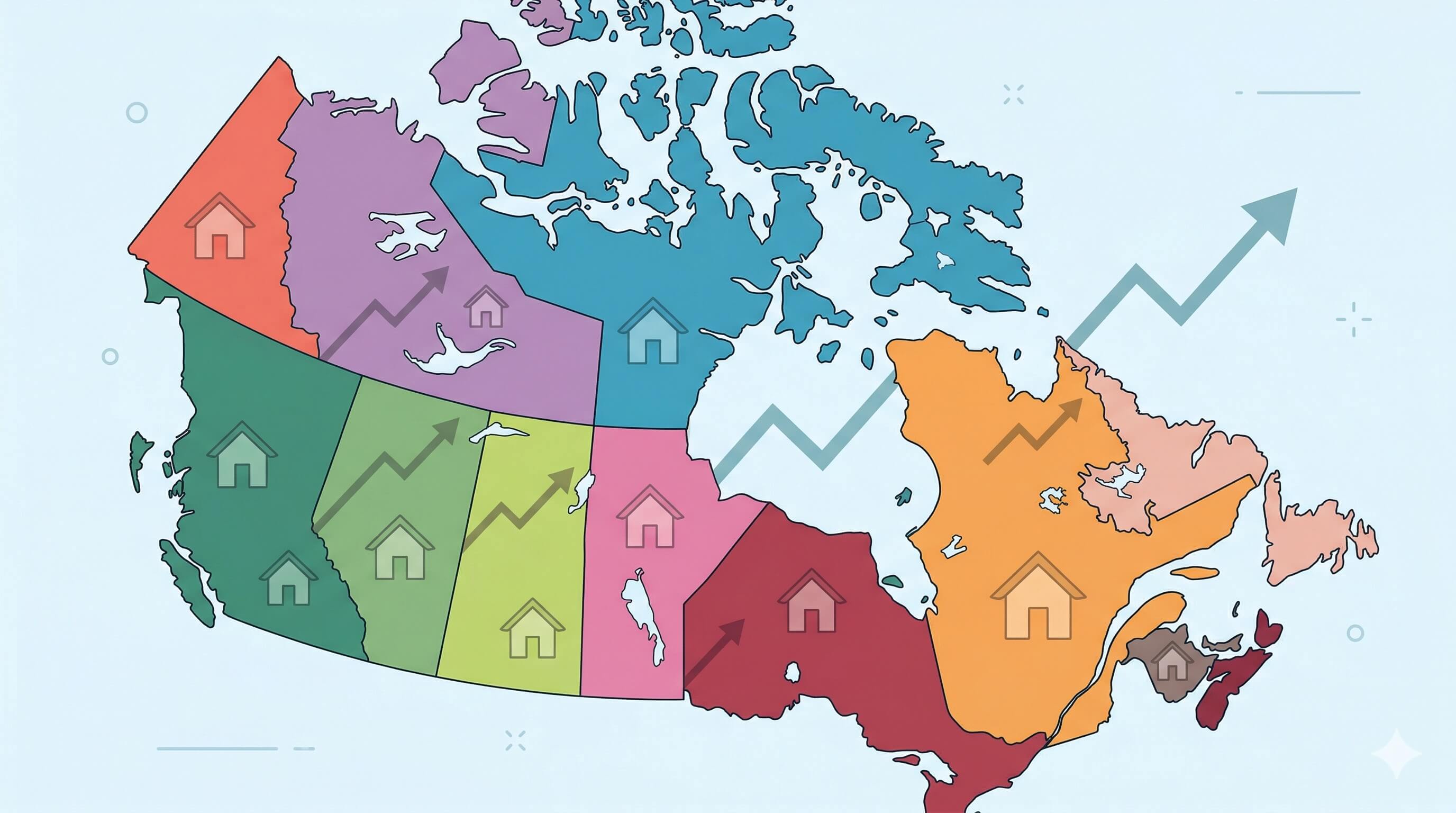
1Why Home Insurance Rates Vary So Much Across Canada
If you've ever compared home insurance quotes with a friend in another province, you've probably noticed a striking gap. A homeowner in Vancouver might pay $1,800 a year for coverage that would cost $1,100 in Montreal — for a home of similar size and value.
That's because home insurance rates in Canada are shaped by a complex mix of provincial factors: local weather patterns, construction costs, regulatory environments, claims history, and even the competitiveness of the insurance market in each region.
Understanding these differences isn't just interesting trivia — it's essential for making informed decisions about your coverage, your budget, and even where you choose to live. In this guide, we'll walk through:
- Average home insurance premiums for every province
- Year-over-year rate changes and which provinces are rising fastest
- 10-year premium trends showing long-term cost trajectories
- The specific factors driving costs in each region
- How to use this data to get a better rate, no matter where you live
All data referenced in this article is drawn from the Insurance Bureau of Canada (IBC), provincial regulatory filings, and industry rate analyses current to early 2026.
2National Overview: Average Home Insurance Rates Across Canada
The national average home insurance premium in Canada sits at approximately $1,340 per year as of 2026 — but that number masks enormous provincial variation. The gap between the cheapest and most expensive provinces can be over $1,000 annually for similar coverage.
Average Annual Home Insurance Premiums by Province (2026)
| Province | Average Annual Premium Range | Approximate Monthly Cost |
|---|---|---|
| British Columbia | $1,500 – $2,200 | $125 – $183 |
| Alberta | $1,300 – $1,800 | $108 – $150 |
| Saskatchewan | $1,100 – $1,600 | $92 – $133 |
| Manitoba | $1,000 – $1,500 | $83 – $125 |
| Ontario | $1,200 – $2,000 | $100 – $167 |
| Quebec | $900 – $1,400 | $75 – $117 |
| New Brunswick | $900 – $1,400 | $75 – $117 |
| Nova Scotia | $1,000 – $1,600 | $83 – $133 |
| Prince Edward Island | $900 – $1,300 | $75 – $108 |
| Newfoundland & Labrador | $1,000 – $1,500 | $83 – $125 |
Note: Ranges reflect variations based on home value, location within the province, coverage level, and individual risk factors. Urban centres within each province tend to skew higher.
Key Takeaways from the Provincial Breakdown
- British Columbia is the most expensive province for home insurance, with premiums routinely exceeding $1,800 in the Greater Vancouver area.
- Ontario has the widest range ($1,200–$2,000), reflecting the dramatic difference between rural Ontario and the GTA.
- Quebec and Prince Edward Island consistently offer the lowest rates in the country.
- Alberta falls in the middle but has experienced some of the steepest rate increases in recent years.
3Year-Over-Year Rate Changes: Which Provinces Are Rising Fastest?
Not all provinces are experiencing rate increases at the same pace. Some regions have seen double-digit premium hikes driven by catastrophic weather events, while others have remained relatively stable.
Year-Over-Year Home Insurance Premium Changes by Province
| Province | YoY Premium Increase | Primary Driver |
|---|---|---|
| Nova Scotia | 12.12% | Hurricane Fiona aftermath, coastal flooding |
| Alberta | 9.07% | Hailstorms, wildfire, and flood claims |
| British Columbia | 8.34% | Wildfire risk, earthquake reinsurance costs |
| Saskatchewan | 7.15% | Severe summer storms, hail damage |
| Newfoundland & Labrador | 6.89% | Winter storm damage, coastal erosion |
| Manitoba | 5.42% | Overland flooding, spring melt events |
| Ontario | 5.18% | Urban flooding, rising replacement costs |
| New Brunswick | 4.73% | River flooding, aging housing stock |
| Prince Edward Island | 3.91% | Coastal storm surge exposure |
| Quebec | 2.18% | Competitive market, lower catastrophic losses |
What's Driving the Disparity?
Nova Scotia's 12.12% increase is the highest in the country and is largely a delayed response to Hurricane Fiona in 2022, which caused over $800 million in insured losses across Atlantic Canada. Insurers have been gradually repricing risk in the region as climate models project more frequent and intense Atlantic storms.
Alberta's 9.07% increase reflects the province's ongoing exposure to severe convective storms. The Calgary hailstorm of 2020 — which caused $1.3 billion in insured damage — fundamentally shifted how insurers price hail risk in the province. Subsequent hail and wildfire seasons have only reinforced the trend.
Quebec's modest 2.18% increase stands in sharp contrast. The province benefits from a highly competitive insurance market with several large mutual insurers (like Desjardins and La Capitale) that exert downward pressure on rates. Quebec also experiences fewer catastrophic weather events relative to western and Atlantic provinces.
410-Year Premium Trends: How Much More Are Canadians Paying?
Looking at a longer time horizon reveals just how dramatically home insurance costs have escalated across the country. Over the past decade, every province has experienced significant premium growth — but some have been hit far harder than others.
10-Year Cumulative Premium Increases by Province
| Province | 10-Year Dollar Increase | Approximate % Increase | Key Contributing Events |
|---|---|---|---|
| Alberta | +$660 | ~58% | 2016 Fort McMurray wildfire ($3.7B), 2020 Calgary hailstorm ($1.3B), recurring severe storms |
| British Columbia | +$592 | ~47% | 2017 & 2021 wildfire seasons, 2021 atmospheric river flooding, earthquake reinsurance hikes |
| Ontario | +$519 | ~43% | 2013 Toronto flood ($1B+), recurring urban basement flooding, rising GTA replacement costs |
| Nova Scotia | +$487 | ~52% | Hurricane Fiona (2022), increasing nor'easter frequency, coastal erosion |
| Saskatchewan | +$412 | ~39% | Recurring hail and summer storm seasons, rural wildfire exposure |
| Manitoba | +$378 | ~37% | 2011 & 2014 spring flooding, Lake Manitoba/Assiniboine River events |
| Newfoundland & Labrador | +$365 | ~38% | Snowmageddon (2020), winter storm damage, supply chain delays for repairs |
| New Brunswick | +$341 | ~36% | Saint John River flooding, spring ice jam events |
| Quebec | +$321 | ~30% | 2017 spring flooding ($223M), 2019 floods, but offset by competitive market |
| Prince Edward Island | +$298 | ~31% | Post-tropical storms, gradual coastal erosion risk repricing |
The Big Picture
Alberta's $660 increase over the past decade is the highest in absolute dollar terms, driven largely by the 2016 Fort McMurray wildfire — the costliest insured natural disaster in Canadian history at $3.7 billion — and the 2020 Calgary hailstorm. These catastrophic events forced insurers to fundamentally reassess risk pricing for the entire province.
British Columbia's $592 increase reflects a similar pattern of escalating wildfire seasons and the unprecedented November 2021 atmospheric river event, which caused billions in damage across the Fraser Valley. The province's unique earthquake exposure also adds a layer of reinsurance cost that other provinces don't face.
Quebec's relatively modest $321 increase over the full decade highlights how market structure matters. With strong mutual insurers and cooperative models keeping competition fierce, Quebec homeowners have been partially shielded from the rate acceleration seen elsewhere — though even Quebec's 30% increase significantly outpaces general inflation over the same period.
5Province-by-Province Deep Dive: What Drives Your Rates?
Each province has its own unique combination of risk factors that shape home insurance premiums. Here's what you need to know about the forces driving costs where you live.
British Columbia ($1,500 – $2,200/year)
BC's position as the most expensive province for home insurance is driven by three compounding factors:
- Earthquake risk: The Cascadia Subduction Zone poses a significant seismic threat to the Lower Mainland and Vancouver Island. Reinsurance costs for earthquake exposure have risen steadily, and these costs are passed through to homeowners even on standard policies.
- Wildfire exposure: The 2017 and 2021 wildfire seasons were among the worst in BC history. Communities in the interior (Kamloops, Kelowna, Prince George) face particularly elevated rates.
- Replacement costs: BC has some of the highest construction and labour costs in Canada. Rebuilding a home in the Lower Mainland can cost 20–30% more than in other provinces, directly inflating dwelling coverage requirements.
Ontario ($1,200 – $2,000/year)
Ontario's wide premium range reflects the province's diversity:
- Urban flooding in the GTA: Toronto and surrounding municipalities have experienced multiple severe basement flooding events. Aging storm infrastructure in older neighbourhoods drives up water damage claims.
- High replacement costs: Skilled labour shortages and elevated material costs in southern Ontario push replacement values higher, increasing dwelling coverage premiums.
- Rural vs. urban divide: A home in rural eastern Ontario might cost $1,200/year to insure, while a comparable property in midtown Toronto could exceed $2,000 due to density, theft risk, and liability exposure.
Alberta ($1,300 – $1,800/year)
Alberta's insurance landscape has been reshaped by catastrophic events:
- Hailstorm capital of Canada: Calgary and central Alberta experience more damaging hail events than anywhere else in the country. The 2020 northeast Calgary hailstorm alone generated $1.3 billion in insured losses.
- Wildfire: The 2016 Fort McMurray fire displaced 88,000 people and destroyed 2,400 structures. The event fundamentally changed how insurers price wildfire risk across the province.
- Overland flooding: Southern Alberta, particularly the Bow River and Elbow River corridors, faces recurring spring flooding that drives up water damage endorsement costs.
Quebec ($900 – $1,400/year)
Quebec offers the most affordable home insurance market in Canada for several reasons:
- Competitive market structure: Large mutual insurers like Desjardins, La Capitale, and Promutuel create strong price competition. These cooperative-model companies reinvest surpluses rather than distributing dividends, which helps keep premiums lower.
- Lower replacement costs: Construction costs in most of Quebec are below the national average, reducing the dwelling coverage portion of premiums.
- Fewer catastrophic events: While Quebec does experience spring flooding (notably the 2017 and 2019 events), the province has been spared the wildfire and hailstorm severity seen in western Canada.
- Regulatory environment: Quebec's Autorité des marchés financiers (AMF) maintains a regulatory framework that promotes market stability and consumer protection.
Prairie Provinces: Saskatchewan ($1,100 – $1,600) and Manitoba ($1,000 – $1,500)
- Saskatchewan faces severe summer convective storms with hail, wind, and tornado risk. Agricultural communities also contend with wildfire exposure along the boreal fringe. The province's relatively small insurance market limits price competition.
- Manitoba is defined by flood risk. The Red River and Assiniboine River systems create recurring spring flooding events, and overland water coverage has become increasingly expensive. The 2011 flood caused over $1 billion in total damages.
Atlantic Provinces: Nova Scotia, New Brunswick, PEI, and Newfoundland & Labrador
- Nova Scotia ($1,000 – $1,600): Hurricane Fiona in 2022 was a turning point — the costliest extreme weather event in Atlantic Canadian history. Coastal storm surge, wind damage, and erosion are driving rapid premium increases. Nova Scotia's 12.12% YoY increase is the highest in Canada.
- New Brunswick ($900 – $1,400): River flooding along the Saint John River is the primary claims driver. Spring ice jam events regularly cause basement flooding in communities throughout the river valley.
- Prince Edward Island ($900 – $1,300): PEI benefits from relatively low replacement costs and a small, tight-knit insurance market. However, coastal erosion and storm surge risk are being gradually repriced as climate data improves.
- Newfoundland & Labrador ($1,000 – $1,500): Harsh winters drive significant claims for wind, ice, and snow damage. The January 2020 "Snowmageddon" event in St. John's highlighted the province's vulnerability. Remote locations and supply chain delays also increase repair costs.
6Cheapest vs. Most Expensive: A Side-by-Side Comparison
To illustrate just how much location matters, let's compare the cheapest and most expensive provinces using a standardized example: a detached home with a replacement cost of $400,000, standard coverage, and a $1,000 deductible.
Estimated Annual Premium for a $400,000 Replacement-Cost Home
| Factor | Quebec (Cheapest) | British Columbia (Most Expensive) |
|---|---|---|
| Estimated annual premium | $1,050 | $1,850 |
| Monthly cost | $88 | $154 |
| Annual difference | $800 per year | |
| 10-year cost difference | $8,000+ | |
| Primary risk factor | Spring flooding (moderate) | Earthquake + wildfire (high) |
| Earthquake endorsement | Not typically needed | $200 – $600 additional |
| Overland water endorsement | $50 – $150 | $100 – $300 |
| Market competition | High (mutual insurers) | Moderate |
The $800 annual gap is significant — over a 25-year mortgage, that's a $20,000 difference in insurance costs alone. And this example uses mid-range estimates; homeowners in high-risk zones within BC could pay substantially more.
What About Within the Same Province?
Provincial averages can be misleading. Within any given province, premiums can vary by 50% or more based on:
- Postal code: Insurers use granular geographic data to assess flood, fire, and crime risk at the neighbourhood level.
- Distance to fire services: Homes more than 8 km from a fire station or without nearby hydrant access often pay a rural surcharge.
- Proximity to water: Properties near rivers, lakes, or coastlines face higher flood risk premiums.
- Local claims history: Areas with a high volume of recent claims (e.g., a neighbourhood hit by repeat sewer backups) will see elevated rates for all residents.
7Key Factors That Affect Home Insurance Rates in Every Province
While provincial location is a major driver, several universal factors influence your home insurance premium regardless of where you live in Canada.
Property-Specific Factors
- Replacement cost: This is the estimated cost to rebuild your home from scratch — not its market value. Higher replacement costs mean higher premiums. In 2026, national average rebuilding costs have risen 15–20% compared to 2020 due to labour shortages and material inflation.
- Age and construction type: Homes built before 1970 often have outdated systems (knob-and-tube wiring, galvanized plumbing, oil heating) that significantly increase fire and water damage risk. A home with updated systems can save 10–20% on premiums.
- Roof age and material: A roof older than 20 years is a red flag for insurers. Some companies will decline coverage entirely for roofs over 25 years old. Metal and tile roofs generally earn lower rates than asphalt shingles.
- Basement type: Finished basements increase your personal property exposure, while walkout basements in low-lying areas elevate flood risk. Both can raise premiums.
Personal and Behavioural Factors
- Claims history: Homeowners with two or more claims in the past five years can expect premium increases of 15–30%. Some insurers may decline renewal after three claims in five years.
- Credit score: Most Canadian insurers (except in Ontario, where it's restricted) use credit-based insurance scores. A strong score can reduce premiums by 10–15%.
- Bundling: Combining home and auto insurance with the same provider typically yields a 10–15% multi-line discount.
- Security systems: Monitored alarm systems, water leak detectors, and smart home devices can earn discounts of 5–15%.
- Deductible choice: Raising your deductible from $500 to $2,500 can reduce your annual premium by 15–25%, but you need to ensure you can afford the out-of-pocket cost if you file a claim.
Market and Regulatory Factors
- Reinsurance costs: Insurers buy reinsurance to protect against catastrophic losses. Global reinsurance rates have risen sharply since 2020, and these costs are passed directly to consumers.
- Provincial regulation: Some provinces have stricter rate approval processes (e.g., Alberta's rate filing requirements), which can slow premium increases but may also limit market entry by new competitors.
- Market concentration: Provinces with fewer active insurers tend to have less price competition. Quebec's highly competitive market with many mutual insurers contributes to its lower rates.
8How to Get the Best Home Insurance Rate in Your Province
No matter which province you live in, there are concrete steps you can take to ensure you're paying a fair rate for your home insurance.
1. Shop Around — Every Single Year
Loyalty rarely pays in home insurance. Studies by the IBC and consumer groups consistently show that homeowners who compare quotes at renewal save an average of $300–$500 per year. Online comparison platforms have made this process faster than ever — most quotes take under five minutes.
2. Understand What You're Comparing
Not all policies are equal. When comparing quotes, ensure you're looking at:
- The same dwelling coverage amount (replacement cost, not market value)
- Matching deductible levels
- Equivalent liability limits ($1M vs. $2M makes a meaningful difference)
- Whether water damage endorsements (sewer backup, overland water) are included
- Whether the policy is comprehensive, broad, or basic form
3. Invest in Risk Reduction
Some of the most effective premium-reducing investments include:
| Upgrade | Approximate Cost | Potential Premium Savings |
|---|---|---|
| Monitored alarm system | $300 – $600/year | 5 – 10% discount |
| Water leak detection system | $200 – $500 one-time | 3 – 8% discount |
| Backwater valve installation | $1,500 – $3,000 one-time | Reduced sewer backup premium |
| Roof replacement | $8,000 – $15,000 | 10 – 20% reduction if roof was 20+ years |
| Electrical panel upgrade | $2,000 – $4,000 | 5 – 15% reduction (eliminates surcharge) |
| Bundling home + auto | No cost | 10 – 15% multi-policy discount |
4. Review Your Coverage Annually
Replacement costs change with construction inflation. If your dwelling coverage hasn't been updated in several years, you may be either underinsured (risky) or overinsured (expensive). Ask your insurer or broker to recalculate your replacement cost estimate at each renewal.
5. Consider Your Deductible Strategically
A higher deductible means lower premiums — but it also means more out-of-pocket expense when you file a claim. The sweet spot for most Canadian homeowners is a $1,000 to $2,500 deductible. Going below $1,000 is rarely cost-effective, and going above $2,500 provides diminishing returns.
6. Ask About Available Discounts
Many homeowners miss discounts they're entitled to. Common ones include:
- Claims-free discount (3–5 years with no claims)
- New home discount (homes less than 10 years old)
- Retiree/work-from-home discount (someone is home during the day)
- Professional or alumni group rates
- Loyalty discount (though shopping around usually saves more)
9Final Thoughts: Location Matters, but So Do Your Choices
Where you live in Canada has a significant impact on your home insurance premium — a BC homeowner can expect to pay $800 or more per year than a comparable homeowner in Quebec. And the gap is growing: provinces like Nova Scotia and Alberta are experiencing year-over-year increases exceeding 9–12%, while Quebec's rates have risen a comparatively modest 2.18%.
But provincial averages only tell part of the story. Your specific postal code, your home's condition and age, your claims history, and the coverage choices you make all play a critical role. Two homeowners in the same city can have premiums that differ by hundreds of dollars based on these individual factors.
The most important step you can take is to compare quotes from multiple providers every year. Online platforms make this easy, and the potential savings — $300 to $500 annually — make it well worth the few minutes of effort.
Whether you're in a high-cost province or a low-cost one, understanding what drives your rate gives you the power to make smarter decisions about your coverage and your budget.
Powered by Bluecouch
Find the Best Rate in Your Province — Compare Instantly
- Bluecouch compares home insurance quotes from multiple Canadian providers at once
- See real rates for your specific address, not just provincial averages
- Our AI finds the best coverage-to-price ratio for your home automatically
- Switch or start your policy online — no lengthy back-and-forth with a broker
Frequently Asked Questions
British Columbia consistently has the highest home insurance premiums in Canada, with average annual costs ranging from $1,500 to $2,200. This is driven by earthquake risk in coastal areas, high replacement costs due to elevated property values, and increasing wildfire exposure in the BC interior.
Quebec generally offers the lowest home insurance premiums in Canada, with average annual costs between $900 and $1,400. This is due to a combination of lower replacement costs, a competitive insurance market with strong mutual insurers, and fewer catastrophic weather claims compared to western provinces.
Provinces like Nova Scotia (12.12% year-over-year increase) and Alberta (9.07%) are seeing steep rate hikes primarily due to escalating climate-related claims — hurricanes, flooding, and hailstorms. Rising construction and labour costs, supply chain inflation, and insurer losses from catastrophic weather events are also contributing factors.
Over the past decade, Alberta has seen the largest dollar increase at approximately $660, followed by British Columbia at $592, Ontario at $519, and Quebec at $321. Nationally, the average home insurance premium has risen by roughly 40–60%, far outpacing general inflation.
Your specific address matters more than the province alone. Insurers use postal-code-level data to assess risks like proximity to flood zones, wildfire areas, crime rates, and distance to fire stations. Two homes in the same province can have very different premiums based on their exact location, construction type, and local hazard exposure.
Compare home insurance rates from multiple providers — get your personalized quote in 90 seconds.
Get Your Quote