

1Why Home Insurance Claims Get Denied — and What You Can Do About It
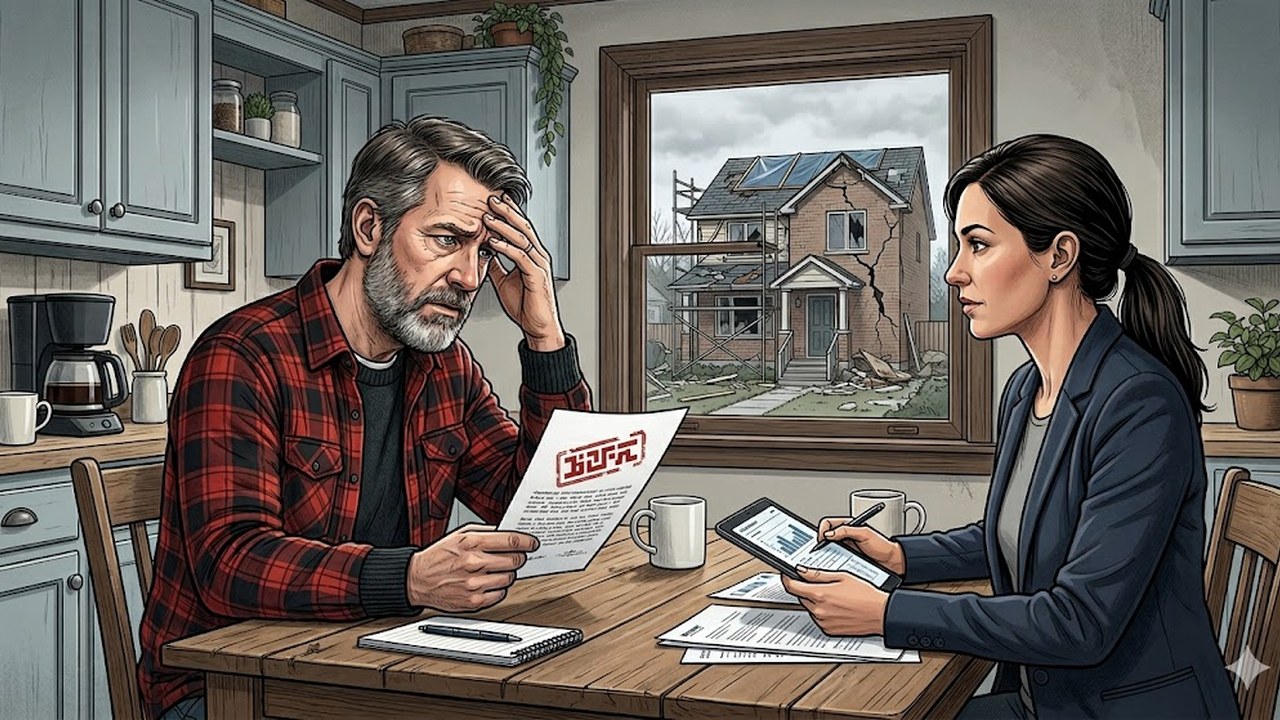
You've been paying your home insurance premiums for years. When a pipe bursts, a tree falls on your roof, or a fire damages your kitchen, you expect your insurer to step in and cover the loss. But then you receive the letter no homeowner wants to see: your claim has been denied.
In Canada, claim denials are more common than most homeowners realize. According to the General Insurance OmbudService (GIO), thousands of Canadian policyholders dispute their insurer's decision each year — and many of those disputes are resolved in the homeowner's favour. A denial is not necessarily the final word.
This guide explains the most common reasons home insurance claims get denied in Canada, walks you through the appeal process step by step, and outlines your options when the insurer won't budge — from invoking the appraisal clause to hiring a public adjuster to filing a complaint with provincial regulators.
2The Most Common Reasons Home Insurance Claims Are Denied
Before you can fight a denial, you need to understand why it happened. Here are the most frequent reasons Canadian insurers deny home insurance claims:
1. The Peril Is Excluded from Your Policy
Standard home insurance policies in Canada use either named perils or comprehensive (all-risk) coverage. Named perils policies only cover events explicitly listed — typically fire, lightning, windstorm, hail, theft, vandalism, and a few others. Comprehensive policies cover everything except what's specifically excluded.
Common exclusions across both types include:
- Overland flooding (requires a separate endorsement)
- Sewer and drain backup (requires a separate endorsement)
- Earthquake
- Gradual water damage and seepage
- Mould and fungus (unless caused by a covered peril)
- Wear and tear, deterioration, and lack of maintenance
- Intentional damage
- Damage from pests (rodents, insects, raccoons)
2. Failure to Maintain the Property
Insurance is designed to cover sudden and accidental losses — not damage caused by neglect. If an insurer determines that the loss could have been prevented with reasonable maintenance, they can deny the claim. Common examples include roof damage from missing shingles that were never replaced, foundation cracks from years of poor drainage, and frozen pipes in an unheated property during winter.
3. Late Reporting
Most Canadian policies require you to report a claim as soon as reasonably possible — typically within 24 to 72 hours. Delaying your report gives the insurer grounds to argue that the delay prevented them from properly assessing the damage or that additional damage occurred that could have been mitigated.
4. Misrepresentation on the Application
If you provided inaccurate information when purchasing or renewing your policy — such as understating the age of your roof, failing to disclose a home-based business, or omitting a previous claim — the insurer can void the policy retroactively. This is known as material misrepresentation, and it can result in the entire policy being cancelled, not just the current claim being denied.
5. Insufficient Documentation
Without adequate photos, videos, receipts, and records of the damage, the insurer cannot verify the extent of the loss. Poorly documented claims are far more likely to be underpaid or denied outright.
| Reason for Denial | Frequency | Can You Appeal? |
|---|---|---|
| Excluded peril | Most common | Yes, if coverage is ambiguous |
| Lack of maintenance | Very common | Yes, with contractor evidence |
| Late reporting | Common | Yes, with valid explanation |
| Misrepresentation | Moderate | Difficult, but possible |
| Insufficient documentation | Common | Yes, with supplementary evidence |
| Policy lapsed (missed premium) | Less common | Very difficult |
3Step 1: Get the Denial in Writing and Review Your Policy
When your claim is denied, the first thing you should do is request a detailed written explanation from your insurer. Under Canadian insurance law, the insurer must provide the specific reason(s) for the denial, including references to the policy language they are relying on.
What to Look For in the Denial Letter
- The specific policy clause or exclusion cited
- Whether the denial is for the entire claim or only part of it
- Any conditions that were allegedly not met (e.g., maintenance obligations, reporting deadlines)
- Information about your right to appeal
Review Your Policy Carefully
Once you have the denial letter, pull out your actual policy document — not just the summary or declarations page. Read the relevant sections word by word. Insurance policies are legal contracts, and the language matters. Look for:
- Definitions: How does the policy define the peril in question? Sometimes the language is broader than the insurer's interpretation.
- Exclusions vs. exceptions to exclusions: Many exclusions have exceptions. For example, a policy might exclude water damage but include an exception for sudden discharge from plumbing.
- Conditions: Were you actually required to do what the insurer says you failed to do? Is the condition clearly stated?
If the policy language is ambiguous, Canadian courts have consistently ruled in favour of the policyholder. This principle — known as contra proferentem — means that unclear policy wording is interpreted against the party that drafted it (the insurer).
4Step 2: File an Internal Appeal with Your Insurer
Every Canadian insurance company is required to have a formal internal complaints and dispute resolution process. This is your first avenue of appeal, and it's free.
How to File an Effective Appeal
- Write a formal appeal letter. Address it to the insurer's complaints department (not the claims adjuster who denied your claim). Include your policy number, claim number, and a clear statement that you are disputing the denial.
- Explain why you believe the denial is incorrect. Reference specific policy language that supports your position. If the insurer cited an exclusion, explain why the exclusion doesn't apply or point to an exception within the exclusion.
- Include supporting evidence. Attach any new documentation — additional photos, contractor reports, expert opinions, weather records, maintenance receipts — that strengthens your case.
- Set a deadline for response. Request a written response within 30 days. While insurers are not legally bound by your deadline, it signals that you are serious and tracking the timeline.
What to Expect
The insurer's complaints department will review your appeal independently from the original claims team. In many cases, claims are overturned at this stage — especially when the homeowner provides additional documentation or points out policy language the adjuster may have overlooked. The Insurance Bureau of Canada (IBC) reports that a significant portion of complaints are resolved through insurers' internal processes.
If the internal appeal is denied, you will receive a final position letter. This document is important — you will need it to escalate to external dispute resolution.
5Step 3: Escalate to the General Insurance OmbudService (GIO)
If your insurer's internal appeal process fails, your next step is the General Insurance OmbudService (GIO). The GIO is an independent, national organization that resolves disputes between consumers and their home, auto, and business insurers in Canada.
How the GIO Process Works
- Eligibility: You must have completed the insurer's internal complaints process and received a final position letter. The dispute must involve a federally or provincially regulated insurer.
- Filing a complaint: You can file online at the GIO website or by phone. There is no cost to the consumer.
- Investigation: A GIO dispute resolution officer reviews your complaint, the insurer's file, and all supporting documentation. They may request additional information from either party.
- Recommendation: The GIO issues a non-binding recommendation. While it's not legally enforceable, insurers take GIO recommendations seriously because the GIO can escalate matters and the outcome is part of the public record.
Provincial Insurance Regulators
In addition to the GIO, you can file a complaint with your provincial insurance regulator. Each province has its own body:
| Province | Regulator |
|---|---|
| Ontario | Financial Services Regulatory Authority (FSRA) |
| British Columbia | BC Financial Services Authority (BCFSA) |
| Alberta | Alberta Superintendent of Insurance |
| Quebec | Autorité des marchés financiers (AMF) |
| Manitoba | Manitoba Financial Services Agency |
| Saskatchewan | Financial and Consumer Affairs Authority (FCAA) |
| Nova Scotia | Office of the Superintendent of Insurance |
| New Brunswick | Financial and Consumer Services Commission (FCNB) |
Provincial regulators can investigate whether the insurer followed proper procedures and complied with provincial insurance legislation. While they typically cannot order an insurer to pay a claim, their involvement often prompts a second look at the decision.
6The Appraisal Clause and Hiring a Public Adjuster
If your dispute is about the amount of the loss rather than whether the loss is covered, two powerful tools are available to you: the appraisal clause and public adjusters.
The Appraisal Clause
Most Canadian home insurance policies include an appraisal clause (sometimes called a "loss valuation" clause). This clause allows either the insurer or the policyholder to request an independent appraisal when they disagree on the value of the damage.
Here's how the appraisal process typically works:
- Either party invokes the appraisal clause in writing.
- Each side selects an independent, qualified appraiser.
- The two appraisers attempt to agree on the value of the loss.
- If they can't agree, they select a neutral umpire. The umpire's decision (or any two of the three agreeing) is binding.
The appraisal process is significantly faster and less expensive than litigation. Each party pays for their own appraiser, and the cost of the umpire is typically split. This process is ideal when the insurer acknowledges coverage but offers a settlement you believe is too low.
Public Adjusters
A public adjuster is a licensed insurance professional who works exclusively for the policyholder. Unlike the insurer's adjuster (who works for the insurance company), a public adjuster represents your interests throughout the claims process.
Public adjusters can help with:
- Documenting and valuing the damage accurately
- Preparing and submitting the claim with proper supporting evidence
- Negotiating with the insurer's adjuster on your behalf
- Identifying coverage you may not have realized you had
- Managing the appraisal process if needed
Public Adjuster Costs
| Fee Structure | Typical Range | When It Applies |
|---|---|---|
| Percentage of settlement | 5% - 15% | Most common; fee based on final payout |
| Flat fee | $500 - $5,000+ | Smaller or straightforward claims |
| Hourly rate | $100 - $300/hour | Consulting or advisory services only |
Public adjusters are regulated at the provincial level in Canada. Make sure any adjuster you hire is licensed in your province and has experience with the type of claim you're dealing with. Ask for references and verify their track record before signing a contract.
7Legal Options: When to Hire an Insurance Lawyer
If internal appeals, the GIO process, and the appraisal clause have not resolved your dispute, you may need to consider legal action. While litigation should be a last resort — it's expensive and time-consuming — there are situations where it's the right move.
When to Consult an Insurance Lawyer
- The claim value is substantial (typically $25,000+) and the insurer refuses to negotiate
- The insurer is acting in bad faith — unreasonably delaying, misrepresenting policy terms, or pressuring you to accept an unfair settlement
- The denial is based on alleged misrepresentation, and you believe the information you provided was accurate
- Your policy has been cancelled or voided retroactively
- The insurer is denying coverage for a peril that you believe is clearly covered by the policy language
Bad Faith Claims in Canada
Canadian courts recognize the concept of insurer bad faith. If an insurer unreasonably denies a claim, delays payment without justification, or fails to properly investigate, the policyholder may be entitled to damages beyond the original claim amount — including punitive damages. The Supreme Court of Canada's landmark decision in Whiten v. Pilot Insurance (2002) awarded $1 million in punitive damages for bad faith claim handling, establishing an important precedent for policyholder rights.
Small Claims Court vs. Superior Court
| Option | Claim Limit | Cost | Best For |
|---|---|---|---|
| Small Claims Court | $25,000 - $50,000 (varies by province) | $100 - $500 in filing fees | Smaller claims; no lawyer required |
| Superior Court | No limit | $5,000 - $50,000+ in legal fees | High-value or complex disputes |
Many insurance lawyers work on a contingency fee basis for strong cases, meaning they only get paid if you win. Typical contingency fees range from 25% to 40% of the settlement amount. Always clarify the fee structure before retaining a lawyer.
Limitation Periods by Province
You must file a lawsuit within the limitation period set by your province. In most provinces, this is two years from the date of the denial or from when you knew (or should have known) that your claim was denied. Missing this deadline permanently bars your legal claim.
8How to Prevent Future Claim Denials
The best way to deal with a denied claim is to prevent one in the first place. Here are practical steps every Canadian homeowner should take:
- Read your policy thoroughly. Don't just skim the declarations page. Understand what's covered, what's excluded, and what conditions you must meet. Pay special attention to maintenance requirements and reporting obligations.
- Add endorsements for common gaps. Sewer backup, overland water, and earthquake coverage are available as add-ons in most provinces. If you live in an area prone to these risks, adding them costs far less than paying for damage out of pocket.
- Maintain your property. Keep records of all maintenance — roof inspections, plumbing updates, furnace servicing, tree trimming. If you ever need to prove that you maintained the property, these records are invaluable.
- Document everything before a loss occurs. Create a comprehensive home inventory with photos, videos, receipts, and serial numbers. Update it annually and store it in the cloud.
- Report claims immediately. Don't wait to see if the damage gets worse or to get a contractor's opinion first. Report to your insurer within 24 hours, then follow up with details.
- Be completely honest on your application. Disclose everything accurately — prior claims, renovations, home business use, age of the roof and major systems. Saving a few dollars on your premium by omitting information can cost you your entire claim.
- Review your policy annually. Life changes — renovations, valuable purchases, a new home office — can affect your coverage needs. Update your policy to match your current situation.
9Final Thoughts
Having your home insurance claim denied is frustrating, but it's not the end of the road. Canadian homeowners have multiple avenues to dispute a denial — from internal appeals to the GIO, the appraisal clause, public adjusters, and ultimately the courts.
The key takeaways:
- Always get the denial in writing and review the specific policy language cited
- File an internal appeal with your insurer's complaints department as the first step
- Escalate to the General Insurance OmbudService (GIO) or your provincial regulator if the internal appeal fails
- Use the appraisal clause for disputes about the amount of the loss
- Consider a public adjuster for complex or high-value claims
- Consult an insurance lawyer if the claim is substantial or the insurer is acting in bad faith
- Act promptly — limitation periods apply to all dispute options
The homeowners who get the best outcomes are the ones who understand their policy, document thoroughly, and know their rights. If your current coverage has gaps that leave you vulnerable, now is the time to fix that — not after the next loss occurs.
Frequently Asked Questions
The most common reason is that the damage falls outside the scope of the policy. Many homeowners are surprised to learn that perils like overland flooding, sewer backup, earthquake, and gradual wear and tear are excluded from standard policies. Other frequent reasons include late reporting, insufficient documentation, failure to maintain the property, and misrepresentation on the original insurance application.
Yes. Every Canadian insurer is required to have an internal complaints process. You can submit a written appeal to the insurer's complaints department. If the internal appeal is unsuccessful, you can escalate to the General Insurance OmbudService (GIO), your provincial insurance regulator, or pursue legal action through the courts. There are time limits for each step, so act promptly.
A public adjuster is a licensed professional who works on behalf of the policyholder — not the insurance company — to assess damage, prepare the claim, and negotiate the settlement. In Canada, public adjusters typically charge between 5% and 15% of the final settlement amount. They are most valuable for complex or high-value claims where the insurer's initial offer appears significantly below the actual loss.
The time limit depends on your province. In most provinces, the limitation period to start a lawsuit against your insurer is two years from the date of the denial. In some provinces like Saskatchewan, it may be shorter. Your policy may also contain specific deadlines for invoking the appraisal clause or filing a formal dispute, so review your policy documents carefully and act quickly.
The appraisal clause is a provision found in most Canadian home insurance policies that allows either the insurer or the policyholder to request an independent appraisal when they disagree on the value of the loss. Each side hires an independent appraiser, and the two appraisers select an umpire. The umpire's decision is binding. This process is typically faster and cheaper than going to court.
Make sure you have the right coverage before a claim. Get a quote in 90 seconds.
Get Your Quote