
1The Endorsement Most Canadians Don't Know They Need
Most Canadian homeowners know they need home insurance. Far fewer know that the standard policy — even one marketed as "comprehensive" — may pay them only a fraction of what it costs to repair or replace damaged property.
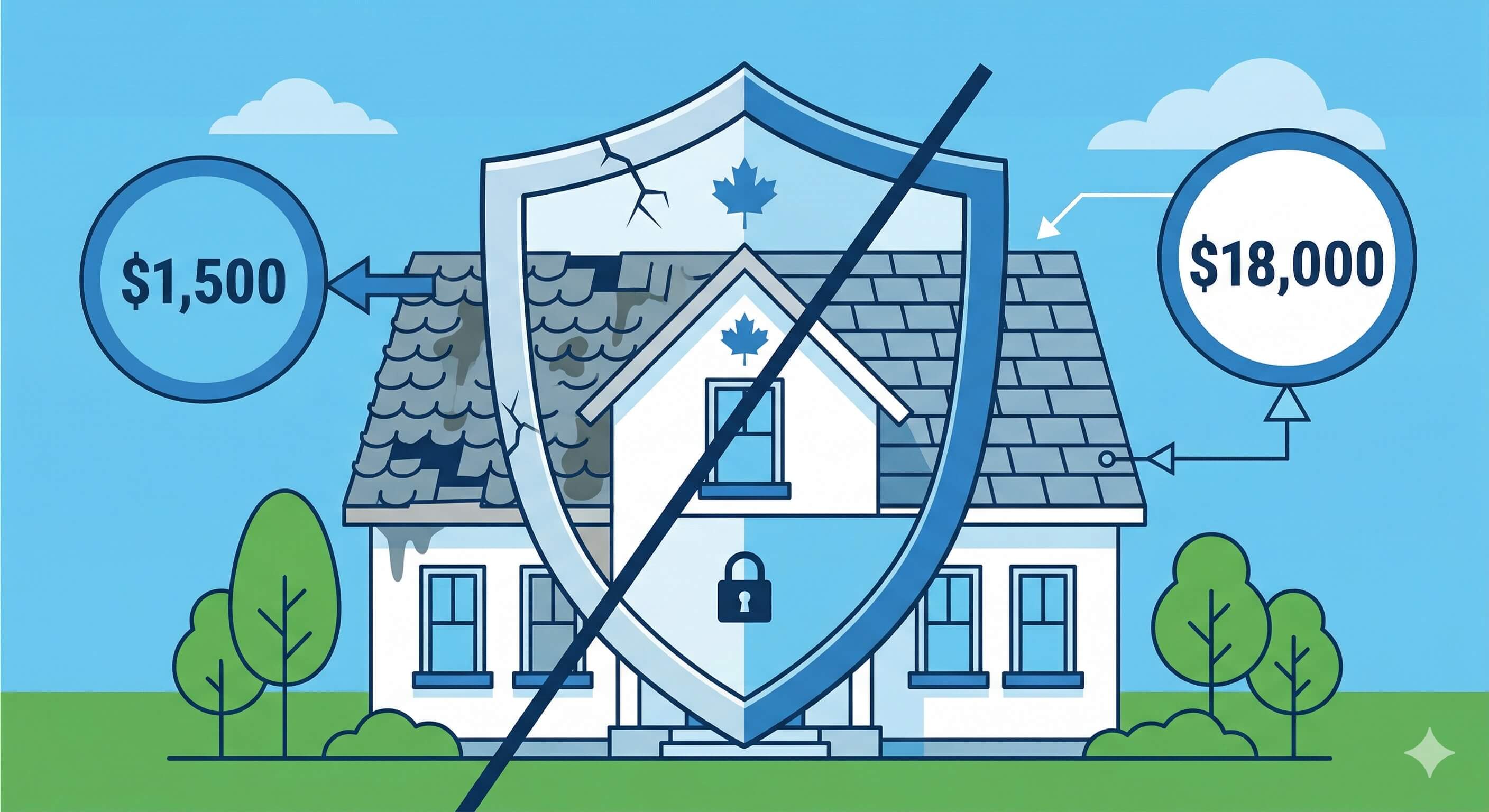
The culprit is depreciation: the reduction in value your insurer applies to your claim payout based on the age and condition of your home and belongings. A 15-year-old roof, a 10-year-old furnace, a 7-year-old refrigerator — all are worth significantly less than new in an insurer's eyes, and that reduction comes directly out of your cheque.
Depreciation protection insurance — also called a depreciation waiver or Guaranteed Replacement Cost endorsement — is the solution. For a modest annual premium, it removes depreciation from the equation entirely. But is it worth adding to your policy? Here's what every Canadian homeowner should know.
2What Exactly Is a Depreciation Protection Endorsement?
A depreciation protection endorsement is an optional add-on to your home insurance policy that eliminates depreciation deductions at claim time. It goes by several names depending on the insurer:
- Guaranteed Replacement Cost
- Depreciation Waiver
- Value Protection
- Enhanced Replacement Cost
- Depreciation Buyback
Under a standard Replacement Cost Value (RCV) policy, your insurer pays you the Actual Cash Value (depreciated value) first, then releases the withheld depreciation after you prove you've replaced the item. This is called recoverable depreciation.
Under a depreciation protection endorsement, the process is even simpler:
- Your insurer pays the full replacement cost upfront — no holdback, no second submission
- You don't need to submit replacement receipts to receive the full amount
- The depreciation question never enters the picture
It's the most comprehensive depreciation coverage available and removes virtually all risk of a depreciation gap at claim time.
3Real Dollar Examples: With vs. Without Depreciation Protection
Numbers make the value of depreciation protection concrete. Here are three scenarios comparing payouts for the same loss under different coverage types:
Scenario 1: Roof Replacement (Hail Damage, Ontario)
| ACV Policy | RCV Policy | Depreciation Protection | |
|---|---|---|---|
| Replacement cost (new roof) | $20,000 | $20,000 | $20,000 |
| Roof age / depreciation | 12 yrs — 52% depreciated | 12 yrs — withheld | N/A — waived |
| Initial payout (less $1,000 deductible) | $8,600 | $8,600 | $19,000 |
| After replacement submission | No additional payment | +$10,400 released | Already received |
| Total payout | $8,600 | $19,000 | $19,000 |
| Out-of-pocket gap | $11,400 | $0 (if receipts submitted) | $0 |
Scenario 2: Furnace Replacement (Burst Pipe, Alberta)
| ACV Policy | Depreciation Protection | |
|---|---|---|
| Replacement cost (new furnace) | $4,500 | $4,500 |
| Furnace age / depreciation | 11 yrs — 65% depreciated | N/A — waived |
| Payout (less $500 deductible) | $1,075 | $4,000 |
| Out-of-pocket gap | $3,425 | $0 |
Scenario 3: Appliances and Electronics (Theft, BC)
A homeowner loses a refrigerator (8 years old, $2,000 replacement), a 65" TV (5 years old, $1,800 replacement), and a laptop (3 years old, $1,600 replacement) to theft.
| Item | ACV Payout | With Depreciation Protection |
|---|---|---|
| Refrigerator | $533 | $2,000 |
| 65" TV | $540 | $1,800 |
| Laptop | $640 | $1,600 |
| Total | $1,713 | $5,400 |
The gap across these three scenarios is stark — depreciation protection can mean receiving $3,700 more or $19,000 more on a single claim, depending on what was damaged.
4How Much Does Depreciation Protection Cost in Canada?
The cost of a depreciation protection endorsement varies by insurer, province, and the value and age of your property, but typical ranges are:
- For the dwelling (structure): $75–$150 per year additional premium
- For personal property (contents): $50–$100 per year additional premium
- Combined (dwelling + contents): $100–$250 per year in total
Put this in context: the additional annual cost is roughly $8–$20 per month. Against a potential claim gap of $10,000–$20,000 on a roof or major structural repair, the cost-benefit analysis is straightforward for most homeowners.
Factors that affect the cost include:
- Home age: Older homes typically carry higher endorsement costs due to greater depreciation exposure
- Roof age: Roofs older than 15 years may not be eligible for depreciation protection, or may be subject to a separate roof depreciation cap
- Coverage limits: Higher content limits mean higher endorsement cost
- Province: Insurance pricing varies significantly by province, with Alberta and Ontario typically seeing higher base premiums and endorsement costs
5Who Needs Depreciation Protection Most?
While depreciation protection can benefit any homeowner, it provides the greatest value in these situations:
Older Homes and Roofs
The older your roof, the more depreciation your insurer will apply — and the larger the gap between your ACV payout and the actual cost to replace it. A 15-year-old asphalt shingle roof on a 25-year lifespan is already 60% depreciated, meaning you'd receive only 40 cents on the dollar under an ACV policy. Depreciation protection closes this gap entirely.
Aging HVAC Systems
Furnaces and central air conditioning units have 15–20 year lifespans and are expensive to replace ($4,000–$10,000+). After 10 years, they are 50–65% depreciated under standard ACV calculations. For homes with older HVAC equipment, the endorsement can pay for itself in a single claim.
Significant Personal Property
Homeowners with high-value electronics, appliances, musical instruments, or furniture that was purchased several years ago face significant depreciation exposure on those items. A full home loss can involve tens of thousands of dollars in content depreciation.
Investment Properties and Rental Properties
Landlords who rent furnished properties face additional exposure on contents. Depreciation protection on a furnished rental unit can dramatically increase the payout for a major loss event.
Who May NOT Need It
New homeowners who recently built or purchased a newly constructed home, with brand-new appliances and contents throughout, have minimal depreciation exposure for the first 3–5 years. In this scenario, the cost of a depreciation protection endorsement may not be justified until the home and contents begin to age.
6Eligibility Restrictions and Policy Conditions to Know
Not every homeowner qualifies for depreciation protection, and not every item is covered even under a depreciation waiver policy. Be aware of these common restrictions:
- Roof age limits: Many Canadian insurers will not offer full depreciation protection on roofs older than 15–20 years. Some will offer a modified endorsement that caps roof depreciation at 50% rather than eliminating it entirely.
- Maintenance requirements: Some endorsements include a maintenance clause — if your home or its components have not been adequately maintained, the insurer may reduce the endorsement's coverage or deny it entirely.
- Item exclusions: Certain categories — such as jewellery, fine art, or collectibles — may be excluded from standard depreciation protection and require separate scheduled coverage.
- Home age limits: Older heritage homes (typically more than 40–50 years old) may require a separate appraisal or may not qualify for Guaranteed Replacement Cost coverage at all.
Always read the endorsement wording carefully and ask your insurer or broker to explain any conditions before adding it to your policy.
7How to Add Depreciation Protection to Your Policy
Adding a depreciation protection endorsement is straightforward:
- Review your current policy. Determine whether you currently have ACV or RCV coverage for your dwelling and contents.
- Contact your insurer or broker. Ask about the depreciation protection endorsement or Guaranteed Replacement Cost rider available under your policy.
- Get the cost. Ask for the specific annual premium increase to add the endorsement — and confirm what is and isn't covered.
- Check for home inspection requirements. Some insurers require a recent home inspection before adding or continuing Guaranteed Replacement Cost coverage.
- Add the endorsement at renewal or mid-term. Most insurers allow mid-term endorsement additions with a pro-rated premium adjustment.
If your current insurer's depreciation protection options are limited or the cost seems high, it may be worth shopping your policy at renewal. Different insurers price this endorsement very differently, and switching can sometimes result in better coverage at a lower overall premium.
8Is Depreciation Protection Worth It? Our Verdict
For the majority of Canadian homeowners — particularly those with homes or contents more than five years old — depreciation protection insurance is worth adding to your policy.
The math is compelling: the endorsement costs $100–$250 per year, while the depreciation gap on a single roof claim can exceed $10,000. On a furnace, appliance, or major contents claim, the gap can add $3,000–$20,000. The endorsement pays for itself many times over in almost any major loss scenario.
The cases where it's less necessary are few: brand-new homes, homeowners who recently replaced all major systems, or those who prefer to self-insure the depreciation risk. For everyone else, the modest additional premium is one of the best value additions to a home insurance policy.
Before your next renewal, ask your insurer: "What would it cost to add full depreciation protection to my policy?" Then compare that number against what you would receive in a worst-case claim scenario. For most Canadians, the answer makes the decision easy.
Powered by Bluecouch
Compare Policies With Depreciation Protection Built In
- Find home insurance policies that include full Replacement Cost Value — no depreciation gap at claim time
- Get quotes from leading Canadian insurers in under 2 minutes
- Our AI agent Kylie recommends the right endorsements for your home's age and contents
- Fully online — instant quotes, instant coverage, no broker required
Frequently Asked Questions
Depreciation protection insurance — also called a depreciation waiver or guaranteed replacement cost endorsement — is an add-on to a home insurance policy that eliminates depreciation deductions from your claim payout. Instead of receiving the depreciated (Actual Cash Value) of damaged property, you receive the full cost to replace it with a new equivalent, without needing to submit replacement receipts first.
On an insurance policy, depreciation protection means that when you make a claim, your insurer will not reduce your payout to account for the age or wear of the damaged items. Rather than receiving the depreciated value (ACV), you receive the full Replacement Cost Value (RCV) upfront — without the usual process of withholding and recovering depreciation after replacement.
In Canada, a depreciation protection endorsement (also called a Guaranteed Replacement Cost rider) typically adds between $100 and $250 per year to a standard home insurance premium. The exact cost depends on the insurer, the value of your home and contents, and the age of key components like your roof, HVAC, and appliances. Given that the depreciation gap on a single roof claim can exceed $10,000, the endorsement is widely considered excellent value.
Depreciation protection provides the most value to homeowners with older homes, older roofs (more than 10 years old), aging HVAC systems (more than 8 years old), and significant personal property that is not recently purchased. New homeowners or those with brand-new appliances and contents benefit less, since depreciation on new items is minimal. However, as your home and belongings age, the potential depreciation gap — and the value of protection — increases substantially.
Most major Canadian home insurers offer some form of depreciation protection endorsement, though the name varies: Intact calls it 'Value Protection', Economical offers a 'Guaranteed Replacement Cost' rider, and Aviva provides 'Enhanced Contents Replacement Cost'. Smaller regional insurers also typically offer equivalent options. The availability and cost depend on your province, home age, and coverage limits — your broker or an online platform like Bluecouch can show you what's available for your specific home.
They are closely related but not identical. Replacement Cost Value (RCV) insurance means your policy pays the full replacement cost — but you typically receive the ACV first and then recover the withheld depreciation after proving replacement. Depreciation protection (or a depreciation waiver endorsement) goes further: it removes the holdback entirely, paying you the full replacement cost upfront without requiring a second submission. Think of depreciation protection as the most comprehensive version of replacement cost coverage.
Get a home insurance quote with full Replacement Cost coverage — no depreciation surprises.
Get Your Quote