
1The Numbers Don't Lie
Between 2021 and 2025, home insurance premiums in Canada rose 31% — more than double the overall inflation rate of 15% during the same period. In 2025 alone, premiums climbed 7.8% nationally, with some provinces seeing increases above 12%.
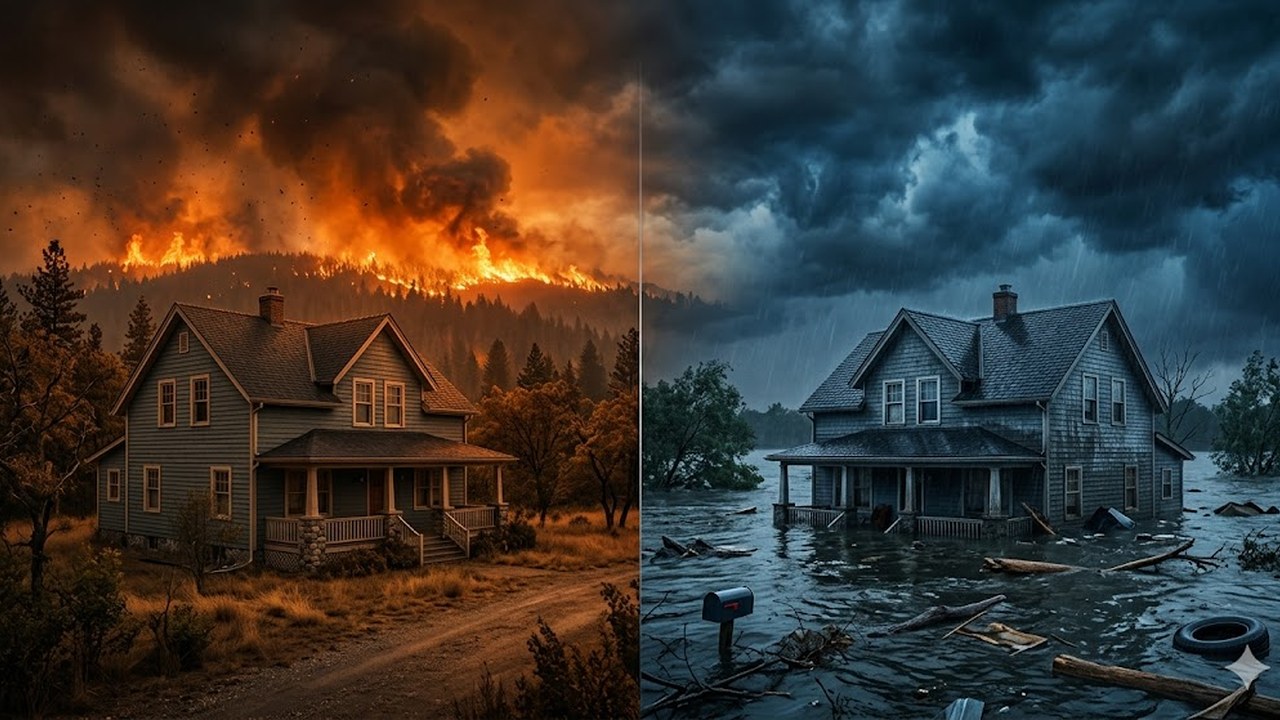
The primary driver isn't corporate greed or regulatory changes — it's climate change. Canada is warming at twice the global average rate, and the consequences are showing up directly in insurance claims. Wildfires, floods, hailstorms, ice storms, and windstorms are becoming more frequent, more intense, and more expensive.
In 2025, severe weather-related insured losses exceeded $2.4 billion. The summer of 2024 was even worse — July and August alone produced over $7 billion in insured damages, making it the costliest season on record.
This guide explains what's happening, why it's happening, and — most importantly — what Canadian homeowners can do about it.
2How Climate Change Affects Home Insurance
Climate change impacts home insurance through three interconnected mechanisms:
1. More Frequent Extreme Weather Events
Canada is experiencing more severe storms, longer wildfire seasons, more intense rainfall events, and more damaging freeze-thaw cycles. Events that used to occur once every 50 years are now happening every 10 to 20 years in some regions. More events mean more claims, and more claims mean higher premiums for everyone.
2. Higher Cost Per Event
Extreme weather events are not only happening more often — they're causing more damage when they do occur. This is partly due to climate intensity and partly due to more Canadians living in vulnerable areas (flood plains, wildfire-urban interfaces, coastal zones). The average insured loss per severe weather event has increased dramatically over the past two decades.
3. New and Expanding Risk Categories
Risks that were once rare in certain regions are now common. Flooding has expanded beyond traditional flood plains. Wildfire risk has spread to communities that never experienced it before. Hailstorms are producing larger hailstones. These expanding risk categories force insurers to reassess and reprice entire regions.
3Premium Increases by Province
Climate change doesn't affect all provinces equally. Here's how premiums are changing across Canada:
| Province | 2025 Premium Increase | Primary Climate Risks |
|---|---|---|
| Nova Scotia | 12.12% | Hurricane-force storms, coastal flooding, erosion |
| Alberta | 9.07% | Hailstorms, flooding, wildfire |
| Newfoundland & Labrador | 8.87% | Coastal storms, flooding, freeze-thaw damage |
| PEI | 8.78% | Coastal erosion, storm surge, flooding |
| New Brunswick | 8.36% | River flooding, ice storms, wind damage |
| Manitoba | 6.67% | Prairie flooding, hailstorms, blizzards |
| British Columbia | 5.89% | Wildfire, atmospheric rivers, flooding, earthquake |
| Ontario | 5.45% | Flooding, ice storms, windstorms, tornadoes |
| Saskatchewan | 4.92% | Hailstorms, prairie flooding, wildfire |
| Quebec | 2.18% | Spring flooding, ice storms, windstorms |
The 10-Year Picture
Looking at the longer trend makes the impact even clearer. Over the past decade:
- Alberta homeowners pay an average of $660 more per year than in 2015
- British Columbia homeowners pay approximately $592 more
- Ontario homeowners pay $519 more
- Quebec saw the lowest 10-year increase at $321
These are averages — homeowners in the highest-risk areas within each province are seeing significantly larger increases.
4Climate Risks Reshaping Canadian Insurance
Flooding: Canada's Costliest Natural Disaster
Flooding has become the most expensive natural disaster category in Canada. Over 1.5 million Canadian households sit in high flood-risk areas. Overland flood insurance — which didn't even exist in Canada before 2015 — is now one of the most important endorsements a homeowner can purchase. Yet many homes in the highest-risk flood zones still cannot get private coverage at any price.
Wildfire: Longer Seasons, Larger Burns
Canada's wildfire season is now several weeks longer than it was 40 years ago. The 2023 season burned 18.5 million hectares — four times the historical average. Communities in BC, Alberta, Saskatchewan, Ontario's north, and the NWT are seeing annual wildfire threats that drive both premium increases and coverage restrictions.
Hailstorms: Bigger, More Destructive
Hailstorms in Alberta and Saskatchewan are producing larger hailstones more frequently. A single hailstorm in Calgary can generate hundreds of millions in insured losses in a matter of minutes. Many Alberta insurers have introduced separate, higher deductibles specifically for hail and wind claims.
Ice Storms and Freezing Rain
Warmer winters don't mean fewer ice storms — they mean more freeze-thaw cycles, which actually increase the risk of ice storms, ice dams, and frozen pipe damage. The 2013 ice storm in Toronto and the GTA caused over $200 million in insured losses. Similar events are expected to become more common.
5The Growing Insurability Challenge
For some Canadian homeowners, the issue isn't just rising premiums — it's whether they can get insurance at all.
Non-Renewals and Coverage Restrictions
Insurers are making difficult decisions in the highest-risk areas:
- Some are declining to write new policies in wildfire-prone regions of BC's interior
- Others are non-renewing existing policies in areas that have experienced repeated flood or wildfire losses
- Overland water coverage is unavailable or unaffordable for homes in the most flood-prone zones
- Some insurers are introducing exclusions or sub-limits for climate-related perils in high-risk areas
Government Response
The federal government recognizes the growing insurability challenge and is taking steps:
- A national flood insurance program is being developed to provide coverage for high-risk properties that can't access private insurance
- Investments in flood mapping are helping Canadians understand their risk — many homeowners don't know they live in a flood zone
- Building code updates are requiring more climate-resilient construction in new developments
- Municipalities are investing in stormwater infrastructure upgrades to reduce flood risk
What It Means for Homeowners
If you live in a high-risk area and receive a non-renewal notice, don't panic. Work with a specialized insurance broker who can access alternative markets. As a last resort, each province's Facility Association provides basic coverage for properties that can't get insurance in the standard market — though premiums are typically higher and coverage may be more limited.
6What Homeowners Can Do to Control Costs
You can't stop climate change, but you can take meaningful steps to reduce your insurance costs and protect your property:
Reduce Your Physical Risk
- Water damage prevention: Install a backwater valve, smart leak detectors with auto-shutoff, and a battery backup sump pump. Water damage is the #1 claim — reducing your water risk has the biggest impact on your premium
- Wildfire resilience: Follow FireSmart Canada guidelines for vegetation management, building materials, and defensible space around your home
- Roof maintenance: Keep your roof in excellent condition. Consider impact-resistant shingles (Class 4) when it's time to replace — some insurers offer 5% to 15% discounts
- Foundation and drainage: Ensure proper lot grading, functional weeping tile, and clean eavestroughs and downspouts
Optimize Your Insurance
- Shop around at renewal: Get quotes from at least three insurers. Different companies use different risk models, and pricing can vary by 30% or more for the same property
- Increase your deductible: Moving from $500 to $2,500 can reduce your premium by 15% to 25%. Only do this if you can comfortably absorb the higher out-of-pocket cost
- Bundle policies: Combining home and auto insurance saves 10% to 15% with most insurers
- Ask about discounts: Monitored alarms (5-10%), new roof (5-10%), claims-free record (5-15%), loyalty (3-5%) — these stack up
- Review coverage annually: Make sure you're not over-insured on contents or under-insured on your dwelling
7What to Expect in the Coming Years
The trajectory is clear: climate-related insurance costs will continue to rise across Canada. Here's what experts and industry analysts are projecting:
- Continued premium increases: Annual premium increases of 5% to 10% are likely for the foreseeable future in most provinces, with higher increases in the most risk-exposed regions
- More granular risk pricing: Insurers are moving from postal-code-level pricing to individual property-level risk assessment using satellite imagery, AI, and climate modelling. This means your specific property's features — not just your neighbourhood — will increasingly determine your premium
- Greater emphasis on prevention: Insurers will expand premium discounts for resilience measures and may eventually require them for coverage in high-risk areas
- New insurance products: Parametric insurance (payouts triggered automatically by measured events like wind speed or rainfall amount) and community-based insurance pools may emerge as alternatives to traditional coverage
- Building code evolution: Expect stricter codes for construction in flood zones, wildfire-urban interfaces, and areas prone to extreme weather — increasing the cost of new construction but reducing long-term insurance costs
8Final Thoughts
Climate change is no longer a future threat to Canadian home insurance — it's a present reality driving significant premium increases across every province. The homeowners who will weather this shift best are those who take a proactive approach: reducing their property's physical risk, optimizing their insurance structure, and staying informed about the changing landscape.
The investment in prevention is especially powerful because it serves double duty: it lowers your premium and protects you from the financial devastation of an uninsured or underinsured loss. In a climate where weather-related claims are accelerating, that combination is more valuable than ever.
Start with the basics: review your policy, get competing quotes, and address the biggest risk factor on your property — whether that's water, fire, or wind. Every step you take reduces your exposure to a trend that shows no signs of slowing down.
Frequently Asked Questions
Home insurance premiums in Canada increased by 31% between 2021 and 2025 — more than double the overall inflation rate of 15% during the same period. In 2025 alone, premiums rose 7.8% nationally. Some provinces have been hit even harder: Atlantic Canada led with Nova Scotia increasing 12.12%, and Alberta saw a 9.07% increase. Climate-related losses are the primary driver of these increases.
Climate change is increasing the frequency and severity of extreme weather events — wildfires, floods, hailstorms, ice storms, and windstorms — that generate insurance claims. In 2025, severe weather-related insured losses in Canada exceeded $2.4 billion. As these losses mount year over year, insurers raise premiums across the board to cover the growing cost of claims. Additionally, climate change is making some risks — like flooding — harder to insure at all.
Atlantic Canada and Alberta are being hit hardest. Nova Scotia led the country with a 12.12% premium increase in 2025, followed by Alberta at 9.07%, Newfoundland and Labrador at 8.87%, and PEI at 8.78%. British Columbia and Ontario are also seeing above-average increases due to wildfire and flood risk. Quebec has experienced the most moderate increases at 2.18%, partly due to lower historical claims and stronger building codes.
Affordability is a growing concern. Some homeowners in high-risk areas — wildfire zones in BC, flood-prone areas in Alberta and Atlantic Canada — are already experiencing difficulty finding affordable coverage. The federal government is developing a national flood insurance program to address the most extreme cases. In the meantime, homeowners can control costs through prevention measures, higher deductibles, shopping around at renewal, and adapting their properties to reduce climate-related risks.
Yes. While you can't control the weather, you can reduce your property's risk profile: install water leak detectors and backwater valves, maintain your roof and drainage systems, implement FireSmart landscaping if you're in a wildfire zone, and ensure adequate attic insulation and ventilation. Additionally, bundling policies, increasing your deductible, and shopping for quotes from multiple insurers can significantly offset premium increases.
Get your home insurance quote in 90 seconds — find the best rate for your area.
Get Your Quote