

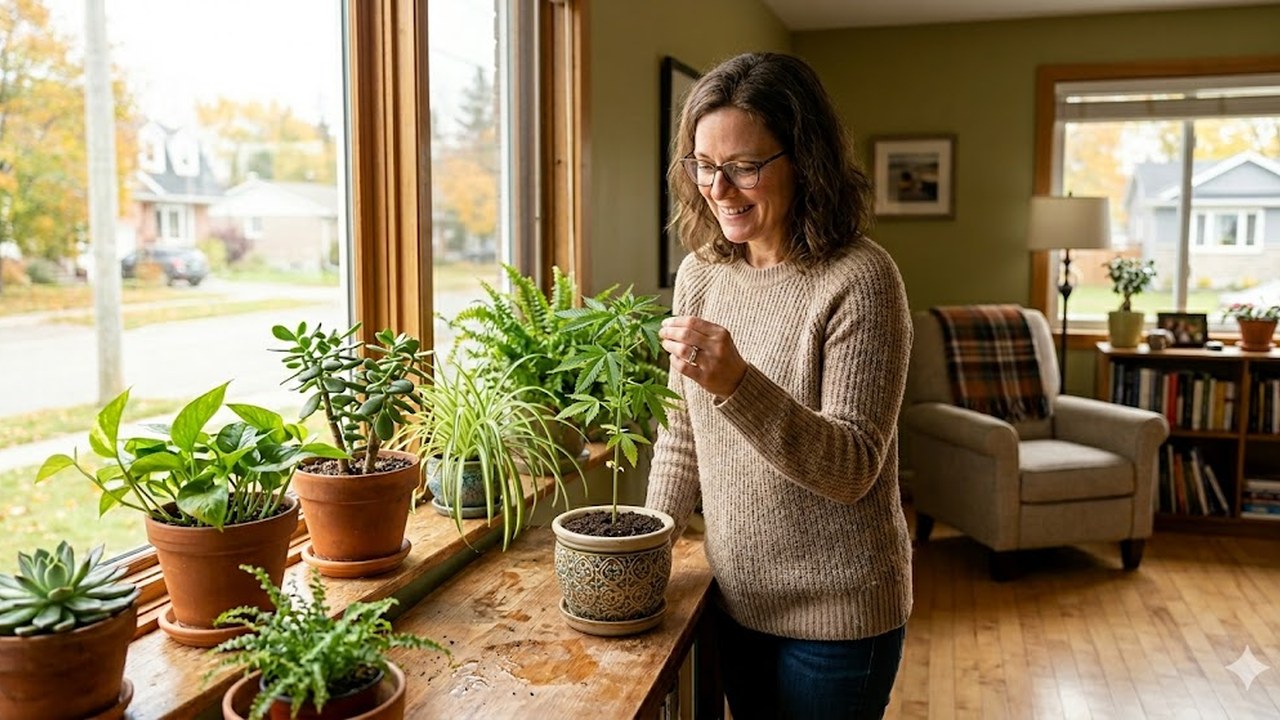
1Cannabis Is Legal in Canada — But Your Insurer Still Cares
When the Cannabis Act came into effect on October 17, 2018, Canada became the second country in the world to fully legalize recreational cannabis. Under federal law, adults can possess up to 30 grams of dried cannabis in public and — in most provinces — grow up to 4 plants per household for personal use.
By 2025, Statistics Canada estimated that approximately 1.4 million Canadian households had grown cannabis at home at least once since legalization. The number of regular home growers continues to rise as Canadians discover it's far cheaper than buying from licensed retailers.
But here's what most home growers don't realize: growing cannabis at home affects your home insurance — and if you don't handle it properly, it can void your coverage entirely. Even though cultivation is legal, it introduces real risks that insurers take seriously: fire hazards from grow lights, water damage from hydroponic systems, mould from increased humidity, and the stigma of the property being classified as a former "grow-op."
This guide explains exactly how home cannabis cultivation interacts with your insurance, what you need to disclose, how many plants cross the line from personal to commercial, and what provincial variations you need to know about.
2The Legal Framework: What You Can and Can't Grow by Province
While the Cannabis Act sets the federal baseline, provinces and territories have the authority to impose additional restrictions on personal cultivation. Here's the current landscape:
| Province/Territory | Personal Cultivation Allowed? | Plant Limit | Key Restrictions |
|---|---|---|---|
| British Columbia | Yes | 4 per household | Not visible from public spaces; landlord restrictions may apply |
| Alberta | Yes | 4 per household | Must use seeds from licensed retailers |
| Saskatchewan | Yes | 4 per household | Standard federal rules apply |
| Manitoba | No | 0 | Provincial law prohibits all home cultivation; fines up to $2,542 |
| Ontario | Yes | 4 per household | Landlords can restrict; condos can prohibit via bylaws |
| Quebec | No | 0 | Provincial law prohibits home cultivation; challenged in court but upheld |
| New Brunswick | Yes | 4 per household | Must not be accessible to minors |
| Nova Scotia | Yes | 4 per household | Standard federal rules apply |
| PEI | Yes | 4 per household | Standard federal rules apply |
| Newfoundland & Labrador | Yes | 4 per household | Standard federal rules apply |
| Yukon | Yes | 4 per household | Standard federal rules apply |
| NWT | Yes | 4 per household | Standard federal rules apply |
| Nunavut | Yes | 4 per household | Standard federal rules apply |
Manitoba and Quebec: The Exceptions
Manitoba and Quebec are the only two provinces that have completely banned home cultivation. In Manitoba, the Liquor, Gaming and Cannabis Control Act makes it illegal to grow any cannabis plants at home, with fines up to $2,542 for a first offence. In Quebec, the provincial Cannabis Regulation Act bans home growing — a provision that was challenged in court in 2019 but upheld by the Quebec Superior Court and subsequently by the Quebec Court of Appeal.
If you live in Manitoba or Quebec and grow cannabis at home, you're not only breaking provincial law — your insurer will almost certainly deny any claim related to your property, as you're conducting an illegal activity.
3How Cannabis Cultivation Affects Your Home Insurance
From an insurer's perspective, growing cannabis at home changes the risk profile of your property — even at the legal limit of 4 plants. Here's how insurers evaluate the situation:
1–4 Plants (Legal Personal Use)
Most major Canadian insurers — including Intact, Aviva, Wawanesa, Co-operators, and Economical — will continue to cover your home if you're growing up to 4 plants for personal use, provided that:
- You disclose the cultivation to your insurer
- Plants are grown using standard household electricity (no modified wiring)
- You're not using industrial-grade grow lights or complex hydroponic systems
- There's no evidence of excessive moisture, mould, or structural modifications
In most cases, growing a few plants on a windowsill or under a small LED light is treated similarly to growing tomatoes or herbs — it's not a significant risk factor.
5+ Plants: The "Grow-Op" Threshold
The moment you exceed the legal limit of 4 plants, everything changes. Growing 5 or more plants is:
- A criminal offence under the Cannabis Act (up to 14 years imprisonment)
- Classified as a "grow operation" by every Canadian insurer
- Grounds for immediate policy cancellation
- A permanent flag on your property that can affect future buyers' ability to insure the home
The Grow-Op Stigma
Properties that have ever been used as grow operations carry a lasting insurance stigma. Even if the grow-op was legal (e.g., a licensed medical cannabis producer), the property can be classified as a former grow-op, which creates problems:
- Many insurers refuse to cover former grow-ops entirely
- Those that do may charge premiums 50% to 200% higher than comparable properties
- Mould remediation certificates and structural inspections are typically required
- Real estate disclosure laws in most provinces require sellers to disclose prior grow-op status
4The Real Risks of Home Cannabis Cultivation
Insurers aren't being arbitrary when they scrutinize cannabis cultivation. Home growing introduces several measurable risks that can lead to costly claims:
Fire Risk
Cannabis plants require significant light — typically 12 to 18 hours per day during the vegetative stage. Even small grow setups use high-intensity LED or HPS (high-pressure sodium) lights that draw substantial power. The fire risks include:
- Overloaded circuits: Plugging high-wattage grow lights into circuits not rated for the load
- DIY electrical modifications: Bypassing breakers or running extension cords to power grow equipment
- Heat from lights: HPS lights in particular generate extreme heat that can ignite nearby materials
- Timer malfunctions: Cheap timers used to automate light cycles can overheat and short-circuit
According to the Office of the Fire Marshal of Ontario, residential fires linked to cannabis cultivation have remained a concern even post-legalization, with approximately 50 to 70 grow-related fires reported annually in Ontario alone.
Water Damage
Cannabis plants are thirsty — a single mature plant can consume 3 to 5 litres of water per day. Hydroponic and deep-water culture systems introduce even more water risk:
- Reservoir leaks and overflows
- Hose connection failures
- Pump malfunctions flooding grow rooms
- Condensation from humidity control systems
Mould and Humidity
Cannabis cultivation significantly increases indoor humidity levels, especially during the flowering stage when plants transpire heavily. This creates ideal conditions for mould growth — not just on the plants, but in walls, ceilings, and floors. Mould remediation in Canadian homes typically costs $3,000 to $10,000, and severe cases can exceed $30,000.
Odour and Structural Modifications
Some growers make structural modifications to their homes — building dedicated grow rooms, adding ventilation systems, or installing carbon filters. These modifications may require permits and, if done improperly, can affect your home's structural integrity and your insurance coverage.
5Disclosure Requirements: What to Tell Your Insurer
The single most important thing you can do as a home cannabis grower is disclose your cultivation activity to your insurer. Here's why and how:
Why Disclosure Matters
Home insurance policies are contracts based on utmost good faith — a legal principle that requires both parties to deal honestly. When you applied for your policy, you were asked about the risk characteristics of your home. Starting to grow cannabis changes those characteristics, and you're legally obligated to inform your insurer of any material change in risk.
Under provincial insurance acts across Canada, failure to disclose a material change gives your insurer the right to:
- Void your policy from the date the change occurred (as if the policy never existed)
- Deny any claim — even claims completely unrelated to cannabis cultivation
- Refuse to renew your policy at the next renewal date
How to Disclose
The process is straightforward:
- Call your insurer or broker and explain that you're growing (or planning to grow) cannabis at home for personal use
- Specify the number of plants — emphasize that it's 4 or fewer (within the legal limit)
- Describe your setup: Are you growing on a windowsill? Under a small LED light? In a grow tent? The simpler and more contained your setup, the less concern your insurer will have
- Ask for written confirmation that your policy remains in force and what, if any, changes are being made to your terms or premium
- Keep a record of the conversation, including the date, time, and name of the person you spoke with
What Most Insurers Will Do
For simple, legal cultivation of 1 to 4 plants, most insurers will:
| Insurer Response | Likelihood |
|---|---|
| Accept with no changes to premium or terms | Most common |
| Accept with a note on file (no premium change) | Common |
| Accept with a small premium increase (5–15%) | Less common (usually if grow lights/hydroponics involved) |
| Require specific safety conditions (e.g., proper ventilation) | Occasional |
| Decline to continue coverage | Rare for 1–4 plants |
6Best Practices for Insured Home Cannabis Growers
If you're going to grow cannabis at home, following these best practices will keep you in good standing with your insurer and minimize risk:
Electrical Safety
- Never overload circuits: Use a dedicated circuit for grow lights if using high-wattage equipment
- Use CSA-approved equipment: All grow lights, timers, and fans should carry the CSA, ULC, or cUL certification mark
- Avoid extension cords: Plug grow equipment directly into wall outlets or use properly rated power bars with surge protection
- Have your electrical system inspected if adding any equipment that draws more than 1,000 watts
Moisture and Ventilation
- Use a hygrometer to monitor humidity levels in your grow area — keep relative humidity below 60% during flowering
- Ensure adequate ventilation: Use fans and, if necessary, a dehumidifier to prevent moisture buildup
- Waterproof your grow area: Use waterproof trays under pots and place plants on surfaces that can handle occasional spills
- Inspect regularly for mould: Check walls, ceilings, and floors near your grow area for any signs of mould or moisture damage
General Best Practices
- Stay within the legal limit: Never exceed 4 plants per household
- Keep it contained: Grow in a designated area rather than spreading plants throughout the house
- Use legal seeds or seedlings: Purchase from licensed retailers only
- Secure plants from minors: Keep your grow area inaccessible to children — this is required by law in most provinces
- Document your setup: Take photos of your grow area, equipment, and number of plants — this can be helpful if you ever need to prove compliance during a claim
7Medical Cannabis: Different Rules, Different Coverage
If you hold a medical cannabis licence from Health Canada, you may be authorized to grow more than the standard 4-plant limit. Licensed medical cannabis patients can grow a number of plants determined by their daily prescribed amount — in some cases, dozens or even hundreds of plants.
Insurance Implications of Medical Growing
Medical cannabis cultivation — even with a valid licence — creates significant insurance challenges:
- Higher plant counts mean greater fire, water, and mould risk
- Most standard home insurers will not cover homes with large-scale medical growing operations
- Specialized cannabis insurance may be required — available through specialty brokers and providers like Apollo Insurance, CAGC, or Foxquilt
- Premiums can be 50% to 300% higher than standard home insurance
What Medical Growers Should Do
- Disclose your licence and plant count to your insurer immediately
- Provide a copy of your medical document and Health Canada registration
- Be prepared to shop for coverage — your current insurer may decline to continue
- Work with a broker who has access to specialty cannabis insurance markets
- Invest in professional growing infrastructure: Proper ventilation, fire suppression, waterproofing, and electrical upgrades will help you find coverage and may lower your premiums
8Keep Your Coverage Intact While You Grow
Cannabis cultivation is legal in most of Canada, and growing a few plants at home is a perfectly reasonable thing to do. But legality and insurability are two different things, and failing to handle the insurance side properly can cost you far more than a few plants are worth.
Here's the bottom line:
- Always disclose — even 1 plant. A quick phone call to your insurer protects your entire policy.
- Stay at 4 or fewer plants. The moment you exceed this limit, you're committing a criminal offence and voiding your insurance.
- Don't live in Manitoba or Quebec? You're good to grow — but still need to disclose.
- Use safe equipment: CSA-certified lights, proper ventilation, and no DIY electrical work.
- Medical growers need specialized coverage — work with a broker who understands the cannabis insurance market.
The worst outcome is growing a few legal plants, having an unrelated house fire or water leak, and discovering your claim is denied because you never told your insurer about your cultivation. That single phone call to disclose could save you hundreds of thousands of dollars.
Frequently Asked Questions
Yes, under the Cannabis Act (2018), adults in most provinces can grow up to 4 cannabis plants per household for personal use. However, Manitoba and Quebec have prohibited personal cultivation entirely through provincial legislation. In other provinces, you must use legally purchased seeds or seedlings from a licensed retailer, plants cannot exceed the limits set by your province, and landlords or condo boards may also restrict cultivation. Growing more than 4 plants for personal use is a criminal offence under federal law.
Yes. You should always disclose cannabis cultivation to your home insurer, even if you're growing the legal maximum of 4 plants. Failure to disclose constitutes a material change in risk, which gives your insurer grounds to deny any claim — not just claims related to the cannabis plants. Most insurers will continue to cover your home without issue for 4 or fewer plants, but they need to know about it to assess your risk accurately.
For legal personal cultivation of 1 to 4 plants, most major Canadian insurers will not increase your premiums, though they may add a note to your policy. If you're growing in a way that introduces additional risks — such as using high-wattage grow lights, modified electrical systems, or hydroponic setups with significant water use — your insurer may adjust your premium by 5% to 15% or require specific safety conditions. Growing 5 or more plants is treated as a commercial operation and will almost certainly result in policy cancellation.
If you fail to disclose cannabis cultivation and later file a claim, your insurer can deny the claim entirely — even if the claim is completely unrelated to your plants. For example, if you have an unrelated kitchen fire but your adjuster discovers cannabis plants during the investigation, your insurer may void your policy for non-disclosure of a material risk change. You could also be flagged in industry databases, making it harder and more expensive to get future coverage from any insurer.
Yes. While the Cannabis Act allows personal cultivation at the federal level, landlords can include no-cultivation clauses in lease agreements, and condo corporations can prohibit growing in their bylaws or rules. Many condo buildings in Canada have enacted bylaws specifically banning indoor cannabis cultivation due to concerns about moisture, odour, and fire risk. If your lease or condo rules prohibit it, growing cannabis could result in eviction or fines — and your insurer may deny claims if you were violating your occupancy agreement.
Growing at home? Make sure your coverage is intact. Compare home insurance quotes that account for cannabis cultivation.
Get Your Quote